
 By
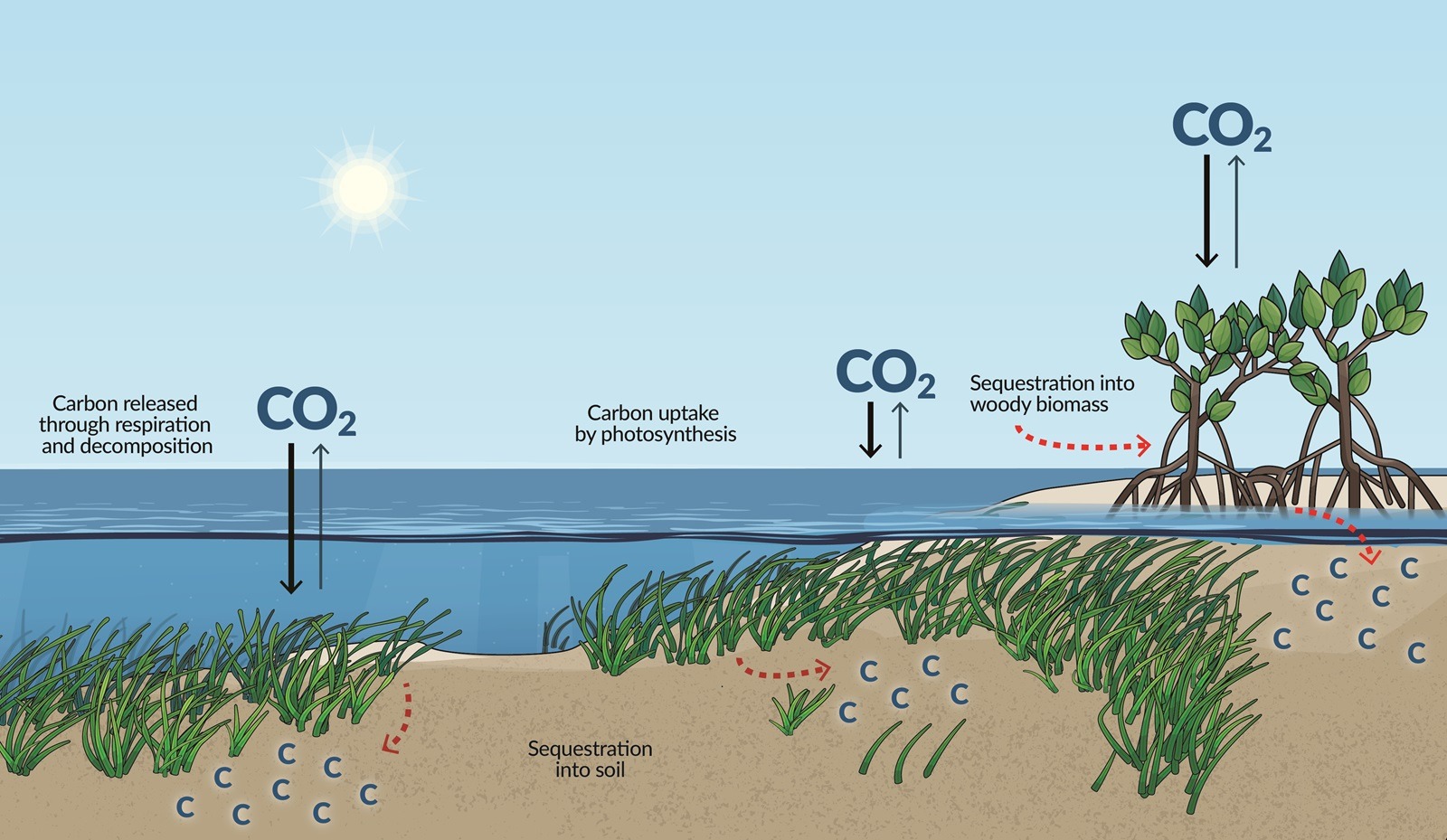
Mangroves, tidal salt marshes, and seagrass meadows are examples of coastal and marine vegetation ecosystems that absorb and store carbon, which is referred to as “blue carbon.” Blue carbon concentrates on the narrow coastal margin where carbon sequestration can be quantified, confirmed, and credited, in contrast to the larger ocean carbon cycle.
These ecosystems store most of the carbon underground, where low oxygen levels inhibit decomposition, at rates that are on par with or higher than those of tropical forests. Blue carbon is both an opportunity and a minefield for DACH sustainability leads navigating CSRD audits, SBTi scrutiny, and internal risk committees: a premium nature-based solution with strong co-benefits, but one where quality varies wildly and only a fraction of projects will survive rigorous due diligence.
What is Blue Carbon
The term “blue carbon” refers to carbon dioxide (CO2) that is stored in marine and coastal ecosystems around the world, including seagrass beds, mangroves, and saltmarshes. Because of its closeness to the water, it is primarily stored in soil and silt up to six meters below the seabed, hence the name “Blue” Carbon.
There is “deep sea carbon” in addition to coastal blue carbon. A particular methodology is used to measure each type in order to comprehend its advantages and effects. The Intergovernmental Panel on Climate Change (IPCC)-recognized accounting methods for coastal Blue Carbon, such as mangroves, tidal marshes, and seagrass beds, are the focus of the World Bank Group. In the future, more habitats might be added.
Why is Blue Carbon Important?
Oceans are the largest heat sink on the planet, absorbing 90% of the excess heat caused by climate change and 23% of human-caused CO2 emissions. Blue Carbon is critical because of the multiple benefits that it offers.
First is the huge storage capacity of Blue Carbon coastal ecosystems. They cover just 2% of the total ocean surface, but account for 50% of the ocean’s carbon absorption. For example, one hectare of mangroves stores five times more carbon than a similar area of forest on land. Seagrasses are another type of coastal ecosystem critical for carbon storage. Stopping seagrass destruction and degradation worldwide could save up to 650 million tons of CO2 emissions annually, roughly equivalent to the entire annual emissions of the global shipping industry.
Second are the benefits that protecting and restoring these ecosystems have on making people and communities more resilient, such as reduction in flooding and erosion, storm protection, and increased job creation and food security. Our last Changing Wealth of Nations report calculated that mangrove ecosystems protect more than 6 million people from flooding annually and prevent losses of $24 billion in productive assets.
Third is the potential for healthy mangroves, seagrasses, and saltmarshes to generate high quality carbon credits, which, once verified and sold through transparent carbon markets, can earn additional income for local communities.
In spite of their multiple benefits, coastal areas storing Blue Carbon have been seriously eroded, with more than 50% of the world’s original salt marshes lost during the 20th century. Up to 35% of mangroves were destroyed through deforestation in the 1980s and 1990s, and an estimated 25% of total seagrass beds lost to date.
The World Bank, with support from the PROBLUE trust fund, has developed a Blue Carbon Readiness Framework to empower governments to reverse these trends. The framework is a step-by-step guide on how to support investment in Blue Carbon to benefit people and economies and enable countries to meet their climate commitments under the Paris Agreement.
How Does Blue Carbon Fight Climate Change?
Healthy ocean and marine ecosystems are essential to fighting climate change. Coastal ecosystems store carbon in soils and dead natural matter such as broken twigs and dead leaves that gather on the ground in the shallows. For example, seagrass has a unique ability to prevent organic carbon from decomposing back into CO2 and carbon in seagrass is stored to six meters under the seabed in the silt on the ocean floor.
Read Also: Ocean Tourism: Balancing Profit and Preservation
Blue carbon ecosystems can store larger quantities carbon compared to terrestrial forests for two reasons:
First, their plants naturally grow quickly, and in the process, capture large amounts of carbon dioxide. For instance, juvenile red mangroves can grow up to 5 feet in a single year. This fast rate of growth enables mangrove forests to bounce back quickly from climatically induced events like hurricanes.
Second, their soils are largely anaerobic (do not have oxygen) so the carbon dioxide gets incorporated into the soils, decomposes very slowly and can be stored for hundreds or even thousands of years.
Many countries are optimizing their marine and coastal natural assets in a way that contributes to the economy and to the health of those marine ecosystems and the planet. The World Bank is helping countries meet this ambition. For instance, a US$419 million project is supporting the Government of Indonesia to enhance the management of mangroves and the connected livelihoods of local communities.
Benefits and Challenges of Protecting Blue Carbon
Blue carbon projects deliver compelling co-benefits but come with scientific and operational complexity that requires careful evaluation.
Co-benefits Beyond Carbon Sequestration
Blue carbon ecosystems provide coastal protection by buffering storm surges and reducing erosion, support fisheries by serving as nursery habitats, improve water quality through filtration, and maintain high biodiversity. Many projects also generate direct livelihood benefits for coastal communities, from sustainable fisheries to eco-tourism to project employment. For corporates seeking credits that align with adaptation, nature, and SDG narratives, these co-benefits are a strategic advantage. However, they also mean that exaggerated or unverified co-benefit claims can amplify reputational risk if projects underdeliver.
Scientific Measurement Challenges
Measuring blue carbon is technically demanding. Soil carbon stocks vary spatially even within a single project site, requiring intensive sampling and modeling. Baselines differ across geographies, and long-term datasets are limited in some regions. Projects must model complex soil carbon dynamics, track land-use change and leakage (e.g., aquaculture shifting to adjacent areas), and maintain rigorous MRV over decades. Independent market analyses from agencies like BeZero and Calyx Global note that only a subset of blue carbon projects are actively issuing credits, and quality varies widely.
Verification and Credibility Concerns
Even technically sound projects can face credibility challenges if MRV is opaque, if baseline assumptions are aggressive, or if there are governance or tenure disputes. Recent scrutiny from ratings agencies and bodies like ICVCM has raised the bar for what constitutes a high-integrity blue carbon credit. For buyers, this means that registry labels alone are insufficient. You need multi-layer verification, including independent ratings, methodology-level approval (such as ICVCM Core Carbon Principles), and ideally a platform or partner that evaluates hundreds of data points per project to identify the top performers.
Finally
We will lose extremely effective natural carbon storage regions if we do not preserve these priceless marine and coastal ecosystems. As a result, the atmosphere will contain more carbon, which is known to have a negative effect on the climate. Creating jobs and ensuring food security are only two of the many benefits that come from preserving and restoring these priceless places.
Ending poverty on a habitable planet can be greatly aided by blue carbon. We are dedicated to fulfilling this objective by combining development, climate, and nature to feed, protect, empower, and uplift communities in collaboration with governments, the corporate sector, and important partners.



Comments