
 By

The industries with the highest rates of AI adoption are IT & Telecom, Retail & Consumer, Financial Services, and Healthcare. Strategy, service operations, and risk management are common areas where AI is used across industries. A shortage of qualified workers and leadership vision are major obstacles to adoption, even if AI skills are becoming more and more necessary for many industries.
The worldwide AI market is expected to develop steadily and reach a total value of more than $240 billion, according to analysts. The industry is adopting AI at a rate of up to 20% annually. The adoption of generative AI increased from 55% to 75% in just the 2023–2024 year, with businesses receiving a 3.7x return on investment for each dollar spent on GenAI and related technologies.
Leading AI users, such as IBM, Shopify, and Coca-Cola, have shifted from employing the technology for merely regular activities to directly increasing staff productivity and accelerating top-line development. Productivity tools powered by AI continue to be the most obvious route to financial success.
Depending on who you ask, the adoption curve for AI is still rising. Over the next ten years, Goldman Sachs predicts that AI will increase global GDP by 15%. J.P. Morgan is more cautious and anticipates an increase of 8% to 9%. Professor of economics at MIT Daron Acemoğlu is far more skeptical about the influence of AI on the world economy, predicting only a 1–1.5% increase.
It’s obvious that mastering the fundamentals now yields the greatest value. If you create AI with the following goals in mind, you have a better chance of making it work for your company:
- Reduce operational costs
- Drive business growth
- Differentiate customer experience
- Ensure secure and reliable operations
AI doesn’t have to be revolutionary; it only needs to be useful, according to Max Belov, CTO at Coherent Solutions. All too frequently, businesses rush to implement flashy new technologies as part of transformation initiatives, only to find out they’ve overspent on systems with unclear objectives and no clear plan of action.
To create the conditions for actual company growth, you need be clear about who will use AI, how big it will be, and how success will be determined. Projects will remain grounded and the investment will be valuable as a result.
The operations that need to produce or digitize massive amounts of structured and unstructured data are usually the ones with the highest rates of AI adoption. AI models may be taught, improved, and scaled more successfully the more data is available. Thus, this emphasis on data is reciprocal.
IT and Telecom
Symbiosis with AI is projected to potentially earn $4.7 trillion in gross value added for IT and telecom by 2035. This is a spacious niche where providers can develop and integrate AI platforms to run a range of internal, technical, and consumer services.
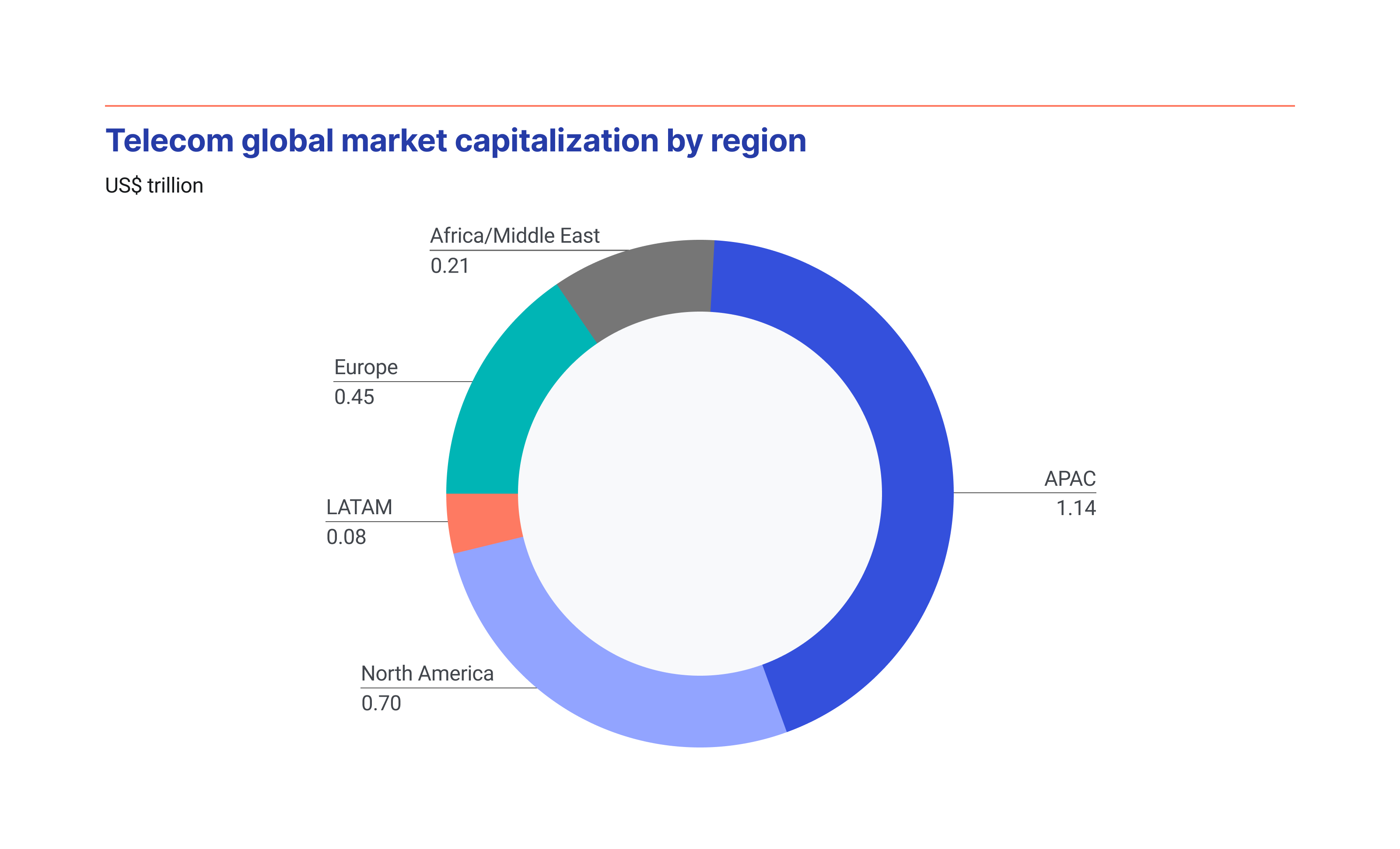
We can already witness the pioneers in these niches, like the AI-RAN Alliance, launched back in February 2024. The AI-RAN Alliance gathers the top telecom and tech market leaders to focus efforts on merging AI with cellular technology. The ultimate goal of the alliance is to achieve new advancements in the RAN (radio access network) technology.
Other use cases for AI adoption in IT and telecom:
- Network planning and optimization
- Network security
- CX enhancement
- Predictive maintenance
- Network slicing
Healthcare
Numerous healthcare facilities and brands rely on the custom development of AI solutions. For example, custom AI tools enable safer and hyper-precise drug development and testing, highly detailed medical imaging, and automation of a ton of administrative work.
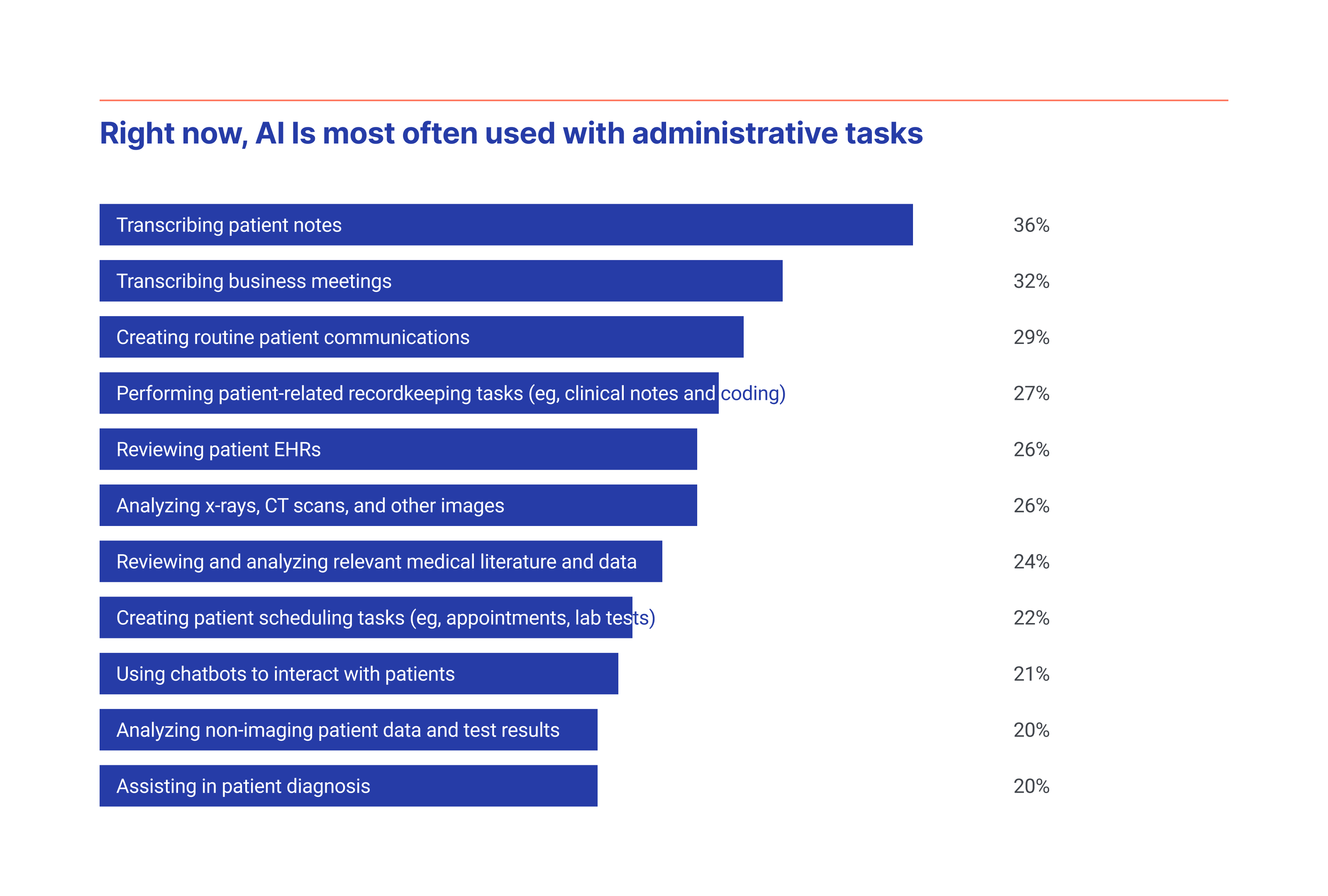
Importantly, the generative AI adoption rate is still only maturing in settings as complex and responsibility-driven as medicine. However, we can already see impressive implementations:
- At Coherent Solutions, we tapped into the creation of AI for healthcare with the RX transcription tool for an eyewear manufacturer company. This solution helps interpret optical prescriptions and select the right glasses.
- Tempus is a precision medicine platform that uses AI to analyze clinical data and personalize cancer care and other treatments.
- PathAI uses deep learning to improve the accuracy of pathology diagnoses for faster, more precise treatments.
- The NMDP Donor Readiness Score helps predict individual stem cell donor availability.
Other use cases for AI adoption in healthcare:
- Developing drugs
- Clinical documentation
- Clinical trials
- Medical imaging
Finance and Banking
The productivity of knowledge workers, from accountants and managers to researchers and developers, can be boosted dramatically by automating mundane tasks. Like routine mortgage reviews, market inspection, answering generic customer queries, etc.
Read Also: Top Countries Leading AI Innovation
AI tools, like innovative authentication systems, have also been developed to reinforce the security of access and interaction with valuable assets. At Coherent Solutions, we had the pleasure of building a feature-rich identity authentication platform that restricts access based on real-time user behavior monitoring and analysis.
In dry figures, the financial sector can get up to $1.2 trillion extra GVA thanks to mass AI adoption in financial services in 2035. But that’s if the market players are not slowed down by the emerging governance of AI adoption in central banks and other associated risks too much.
Use cases for AI adoption in banking and finance:
- Anomaly detection
- Payments
- Robo-advisors (portfolio management)
- Algorithmic trading
Manufacturing
Robotics and IoT help accelerate AI adoption in manufacturing with intelligent systems that connect directly to construction sites and enable remote opportunities. Accenture’s research shows that AI could enrich the manufacturing sector with an extra $3.8 trillion GVA in 2035. But there are more promising stats.
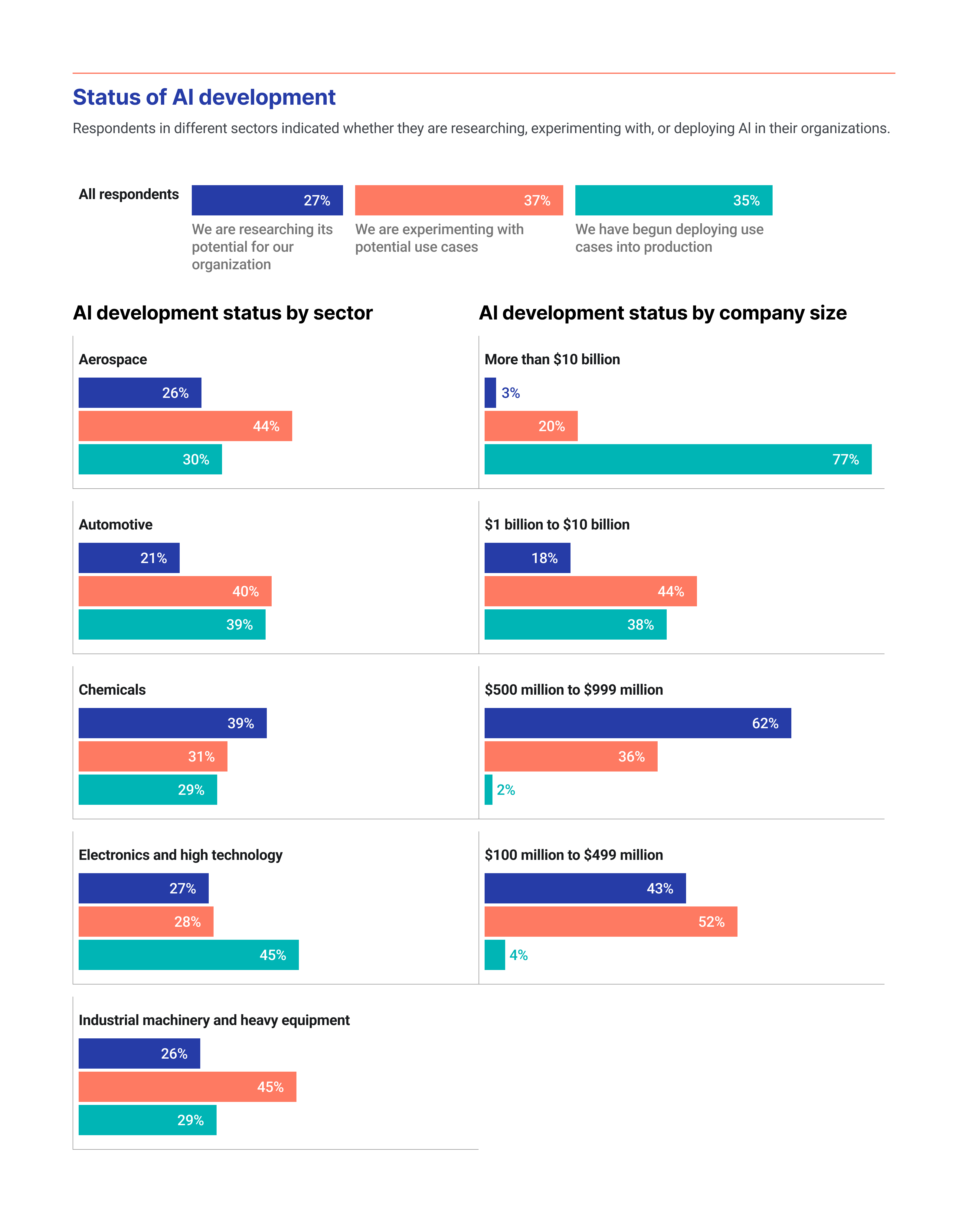
The 2025 State of AI in Manufacturing Survey, which indicates that:
- More than 77% of manufacturers have implemented AI to some extent (as compared to 70% in 2023).
- AI in manufacturing is mostly employed in solutions for production (31%), customer service (28%), and inventory management (28%).
- Rather than fully autonomous AI bots, most manufacturing specialists (53%) would prefer working with collaborative bots or “copilots” (AI agents that support human workflows instead of fully replacing them).
- The leading investment niches for AI in manufacturing are supply chain management (49%) and big data analytics (43%).
- 56% of manufacturers are still unsure whether their existing ERP systems are ready for full-on AI integration.
Use cases for AI adoption in manufacturing:
- Cobots (collaborative robots)
- Industry 4.0
- Generative design
- Quality assurance
- Predictive maintenance and demand forecasting
Retail
According to Deloitte’s 2025 US Retail Industry Outlook, GenAI is really coming in handy in commerce. In particular, retailers saw 15% higher conversion rates after using chatbots during the Black Friday weekend.
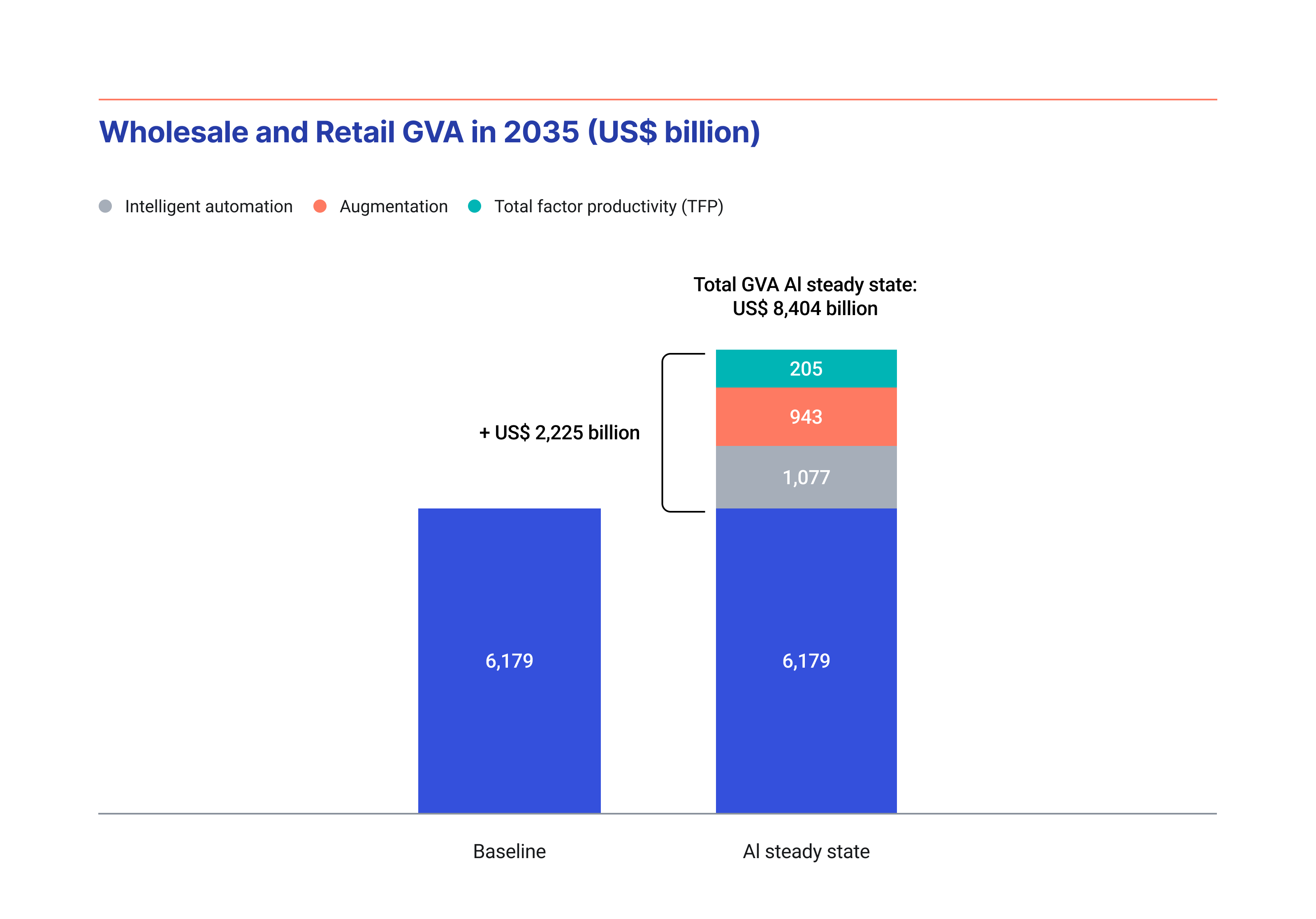
Furthermore, IBM’s research states that organizations working with retail and consumer products will be making the most extensive use of AI across 2025 and beyond. Solutions like Spokn AI have been developed to help ease global consumers’ widespread adoption of AI features.
Spokn AI is a tool for in-depth speech analytics in a contact center, which helps analyze sentiment and gain insights from customer conversations to find ways to improve their experience.
Other use cases for AI adoption in retail:
- Hyper-personalized shopping
- Inventory management
- Fraud detection
- Voice and visual search
Summary
Leading industries in AI adoption
- IT & Telecom: 38% adoption
- Retail & Consumer: 31% adoption
- Financial Services: 24% adoption
- Healthcare: 22% adoption
- Professional Services: 20% adoption
Common applications of AI across industries
- Strategy and corporate finance
- Service operations
- Risk management
Challenges and future trends
- Challenges: 50% of businesses cite a lack of skilled professionals, and 43% mention gaps in leadership vision.
- Future Trends: By 2028, 60% of companies will require basic AI skills from their employees.
- Enterprise adoption: 87% of large enterprises have implemented AI solutions, with 94% of technology companies leading the way.











Comments