
 By
How many of the lead generation strategies on your current list match your budget, your timeline, and the way your customers buy? That question matters more than whether a tactic worked for a larger company with a different sales cycle. A freelancer who needs two qualified calls this month doesn't have the same problem as a software company that can wait six months for search traffic to compound.
Most lists ignore that fit. They rank tactics as if cost, speed, and trust were interchangeable, so you end up spreading a small budget across ten channels and mastering none. In 2024, 69% of surveyed B2B marketers said lead generation was among the marketing activities expected to receive additional funding, according to Endeavor Business Media's 2024 Marketing Benchmark Report. More funding doesn't fix a mismatch between tactic and business model.
The ten options below are framed differently. Each one covers what it is, why it works, where it fails, and the concrete steps that make it produce leads instead of activity. You'll see real examples, from HubSpot and Backlinko to consultants booking calls on LinkedIn, plus the trade-offs most roundups skip.
You don't need all ten. You need one way to capture interest, one way to nurture people who aren't ready, and one way to amplify what's already working. The closing framework will help you pick that combination based on whether you need leads this week, this quarter, or this year. Start by ruling out the strategies you can't sustain, then commit to the two or three you can run properly.
Table of Contents
- 1. Content Marketing and SEO
- 2. Lead Magnets
- 3. Conversion-Focused Landing Pages
- 4. Email Newsletters and Lead Nurturing Sequences
- 5. Social Selling on LinkedIn
- 6. Paid Search Advertising
- 7. Paid Social Advertising
- 8. Webinars and Live Workshops
- 9. Referral and Partner Programs
- 10. Interactive Tools, Calculators, and Assessments
- 10 Lead Generation Strategies Compared
- Choosing Your Two or Three: A Practical Next Step
1. Content Marketing and SEO

Content marketing and SEO attract people who are already searching for a problem you solve. You publish a guide, comparison, or case study that matches their query, then invite them to subscribe, download a resource, or book a call. In 2024, 33% of B2B businesses cited search engines as their top lead generator, according to Kurve's B2B marketing statistics compilation.
That intent is the strength. A reader searching a specific comparison is further along than someone who saw a random ad. Backlinko, led by Brian Dean, built its audience with detailed SEO guides that promoted consulting and tools. Ahrefs does the same with educational articles that move readers toward a trial, and HubSpot pairs blog posts with free templates.
Where It Breaks Down
The weakness is speed. You won't get reliable leads in the first weeks, and thin articles written for volume rarely rank or convert. Say a local accountant publishes generic tax tips copied everywhere else. She gets impressions, no calls, and concludes SEO doesn't work. The content never matched a buyer ready to hire help.
- Target long-tail problems: Build pages around specific questions and comparisons your buyers type, not broad head terms you can't win.
- Update winners: Refresh high-performing articles with current data, dates, and a stronger offer before writing new ones.
- Place the next step early: Put a relevant lead magnet or newsletter signup near the top and bottom of each article.
- Measure per article: Track rankings and organic sessions in Google Search Console, then conversion rate in Google Analytics.
If you're mapping topics, our guide to the top elements of a content marketing strategy helps you structure pillars before you write. I recommend SEO when you can invest consistently for months and want low marginal cost per lead over time.
2. Lead Magnets
A lead magnet trades something immediately useful for an email address. It can be a checklist, template, mini-course, or toolkit, but the format matters less than the fit. The reader should feel the download finishes the job the article started.
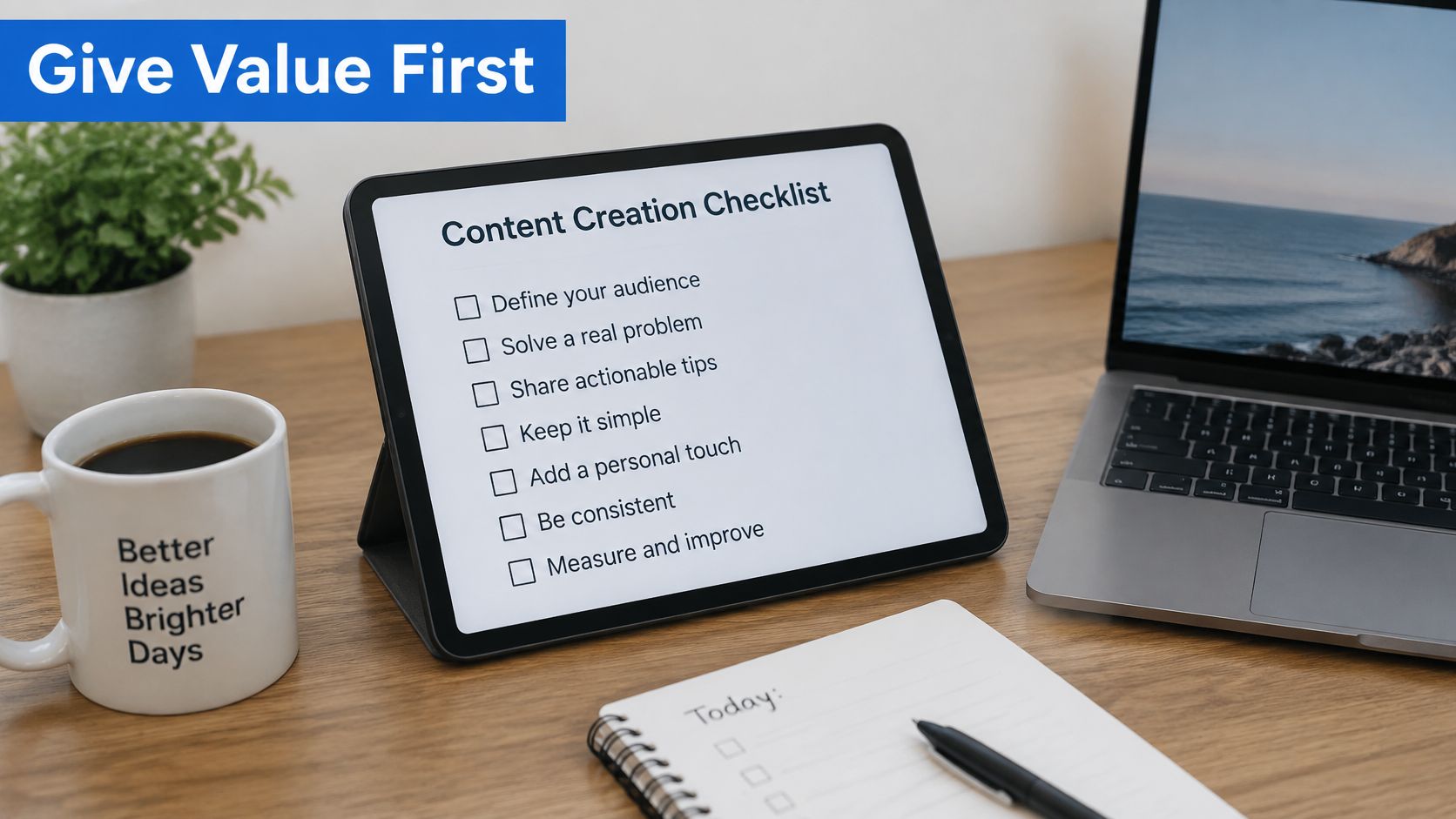
HubSpot's Website Grader works because the visitor gets a performance report, not a vague promise. Personal finance bloggers use the same logic with budgeting templates and investment checklists. Freelancers often offer a pricing or proposal template, which attracts people who are close to hiring rather than casual readers.
Build One That Converts
Generic ebooks are the common failure. A 40 page PDF on everything about marketing sounds valuable and gets ignored because nobody knows what problem it solves tonight. A one page client onboarding checklist, tied to an article about onboarding, converts better because the use case is obvious.
- Match the page: Create a magnet for a specific article or topic cluster, so the offer feels like the natural next step.
- Keep the form short: Ask for name and email only, unless another field is essential for qualification.
- Deliver instantly: Send the file at once, then follow with a short welcome sequence that shows how to use it.
- Test the promise: Try different headlines and formats, because the headline does most of the selling.
A lead magnet isn't a bribe. It's a sample of how you think and whether you're worth hearing from again.
This tactic fits almost any budget, since a useful template costs time rather than ad spend. It fails when there's no follow-up. Capturing an email without a welcome sequence just builds a list of people who'll forget why they joined.
3. Conversion-Focused Landing Pages
Send paid traffic to your homepage and you'll waste most of it. A landing page removes navigation, competing offers, and vague messaging so one visitor can take one action, such as booking a call, starting a trial, or requesting a quote.
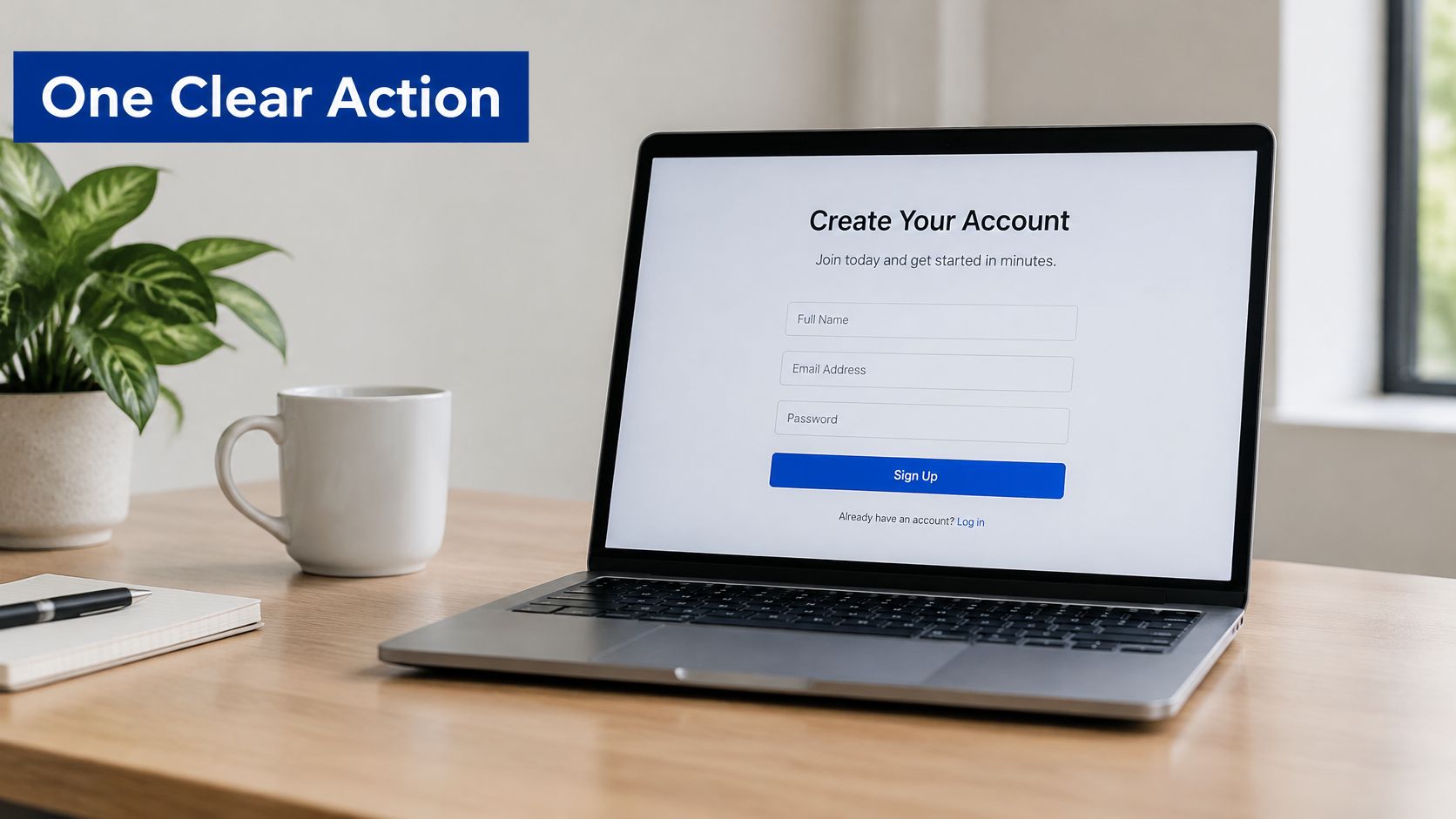
In 2024, 44% of marketers most commonly used landing pages to generate leads, while 51% used social-media promotion to drive traffic to those pages, according to HubSpot's 2025 B2B marketing data summary. That pairing only pays when the page matches the ad or post that sent the click.
A compiled benchmark report cited a median landing-page conversion rate of 6.6% in the fourth quarter of 2024, with the top 25% converting at 11.45% or higher, according to Statistics Fundamentals' lead generation statistics compilation. Treat those as reference points, not promises. Price, audience, and buying cycle change the number.
What to Fix First
Unbounce and Leadpages customers use dedicated pages for webinars, trials, and launches because they can test quickly. Software companies add customer logos beside a short trial form. Consultants use a discovery call page that names the problem, the outcome, and one booking button.
- Use one call to action: Don't ask visitors to download, subscribe, and book on the same page.
- Shorten the form: Collect extra qualification details after the first conversion, not before it.
- Put proof near the form: Add a testimonial, result, or logo where hesitation peaks.
- Test headlines first: Change headline and button copy before redesigning the layout.
I wouldn't scale any paid campaign until this page converts on warm traffic. Fixing the page lowers cost per lead everywhere else.
4. Email Newsletters and Lead Nurturing Sequences
Most leads aren't ready to buy when they first join your list. Email nurturing keeps you useful until they are, through a regular newsletter and automated sequences triggered by what they downloaded, clicked, or viewed.
Morning Brew built a large audience with a daily business newsletter that later supported advertising revenue. Software companies use a different version of the same play, sending onboarding emails that move trial users toward a paid plan. A personal finance writer might pair a weekly editorial with a starter guide sequence for new subscribers.
Personalization Without Losing the Plot
Automation helps, but it can hide weak measurement. In an April 2025 Integrate and Demand Metric survey, 51% of U.S. B2B marketers reported using AI for email, including sales development outreach, while 20% of B2B marketers could not determine the return generated by their email campaigns, according to eMarketer's report on AI and B2B email. More variants won't help if you can't connect sends to qualified leads and revenue.
- Write a welcome series: Send three to five emails that deliver value before you pitch.
- Segment by entry point: Tag subscribers by lead magnet or topic so follow-ups stay relevant.
- Use one call to action: Each email should ask for one click, reply, or booking, not three.
- Clean the list: Remove inactive subscribers periodically to protect deliverability.
For the automation setup behind this, our article on implementing marketing automation for data-driven lead nurturing covers segmentation and triggers in detail. Review any AI generated copy before it sends. One inaccurate claim or overly familiar personalization can cost more trust than a plain email ever would.
5. Social Selling on LinkedIn
LinkedIn works for lead generation when you treat it as a room full of buyers, not a cold email list. You identify people who match your ideal client profile, engage with their work, share useful posts, and start conversations that earn a call.
Consultants and fractional executives often comment thoughtfully on a prospect's posts for several days before sending a connection request. B2B software teams use Sales Navigator lists to focus on accounts that fit, instead of messaging everyone with a job title. Freelancers post case studies and client results so inquiries arrive already warmed up.
The Sequence That Works
Say you're a bookkeeper targeting small agencies. You follow twenty agency owners, leave specific comments on posts about hiring and cash flow, then publish your own short breakdown of a common reporting mistake. When you message one owner, you reference her actual post and offer a relevant resource. That's a conversation, not a pitch blast.
- Engage before you ask: Interact with a prospect's content for several days before messaging.
- Personalize the opener: Mention a specific post, launch, or challenge from their company.
- Post about client problems: Share problems and fixes your buyers recognize, not company announcements.
- Don't pitch first: Ask a question or offer something useful in the first message.
Practical rule: If your first LinkedIn message could be sent to 500 people unchanged, don't send it to anyone.
This channel costs time and consistency rather than media budget, which suits high trust B2B services. It fails when you automate generic outreach or disappear for weeks between posts. Decision makers reply to people they've seen being helpful, not to strangers with a calendar link.
6. Paid Search Advertising
Paid search puts your offer in front of people typing the exact problem you solve. You bid on keywords, pay per click, and send that traffic to a dedicated landing page. It's the fastest way to test whether an offer converts, and the fastest way to burn budget if tracking is missing.
Software companies bid on comparison terms like competitor alternatives because those searchers are close to switching. Financial advisors and tax preparers run campaigns during filing season, when demand spikes. Course creators use search ads to fill a webinar or free mini-course instead of waiting for organic traffic.
Watch how campaign structure and intent matching work in practice before you set budgets:
Controls That Protect Your Budget
The failure mode is loose targeting. Broad keywords pull students, job seekers, and freebie hunters who click, cost money, and never buy. Tight structure limits that damage.
- Build themed ad groups: Group closely matched keywords so the ad and page can echo the search phrase.
- Add negative keywords weekly: Block terms like jobs, free, or DIY if those searchers aren't buyers.
- Use dedicated pages: Never send ad clicks to a homepage with five competing offers.
- Track before you scale: Set up conversion tracking and define a qualified lead before increasing spend.
I recommend paid search when your customer value can support click costs and you need answers quickly. If a click costs more than the lead can reasonably return, better ad copy won't save the math. Start narrow, prove one keyword theme, then expand.
7. Paid Social Advertising
Paid social doesn't capture existing demand the way search does. It interrupts people on Meta, LinkedIn, TikTok, or Pinterest based on demographics, interests, and behavior, then tries to create interest before they knew they had a problem. That makes creative and offer quality decisive.
B2B companies use LinkedIn lead gen forms to offer a gated whitepaper without sending prospects to a separate page. E-commerce brands retarget Meta ads to cart abandoners and recent visitors. Coaches run short video ads offering a free discovery session, where the video itself does the qualifying by naming who the session is for.
Testing Without Wasting Spend
Say a consultant launches one ad, one audience, and a generic ebook. She gets cheap leads who never reply and blames the platform. The problem is that she tested nothing and qualified nobody. Cheap leads who don't progress are expensive once you count follow-up time.
- Start small and varied: Run a small test budget across several creatives to find the message people respond to.
- Retarget warm visitors: Build audiences from landing page and key content viewers first.
- Set a cost target upfront: Decide your maximum cost per lead before scaling, not after.
- Qualify on the form: Add one or two short questions that filter out poor fits.
Judge paid social by cost per qualified lead and sales conversation, not by the cheapest form fill.
This channel suits offers with a clear audience you can describe and a low friction first step. It's a poor fit if you can't produce fresh creative or if your sales cycle needs trust that a single ad can't build. Retargeting usually earns its keep before broad prospecting does.
8. Webinars and Live Workshops
A webinar asks for more than an email address. It asks for time, which is why the leads it produces tend to be stronger. Registrants sign up for a session on a specific problem, you teach and demonstrate expertise live, then invite qualified attendees to a next step.

In benchmark data compiled by MARTAL's lead generation statistics roundup, 73% of marketers identify webinars as their source of the best-quality leads, while the cited average webinar cost per lead is $72. Use that figure for planning only. Your real cost must include promotion, production, software, speakers, and follow-up.
SaaS companies run product walkthroughs that feed a sales pipeline. Financial educators host budgeting or investing workshops that lead to courses or consultations. Agencies present a client case study, then invite attendees to a strategy call.
Turn Attendance Into Pipeline
The data inside the event is a valuable asset. Registration, attendance duration, poll answers, questions, and replay views reveal who is curious and who is evaluating. Pass those fields into your CRM, score live attendance and buying-related questions higher, and route strong accounts to sales while others get educational emails.
- Name a specific outcome: Promote a title that promises a result, not a topic tour.
- Remind twice: Email registrants 24 hours and one hour before the session.
- Send the replay: Record every session for people who registered but couldn't attend.
- Close softly: Make a clear, low pressure offer near the end.
Webinars fail when the teaching is a disguised pitch. Teach something usable, and the offer lands as a next step rather than an ambush.
9. Referral and Partner Programs
A referral lead arrives with trust you didn't have to build. Customers, affiliates, or complementary businesses recommend you, and you reward them with cash, credits, or commissions when that recommendation turns into business.
Dropbox grew early by offering extra storage to users who invited friends, giving both sides a reason to act. Amazon Associates lets bloggers and creators earn commissions by linking to products they already discuss. Software companies often pay recurring commissions, which keeps partners promoting after the first sale.
Making It Easy to Refer
Programs stall when referring takes effort. A happy client may intend to recommend your accounting service, but if she has to write the pitch herself, she won't. Give her a forwardable email, a one page summary, and a tracked link, and the introduction takes a minute.
- Supply ready-made assets: Provide email templates, social posts, and banners partners can use unchanged.
- Reward the long term: Pay recurring commissions where margins allow, so partners send better fits.
- Track attribution clearly: Use unique links or codes and report results partners can verify.
- Pick aligned partners: Choose businesses whose audiences already match your ideal customer.
The economics are attractive because you typically pay when a result occurs. The risk is quality control. Partners chasing commissions can overpromise, discount your positioning, or send buyers you don't want. Set simple rules on claims and audiences before you recruit anyone.
I recommend referrals once you have customers who got a clear result. Without proof and a good experience to point to, incentives just pay people to spread a weak message faster.
10. Interactive Tools, Calculators, and Assessments
A calculator or assessment gives a visitor a personalized answer, then asks for contact details to deliver or expand that result. A retirement calculator, debt payoff planner, or freelance rate calculator works because the output is about the visitor's own numbers, not your company.
HubSpot's Website Grader is the familiar example, turning a site check into a lead. Personal finance sites use retirement and investment return calculators that readers bookmark and share. Agencies and freelancers publish rate calculators that estimate hourly or project pricing, which qualifies prospects on budget before a call.
Design for Completion
Ask for an email before showing anything and completion drops. Show a partial result first, such as a score or estimated range, then offer the full breakdown by email. Say a freelancer's rate calculator shows a suggested hourly range instantly, then emails a detailed worksheet. The visitor got value, and the email exchange feels fair.
- Reveal value early: Show a partial result before the email gate to increase completion.
- Explain your assumptions: State the methodology clearly so users trust the number.
- Recommend a next step: Use the result to point to a relevant article, service, or consultation.
- Promote the tool: Share it with relevant sites and communities, since useful tools earn links.
If you're scoping a build, our guide to understanding website cost calculators explains how these tools are structured. Interactive tools cost more upfront than a PDF, so they fit businesses with a repeatable calculation buyers already struggle with. A novelty quiz with no useful result won't repay the effort.
10 Lead Generation Strategies Compared
| Strategy | Best For | Time to Results | Relative Cost |
|---|---|---|---|
| Content Marketing and SEO | Attracting people actively searching for solutions | Months; builds over time | Low ongoing cost |
| Lead Magnets | Turning website visitors into email subscribers | Quick to launch; results depend on traffic | Low |
| Conversion-Focused Landing Pages | Converting campaign traffic into sign-ups or inquiries | Quick to launch; improves with testing | Low to moderate |
| Email Newsletters and Lead Nurturing Sequences | Building relationships with subscribers and guiding them toward action | Gradual; ongoing | Low to moderate |
| Social Selling on LinkedIn | B2B prospecting, consultants, and personal-brand building | Gradual with consistent activity | Low; paid tools add cost |
| Paid Search Advertising | Reaching people actively searching for a solution | Immediate | High and ongoing |
| Paid Social Advertising | Reaching targeted audiences and retargeting visitors | Quick to launch; testing required | Variable; ongoing ad spend |
| Webinars and Live Workshops | Building trust and generating qualified leads through education | Weeks to plan and promote | Moderate |
| Referral and Partner Programs | Growing through trusted recommendations and partner audiences | Gradual; depends on partner activity | Performance-based |
| Interactive Tools, Calculators, and Assessments | Engaging visitors and qualifying leads with personalized results | Longer to develop; results after launch | Moderate to high |
Choosing Your Two or Three: A Practical Next Step
You don't have a lead generation problem that ten tactics will solve. You have a fit problem, and fit comes from three variables: budget, timeline, and how your buyers decide. Score each strategy against those three before you spend anything, and most of the list will eliminate itself.
Start with timeline. If you need pipeline this month, organic search and interactive tools won't deliver in time, no matter how well you execute them. Paid search and paid social produce volume quickly because you're buying access to demand or attention that already exists. The trade-off is that the leads stop when the spending stops, and your landing page has to convert from day one or you'll pay to learn expensive lessons.
If you can wait a quarter or more, the math changes. Content marketing and SEO, a strong lead magnet, and a well built calculator keep producing after the work is done. They suit patient budgets because the main cost is creation time, and each asset lowers your marginal cost per lead as traffic grows. The risk is giving up too early. These strategies look like failures at week four and assets at month nine.
Then consider trust. High value B2B services rarely close from a single click, so LinkedIn social selling, webinars, and referral programs earn their place by letting buyers evaluate you before a sales call. A consultant who runs one useful workshop a month and follows up based on attendance behavior will usually beat a competitor blasting cold ads at the same audience. Relationship channels are slower to scale, but the conversations are better.
Measurement is where small teams get misled. International B2B research found that 74% of organizations reported longer sales cycles, while LinkedIn research across the United States, United Kingdom, France, and India found that 87% of B2B marketers say measuring long-term campaign impact is becoming harder, according to MediaPost's report on B2B lead generation challenges. When cycles stretch, the cheapest lead this week can be the worst customer next quarter.
So judge channels by progression, not volume. Track lead-to-customer rate, time to opportunity, customer acquisition cost, and revenue per lead by cohort, even in a spreadsheet. A freelancer can compare inquiry quality by source after ten leads. A local business can ask every caller how they found the company and log the answer. A small B2B firm can review which source produced meetings that reached a proposal. You don't need enterprise software to notice which channel sends buyers.
Build your combination in three roles. Pick one capture strategy that turns attention into contact details, such as a lead magnet on a landing page or a webinar registration. Add one nurturing strategy, almost always email, so people who aren't ready today hear from you when they are. Then choose one amplification strategy, such as paid retargeting, partner referrals, or LinkedIn outreach, that pushes your best content and offers further. Three connected pieces beat ten disconnected experiments.
A practical example pulls this together. Say you run a small agency with a modest budget and a long sales cycle. You publish one search focused guide a month, attach a rate calculator as the capture tool, nurture subscribers with a weekly email, and ask two complementary partners to promote a quarterly workshop. That's not flashy. It's sustainable, measurable, and matched to how your clients buy.
We built Mega Income Stream as a global resource for business owners, marketers, bloggers, and entrepreneurs who need that kind of practical guidance. Our free best-selling ebooks are a working example of a lead magnet in action, so you can see the exchange from the reader's side before building your own. If you have a question about applying any strategy here, or a topic you'd like us to cover next, reach out through our contact page and tell us where you're stuck.
Do one concrete thing now. Pick two strategies from this list that fit your budget and timeline, write down the first implementation step for each, and schedule both steps this week. Momentum from two finished steps will teach you more than another month of comparing all ten.
If you're building your first lead generation system, Mega Income Stream publishes practical guides on digital marketing, online income, and business growth, plus free best-selling ebooks you can model as lead magnets of your own. Visit us, grab an ebook that matches the strategy you picked today, and put its first step on your calendar this week.










Comments