
 By

What makes a landing page convert, and what is a good conversion rate in 2026? The most useful large-scale benchmark puts the median landing page conversion rate at 6.6%, while ecommerce landing pages achieve a median of approximately 4.2%. These figures come from Unbounce’s analysis of 41,000 landing pages, 464 million visits and more than 57 million conversions.
The findings suggest that high-converting landing pages don’t necessarily need fancy designs or clever tricks. They need to load quickly, explain the offer clearly, build trust and make the next step easy.
And the difference between an average page and a great one can be worth thousands of dollars.
Landing Page Performance Benchmarks
6.6%
All-industry median
4.2%
E-commerce median
11.4%
Approx. top-quartile threshold
1. What the conversion numbers actually mean
A landing page conversion happens when someone completes the action you want, such as buying a product, booking a consultation, or joining an email list.
Suppose 10,000 people visit your landing page.
| Conversion rate | Customers or leads |
|---|---|
| 2% | 200 |
| 4% | 400 |
| 6.6% | 660 |
| 10% | 1,000 |
| 12% | 1,200 |
At a hypothetical $50 revenue per conversion, improving from 2% to 6% would increase revenue from $10,000 to $30,000 without increasing traffic.
That’s why conversion optimization matters. Sometimes the biggest opportunity isn’t attracting more visitors. It’s doing a better job with the visitors you already have.
2. First impressions matter more than clever design


Think about the last time you clicked an advertisement and landed on a confusing website. You probably didn’t spend five minutes figuring out what the company wanted you to do.
You left. A good landing page should answer three questions almost immediately:
- What is this product or service?
- Why should I care?
- What should I do next?
Compare these headlines:
Weak: “Revolutionizing Digital Productivity Solutions.”
Better: “Create Professional Invoices in Under Two Minutes.”
The second tells the visitor exactly what they’ll get. It’s simple, specific and easy to understand. Unbounce’s benchmark research also highlights the importance of readability and straightforward language.
3. Page speed can quietly destroy conversions
A slow landing page is like a shopkeeper who makes customers wait outside before opening the door. Google reports that, in retail, a one-second delay on mobile can affect mobile conversions by as much as 20%. This is a finding from earlier Google research, not a newly measured 2026 effect.
That makes page speed a business issue, not merely a technical one. Focus on compressing images, removing unnecessary scripts, reducing pop-ups, using reliable hosting and testing pages on real mobile connections.
Google’s advice is particularly relevant:
“Effective landing pages are key to getting conversions from your Google Ads traffic.”
A beautiful page that loads too slowly may never get the chance to persuade anyone.
4. Conversion rates vary enormously by industry
Comparing every landing page against the same 6.6% benchmark can be misleading. A visitor downloading a free checklist is making a much smaller commitment than someone buying a $2,000 software subscription.
Unbounce’s industry figures demonstrate the difference.
| Industry | Median conversion rate |
|---|---|
| SaaS | 3.8% |
| Ecommerce | 4.2% |
| Travel and hospitality | 4.8% |
| Professional services | 6.1% |
| Legal services | 6.3% |
| Financial services | 8.3% |
| Education | 8.4% |
| Entertainment | 12.3% |
Source: Unbounce, 2024 Conversion Benchmark Report, detailed in its July 2025 analysis.
A 5% conversion rate could be excellent for one campaign and disappointing for another. Always compare similar offers, audiences and conversion actions.
5. Simple language beats corporate jargon
One of the more revealing statistics from Unbounce concerns readability. Its analysis found that landing pages written at approximately a fifth- to seventh-grade reading level converted at 11.1%, outperforming pages using more complicated language.
Read Also: How to Build a High-Converting Landing Page
That doesn’t mean treating visitors like children. It means respecting their time. Instead of writing:
Our integrated solutions facilitate streamlined operational efficiencies.
Try:
Manage your team’s work in one place and spend less time chasing updates. The second sentence sounds like something a real person would say.
6. Mobile optimization is no longer optional


Unbounce reports that 83% of landing page visits in its benchmark dataset came from mobile devices. Yet mobile pages often converted less effectively than desktop pages. That’s a serious missed opportunity.
A mobile landing page should have readable text, easily tapped buttons, fast-loading images, simple forms and a prominent call to action. Don’t judge your mobile page by shrinking a desktop browser window. Open it on an actual phone and try completing the form yourself.
7. Trust is part of the conversion equation
Imagine two websites offering the same online course. The first promises life-changing results but provides no instructor details or reviews.
The second shows the instructor’s experience, course outline, genuine student feedback and a clear refund policy. Which would you trust?
Effective landing pages reduce uncertainty through relevant evidence: verified testimonials, real product demonstrations, transparent pricing and clear terms.
As Unbounce puts it:
“Not all conversions are created equal.”
That applies to trust as well. A page collecting low-quality leads isn’t necessarily outperforming one that attracts fewer but more valuable customers.
8. Test changes instead of relying on guesses
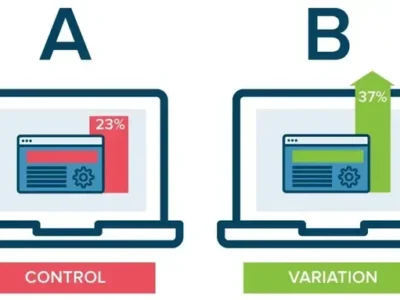
A/B testing compares two versions of a landing page to see which performs better. For example, test:
- A benefit-focused headline against a feature-focused headline.
- A short form against a longer form.
- A product photograph against a demonstration video.
- “Start Free Trial” against “See How It Works.”
- A prominent testimonial against a version without one.
Change one major element at a time and measure the outcome. Also, avoid declaring a winner after ten visitors. Small samples can produce misleading results. Give tests enough traffic and use appropriate statistical methods before making permanent decisions.
9. Measure revenue, not just clicks
A landing page with a 12% signup rate might look better than one converting at 6%. But what happens afterward? If the first page attracts people who never purchase, its impressive conversion rate may not translate into business growth.
Alongside conversion rate, monitor cost per acquisition, qualified leads, average order value, revenue per visitor and customer retention. The best landing page isn’t always the one producing the most form submissions. It’s the one bringing in valuable customers at a sustainable cost.
Final Thoughts
The numbers behind high-converting landing pages reveal something surprisingly ordinary: people respond to clarity, convenience and trust. You don’t necessarily need a complete redesign.
Sometimes you need a better headline. Sometimes your form asks too many questions. And sometimes customers are ready to buy, but your mobile page takes too long to load.
Start by understanding your current conversion rate, compare it with a relevant industry benchmark, identify where visitors drop off and test one meaningful improvement.
A landing page shouldn’t make people work hard to understand why they should take action. Make the offer clear, make the next step easy and let the data guide what you improve next.
FAQ
What is a good landing page conversion rate?
The broad median is 6.6%, according to Unbounce’s large-scale benchmark. However, industry, traffic quality and conversion type matter considerably.
Do shorter landing pages convert better?
Not automatically. A simple email signup may need little explanation, while an expensive or complicated product may require more information and evidence.
Does adding video improve conversions?
Video can help when it demonstrates the product or answers an important question. However, poorly placed or slow-loading videos can hurt the experience. Test their effect rather than assuming every page needs one.
How often should landing pages be optimized?
Review performance regularly, particularly after meaningful changes in traffic, audience, advertising or product offerings. Make improvements based on evidence rather than changing the design simply for variety.
Source: unbounce.com/shopify.com









Comments