
 By
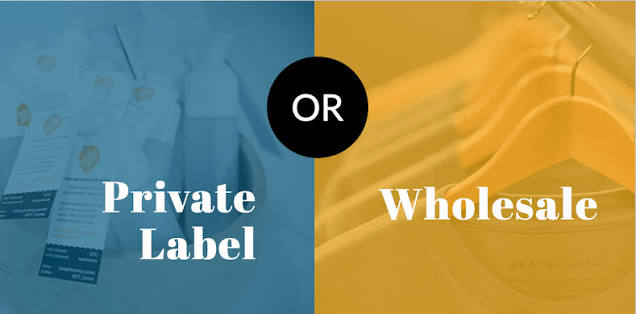
In many cases, private labeling offers greater long-term margin potential because you control the brand, pricing and product positioning. Wholesale sourcing, however, is usually faster, simpler and less risky to start, especially when you’re still learning what customers actually want.
A practical way to think about it is:
- Wholesale sourcing = Lower risk + Faster launch + Less control
- Private labeling = Higher potential margins + Brand ownership + More risk
If you’re a new retailer, starting with wholesale products can help you test demand without tying up too much money in custom inventory. Once you know which products customers repeatedly buy, private labeling those proven winners can be a powerful way to improve margins.
And private label is no longer a small corner of retail. U.S. store-brand sales reached a record $282.8 billion in 2025, according to the Private Label Manufacturers Association (PLMA), increasing 3.3% compared with just 1.2% growth for national brands.
So, which model should you choose?
Let’s break it down.
Wholesale vs Private Label: Comparison
| Factor | Wholesale Sourcing | Private Labeling |
|---|---|---|
| Startup difficulty | Lower | Higher |
| Speed to market | Fast | Slower |
| Brand ownership | No | Yes |
| Product control | Low | High |
| Inventory risk | Usually lower | Usually higher |
| Pricing control | Limited | Greater |
| Competition | Often high | Easier to differentiate |
| Margin potential | Moderate | Potentially higher |
| Customer loyalty | Often to product brand | Can be to your brand |
| Best for | Testing and quick launch | Long-term brand building |
Neither business model automatically guarantees profit. A badly managed private-label business can lose money faster than a well-run wholesale store. The important number isn’t simply your selling price.
It’s what remains after everything else has been paid.
What Is Wholesale Sourcing?
Wholesale sourcing is straightforward. You purchase existing products from a manufacturer, distributor or wholesaler at a discounted price and resell them to customers at a higher price.
Imagine buying a branded kitchen appliance for:
Wholesale cost: $40
and selling it for:
Retail price: $70
Your gross profit before other costs is:
$70 − $40 = $30
Your gross margin is approximately:
42.9%
That sounds good.
But you haven’t yet paid for:
- Shipping.
- Warehousing.
- Marketplace fees.
- Payment processing.
- Advertising.
- Returns.
- Staff.
- Packaging.
That’s why entrepreneurs should be careful when someone says a product has a “50% margin.” Gross margin isn’t the same as money in your pocket.
Shopify notes that retailers often add roughly 30% to 50% on the wholesale price, although actual margins vary considerably by industry and business model.
What Is Private Labeling?
Private labeling means another company manufactures the product, but you sell it under your own brand. Instead of selling:
Manufacturer X Protein Bottle
you might ask a manufacturer to produce bottles carrying:
Your Brand
You may also customize:
- Packaging.
- Colour.
- Ingredients.
- Size.
- Design.
- Features.
- Product bundles.
You now control much more of the customer experience. That’s important because when customers love a wholesale product, they may remember the manufacturer’s brand.
When they love your private-label product, they remember you.
1. Private Label Gives You More Pricing Control
This is probably its biggest attraction. Suppose you wholesale a well-known skincare product. You buy it for:
$15
and sell it for:
$25
But five competitors sell exactly the same bottle.
- One drops the price to $23.
- Another goes to $21.
Suddenly everyone is fighting over price. Private labeling changes the conversation. Suppose your manufacturer produces a customized skincare product for:
$8 landed product cost
and you position your brand at:
$30 retail
Your gross profit before other expenses would be:
$22
or approximately:
73% gross margin.
That’s only an illustrative example—not a normal guaranteed private-label margin. But it demonstrates why brand ownership can change the economics. You’re no longer directly competing with another retailer selling an identical branded item.
2. Wholesale Is Much Easier to Test
Here’s the problem with private labeling. You can spend months creating:
Logo + Packaging + Samples + Photography + Inventory
only to discover customers don’t actually want the product.
That’s painful.
Wholesale sourcing can offer a safer testing ground. You can start with smaller quantities of existing products and find out:
- What sells?
- What gets returned?
- What do customers complain about?
- What do people buy again?
This information is gold. Instead of guessing what your private-label product should be, customers tell you. That’s why a sensible strategy can be:
Wholesale → Collect sales data → Identify winner → Improve it → Private label it
3. Private Label Is Becoming a Serious Retail Force
Consumers are increasingly comfortable buying store brands. PLMA reports that U.S. private-label sales reached a record $282.8 billion in 2025, up more than $9 billion from the previous year. Store brands accounted for 21.3% of dollar sales and 23.5% of unit sales in the market covered by its Circana data.
Read Also: End-to-End eCommerce Web Solutions for Retail and Wholesale Businesses
Put another way, roughly one in four food and non-food grocery products purchased in the measured market is now a store brand.
Private-label dollar revenue increased by $64.8 billion between 2021 and 2025, representing approximately 30% growth. That’s a fairly strong signal that customers aren’t automatically saying:
“I only buy famous brands.”
They’re increasingly willing to consider quality alternatives.
4. Wholesale Can Create a Price War
Let’s imagine you’re selling the same headphones as 20 other Amazon sellers. What makes your listing special?
- Maybe faster delivery.
- Maybe better service.
But eventually someone will probably compete on the easiest thing to change:
Price.
$59.99 becomes: $57.99.
Then: $54.99.
Then someone runs a sale. Your margin slowly disappears.
Private labeling can reduce direct price comparison because customers can’t necessarily find your exact product elsewhere.
You’re competing on:
Brand + Experience + Features + Packaging + Trust + Price
instead of price alone.
5. Private Label Comes With Bigger Risks
Higher potential margins don’t come free. Private labeling can require:
- Product development.
- Manufacturer research.
- Samples.
- Minimum order quantities.
- Packaging.
- Branding.
- Quality control.
- Compliance testing.
- Shipping.
- Inventory storage.
And then there’s the scary part. You might have to order 1,000 units before knowing whether customers want 100. Wholesale lets you buy something with an existing market.
Private label asks you to help create the market for your particular version.
6. Don’t Confuse Markup With Margin
This mistake can destroy retail forecasts. Suppose your product costs:
$50
and sells for:
$100
You have a 100% markup.
But your gross margin isn’t 100%.
It’s:
($100 − $50) ÷ $100 × 100 = 50%
| Product Cost | Selling Price | Gross Profit | Gross Margin |
|---|---|---|---|
| $50 | $100 | $50 | 50% |
| $30 | $100 | $70 | 70% |
| $70 | $100 | $30 | 30% |
Shopify similarly notes that the traditional “keystone” approach of doubling wholesale cost represents a 100% markup but roughly a 50% gross margin. Understanding that difference becomes especially important when comparing suppliers.
7. Private Label Can Build an Asset
There’s another difference that isn’t immediately visible on a profit spreadsheet. Brand equity.
Imagine two businesses each generate $1 million in annual revenue.
Business A sells products available from dozens of other retailers.
Business B owns:
Trademark + Brand + Packaging + Customer list + Exclusive products
Which business is harder to replace?
Potentially Business B.
Private labeling means you’re not simply building sales. You’re potentially building a brand asset. Customers may eventually search directly for your company instead of searching for the generic product.
8. But Wholesale Has One Huge Advantage: Speed
- You find a supplier.
- Negotiate.
- Order stock.
- List products.
- Start selling.
Private label can involve:
Concept → Manufacturer → Sample → Revision → Packaging → Production → Shipping → Launch
That could take weeks or months.
If your objective is learning ecommerce quickly, wholesale can get real products in front of real customers sooner. And real sales data beats a beautiful spreadsheet filled with assumptions.
What Do the Current Numbers Say?
Private label’s momentum is difficult to ignore.
| Private-Label Metric | Recent U.S. Result |
|---|---|
| 2025 sales | $282.8 billion |
| YoY dollar growth | 3.3% |
| National-brand growth | 1.2% |
| 2025 units sold | 68.7 billion |
| Dollar market share | 21.3% |
| Unit market share | 23.5% |
Source: PLMA/Circana Unify+ data.
PLMA President Peggy Davies summarized the trend:
“Store brands are outperforming national brands across the U.S.”
McKinsey’s 2026 grocery research points in the same direction. Around 92% of grocers surveyed expected private label’s contribution to profitability to increase over the following two to three years.
That doesn’t prove every private-label product will make more money. It shows why retailers are taking the strategy seriously.
The Smart Hybrid Strategy
You don’t necessarily need to choose one model forever. A particularly sensible route for a new retailer is:
Step 1: Wholesale several products.
↓
Step 2: Collect actual customer data
↓
Step 3: Identify best sellers
↓
Step 4: Study complaints and reviews
↓
Step 5: Create an improved private-label version
↓
Step 6: Build the brand around proven demand
This lets wholesalers perform the market research before you commit serious money to private labeling.
Finally
So, wholesale sourcing or private labeling?
For beginners:
Wholesale often wins.
For long-term differentiation and margin potential:
Private label often becomes more attractive.
And for retailers trying to balance risk and reward:
Use both.
Start by selling products customers already understand.
- Watch what actually sells.
- Read the complaints.
- Study repeat purchases.
Then ask:
“Can we make this product better—and put our own name on it?”
Private-label sales reaching a record $282.8 billion in the U.S. in 2025 show just how powerful retailer-owned brands have become. But don’t private label something simply because the margins look exciting in Excel.
First, prove demand. Because a 70% theoretical margin on a product nobody wants is worth exactly:
$0.
The strongest retail strategy is ultimately the one that balances:
Margin + Demand + Inventory Turnover + Customer Loyalty + Cash Flow
Get those five things right, and whether the box carries somebody else’s logo or your own becomes a strategic choice rather than a gamble.
FAQ
Is private labeling more profitable than wholesale?
Potentially, yes. Private labeling can provide greater pricing control and differentiation, but profitability depends on manufacturing cost, order quantity, marketing, shipping, returns and customer demand.
Is wholesale better for beginners?
Often, yes. It can be quicker to launch and allows retailers to learn what customers buy before investing in custom products.
What is the biggest risk with private labeling?
Inventory. Minimum order quantities can leave a retailer with substantial unsold stock if demand is weaker than expected.
Can I start wholesale and later switch to private label?
Absolutely. In fact, testing existing products before developing your own version can reduce some of the guesswork involved in launching a private-label brand.
Source: analyzer.tools



Comments