
 By
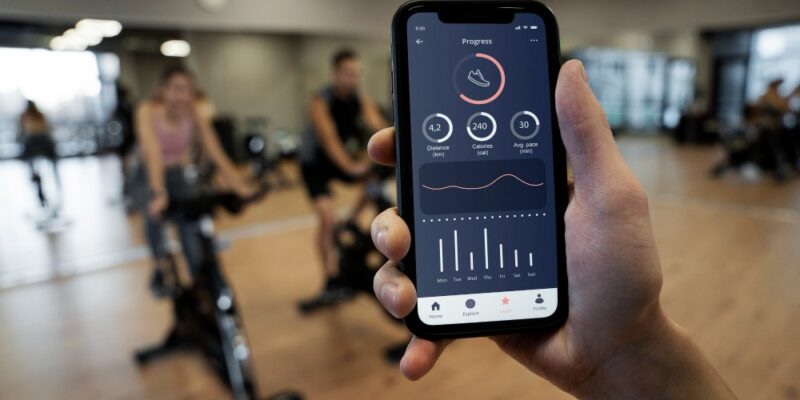
Can you make money from your fitness tracker data? Yes, although usually not enough to replace a salary. Apps such as Evidation, WeWard, Macadam and Optimity can reward eligible users for steps, exercise and other wellness activities, while programs such as HealthyWage offer prize-based fitness challenges. Other platforms, including Charity Miles, convert physical activity into money for charity rather than personal cash.
The basic model is simple:
Fitness tracker → Activity data → Rewards app → Verified activity → Points/rewards → Cash, gift cards, prizes or donations
Evidation provides one of the clearest examples. Users can connect compatible health and fitness apps, earn points for activities and other participation, and currently redeem 10,000 points for a $10 reward. Redemption options through its reward provider can include PayPal, bank transfer, gift cards or charitable donations.
But don’t expect walking to become your new full-time job.
The better way to think about these apps is:
Get rewarded for healthy activities you’re already doing.
Fitness Apps That Reward Your Data and Activity
| App/Program | What It Tracks/Rewards | Reward Type | Best For |
|---|---|---|---|
| Evidation | Steps, exercise, sleep, health actions | Cash/gift cards | Overall fitness data |
| WeWard | Walking/steps | Cash/gifts/donations | Walking |
| Macadam | Steps | Coins/rewards | Daily walkers |
| Optimity | Steps, challenges, quizzes | Gift cards/prizes | Wellness activities |
| HealthyWage | Step/fitness challenges | Cash prizes | Goal-based challenges |
| Charity Miles | Walking, running, cycling | Charity donations | Charitable giving |
| Research studies | Health/activity data | Cash varies | Research participation |
Availability, rewards and withdrawal methods vary by country and can change.
1. Evidation: Get Paid for Healthy Actions
Evidation is one of the clearest examples of turning fitness information into rewards. Users can connect compatible health apps and trackers and earn points from categories including:
- Walking.
- Exercise.
- Sleep.
- Nutrition.
- Vitals.
Evidation currently allows up to 40 activity points per day from synced apps and wearables—eight points in each of five activity categories. Additional points can come from cards, surveys, health programs and eligible research studies.
Once you reach 10,000 points, the current reward is $10.
Evidation explains:
“For every 10,000 points you earn $10.”
Depending on available options, rewards can be redeemed through PayPal, bank transfer or gift cards, or donated to charity.
How much could activity alone produce?
At the maximum 40 synced-activity points every day:
40 × 365 = 14,600 points annually
At the current 10,000 points = $10 conversion:
14,600 points ≈ $14.60
That’s why activity data alone shouldn’t be viewed as meaningful income. Surveys, cards and research opportunities can increase rewards.
2. WeWard: Turn Walking Into Rewards
WeWard focuses heavily on walking. The concept is:
Walk → Earn Wards → Redeem rewards
Its current website says users can convert rewards into cash, gifts or charitable donations, with cash-out options including PayPal and Venmo.
The app also claims its users increase their walking activity by an average of 24%. That is a company-reported statistic rather than independent clinical evidence, but it illustrates the incentive behind the platform.
WeWard also incorporates:
- Challenges.
- Games.
- Leaderboards.
- Sweepstakes.
- Brand rewards.
The attraction isn’t getting rich from walking. It’s receiving something back for steps you’d potentially take anyway.
3. Macadam: Earn Coins From Your Steps
Macadam is another walking-reward application. Its current 2026 reward system lets users validate daily steps to receive coins, with additional bonus packs becoming available after reaching particular step milestones.
Read Also: The Legality of Data Sales: Protecting Privacy While Earning
The important detail is that steps need to be validated. Macadam explains its system simply:
“Walk. Validate. Earn!”
Apps like this effectively gamify ordinary activity.
Instead of:
Walk 8,000 steps → Nothing happens
you get:
Walk → Reach milestone → Validate → Receive points/coins → Work toward reward
Before committing substantial time, check the reward catalogue and redemption options available in your country.
4. Optimity: Wellness Activities for Gift Cards and Prizes
Optimity expands beyond simple step counting. Users can earn its “gems” by completing activities such as:
Step goals + Challenges + Quizzes
Those gems can then be exchanged for eligible rewards.
Optimity says:
“Rewarding you for taking care of your health is fundamental to our mission.”
Rewards can include gift cards, loyalty rewards and prizes. Optimity also imposes monthly redemption limits; interestingly, it says only 2% of users reach that monthly limit.
This isn’t therefore the same as earning an unlimited amount of money for every step. It’s a rewards ecosystem built around wellness engagement.
5. HealthyWage: Fitness Challenges With Cash Prizes
HealthyWage works differently. Instead of simply paying a fixed amount per step, some programs use challenges and prize pools.
For example, its free $5,000 Step Challenge has used a personalized target calculated at 25% above the participant’s established daily-step baseline. Successful participants split the $5,000 prize pool.
Other step challenges can involve entry fees.
Under its published Step Challenge rules, the prize pool consists of participant contributions minus a 25% administration fee, with qualifying winners splitting the remaining pot.
That distinction matters.
This isn’t:
Sell data → Receive guaranteed payment
It’s closer to:
Submit/verify activity → Participate in challenge → Meet conditions → Potentially receive prize
There can be financial risk when an entry fee is involved, so understand the rules before participating.
6. Charity Miles: Your Fitness Data Earns for Charity
Charity Miles doesn’t normally put money into your personal wallet. Instead, your physical activity can help generate sponsorships for charities.
Users can:
Walk + Run + Bike
and connect activity from services and devices that feed data into supported health platforms. Money can come from sponsors, employers and peer-to-peer fundraising.
Charity Miles describes the idea succinctly:
“Get moving. Make an impact.”
This is useful if you’re more interested in converting fitness activity into social impact than personal income.
7. Participate in Health and Fitness Research
This may ultimately be more interesting than receiving fractions of a dollar for steps. Health-research platforms sometimes need participants willing to contribute information for scientific studies.
Evidation, for example, allows members to participate in research studies in addition to earning points from ordinary health activities.
Research could involve:
Surveys + Wearable information + Lifestyle information + Health behaviors + Longitudinal participation
Compensation depends entirely on the study. The advantage is that specialized research participation may value your information more highly than a simple step-reward program.
How Do Fitness Apps Make Money From Your Data?
Not every app follows the same business model. Potential revenue sources include:
- Sponsored challenges
- Advertising
- Brand partnerships
- Research programs
- Employer wellness programs
- Insurance partnerships
- Premium subscriptions
- Affiliate offers
In return, users might receive:
Cash + Gift cards + Discounts + Prizes + Donations
This creates an exchange:
Activity + Engagement + Data → Commercial/research value → User reward
However, the value returned to the individual can be much smaller than people imagine.
How Much Can You Make From Fitness Tracker Data?
For most users, not very much from passive tracking alone. Consider Evidation. Its current maximum from automatically synced activity is 40 points daily.
If maintained for 365 days:
40 × 365 = 14,600 points
With 10,000 points currently worth $10:
14,600 ÷ 10,000 × $10 = approximately $14.60
Additional surveys, research studies and other activities can improve earnings, but this demonstrates why “get paid to walk” shouldn’t be confused with a high-income side hustle.
A better strategy is:
Stack rewards onto activities you already perform.
If you’re already walking 8,000 steps, sleeping with a smartwatch and tracking workouts, earning an additional reward costs relatively little additional effort.
Your Fitness Data Has a Privacy Cost
This is the most important part of the equation. Fitness trackers can contain sensitive information including:
Heart rate + Sleep + Weight + Location + Exercise patterns + Nutrition + Health information
The Federal Trade Commission specifically identifies apps tracking fitness, activity, diet, sleep and other wellness information as health apps that may be subject to federal privacy and security requirements.
The FTC advises health-app developers to:
“Minimize data.”
It also recommends limiting access and permissions and clearly explaining why sensitive information—such as geolocation—is being collected.
Before exchanging fitness information for rewards, ask:
- What data is collected?
- Who receives it?
- Can it be sold or shared?
- Can I delete my account and information?
- Is precise location necessary?
- Is a $5 reward worth the permissions I’m granting?
That’s a financial decision and a privacy decision.
How to Maximize Fitness Rewards
Don’t exercise excessively simply to earn tiny rewards.
Instead:
- Connect activity you’re already tracking.
- Use legitimate apps with transparent privacy policies.
- Combine walking rewards with optional research opportunities.
- Check geographic eligibility before joining.
- Compare redemption thresholds.
- Track actual rewards received.
- Avoid granting unnecessary permissions.
- Never pay large fees chasing small fitness rewards.
Think of fitness rewards as:
Bonus money from healthy behavior
rather than:
A job.
Bottomline
Yes, it is possible to make money—or earn rewards—from fitness tracker data. But the realistic opportunity is supplemental rewards, not a replacement salary.
Evidation currently converts 10,000 points into a $10 reward, while allowing up to 40 points daily from synced activity categories. WeWard offers cash, gifts and charitable rewards for walking, while Optimity converts wellness activity into redeemable gems. HealthyWage adds a different model through cash-prize challenges.
The smartest strategy is therefore:
Track activities you already do → Choose reputable reward programs → Understand the payout → Protect sensitive permissions → Participate selectively → Redeem rewards
And remember that you’re making a trade. Your activity, engagement and potentially health information have value to businesses and researchers.
Don’t exchange highly sensitive data for a tiny reward without understanding exactly what you’re giving away.
FAQ
Can Fitbit or Apple Watch data make you money?
Potentially, yes. Compatible rewards and research apps can use information synchronized from wearables or connected health platforms to award points, determine challenge performance or support research. Compatibility depends on the individual service.
Which fitness app actually pays cash?
Evidation is one example. It currently awards $10 for 10,000 points, with reward options through its provider including PayPal or bank transfer. WeWard also currently advertises cash rewards through PayPal or Venmo.
Can you make $100 a day walking?
You should not expect $100 a day from ordinary step-reward apps. Evidation’s current activity-only limits demonstrate how modest passive rewards can be. Prize challenges or research participation work differently, but income isn’t guaranteed.
Is selling fitness data safe?
No data-sharing arrangement is completely risk-free. Fitness information can be sensitive, particularly when combined with location, health or identity data. Review privacy policies and permissions before connecting a wearable.
Source: visu.network





Comments