
 By

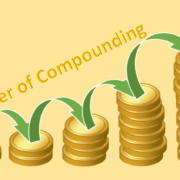
How should you reinvest small profits for exponential wealth growth? The most effective approach is to consistently redirect part of your profits into assets that can generate additional income—such as improving a profitable business, diversified investments, productive digital assets and your own income-producing skills—then reinvest the returns again.
The principle is simple:
Earn → Save → Reinvest → Earn More → Reinvest Again → Compound
You don’t necessarily need thousands of dollars to begin. What matters is developing the habit of keeping some profits working instead of spending everything you earn.
However, “exponential wealth growth” should not be confused with guaranteed exponential investment returns. All investments involve risk, and business profits can fall as well as rise.
The real power comes from compounding over long periods.
Investor.gov, operated by the U.S. Securities and Exchange Commission, describes compound interest as:
“interest you earn on interest.”
Its educational example shows that $100 earning 5% annually grows to more than $162 after 10 years and almost $340 after 25 years without additional contributions.
That is the foundation of reinvesting small profits.
How Small Profits Can Build Wealth
Imagine your side business makes a $500 profit. You have two choices.
Option A: Spend all $500.
Your immediate lifestyle improves, but your business capital remains unchanged.
Option B: Reinvest $300 and spend $200.
The $300 could purchase better equipment, advertising, software, training or another productive asset. If that investment increases future profits, you reinvest again.
Consider this simplified hypothetical example:
| Year | Starting Capital | Hypothetical 8% Growth | Ending Value |
|---|---|---|---|
| 1 | $1,000 | $80 | $1,080 |
| 5 | $1,360 | $109 | $1,469 |
| 10 | $1,999 | $160 | $2,159 |
| 20 | $4,316 | $345 | $4,661 |
| 30 | $9,317 | $745 | $10,062 |
This assumes an 8% annual return and no additional contributions purely to demonstrate compounding mathematically. An 8% return is not guaranteed.
Now imagine continually adding fresh profits. That is when the difference becomes much larger.
1. Create a Profit Reinvestment Rule
Don’t decide what to reinvest after the money arrives. Create a rule beforehand. For example:
| Profit Allocation | Percentage |
|---|---|
| Reinvestment | 40% |
| Long-term investments | 20% |
| Cash/tax reserves | 20% |
| Personal spending | 20% |
If you make $1,000:
- $400 → Business
- $200 → Investments
- $200 → Reserves
- $200 → Personal use
These percentages are illustrative rather than universal. Your appropriate allocation depends on expenses, debts, taxes, emergency savings, dependants and risk tolerance.
The key is that profit automatically creates more productive capital.
2. Reinvest First in What’s Already Working
Entrepreneurs often make their first $1,000 and immediately start another business. That isn’t always wise.
Suppose you spent $100 promoting a digital product and generated $300 in gross profit after relevant costs. You have evidence that the system might work.
Instead of using the profit to start an unrelated dropshipping store, test whether reinvesting part of it can expand the proven system.
You might improve:
- Advertising
- Website conversion
- Product quality
- Email marketing
- Customer acquisition
- Equipment
- Automation
- SEO
- Inventory
- Staff or contractors
Think:
Profit → Productive improvement → Greater capacity → More profit
The important word is productive.
Buying a $3,000 laptop when your existing computer works perfectly isn’t necessarily business reinvestment simply because you call it a business expense.
3. Build an Emergency Reserve Before Taking Bigger Risks
Reinvestment shouldn’t mean keeping no cash. Without reserves, one unexpected expense could force you to sell investments or borrow at an unfavorable time. Create separate pools for:
Operating cash + taxes + emergency savings + investments
Cash reserves won’t necessarily produce exciting returns, but they provide resilience. That resilience allows your long-term assets to remain invested.
Federal Reserve data illustrates how widely household financial positions vary. Its 2022 Survey of Consumer Finances found that 98.6% of U.S. families had transaction accounts, with a median balance of $8,000 among account holders.
Read Also: Top 60 Tactics To Build, Protect and Enhance Your Wealth
The appropriate reserve for you depends on your circumstances, but liquidity deserves a place in any reinvestment strategy.
4. Invest Some Profits for the Long Term
Your business shouldn’t necessarily be your only asset. Once appropriate reserves and expensive debt are addressed, part of your profits could be directed toward diversified long-term investments appropriate to your circumstances.
This introduces another wealth engine:
Business profits → Financial assets → Returns → Reinvestment
The Federal Reserve’s 2022 Survey of Consumer Finances found that 58% of U.S. families held stocks either directly or indirectly, up from 53% in 2019. Retirement accounts were held by 54.3% of families, with a median balance of $86,900 among families holding such accounts.
This doesn’t mean buying random stocks. Diversification matters.
FINRA explains:
“Don’t put all your eggs in one basket.”
It notes that diversification spreads investments among and within different asset classes and can reduce the risk of major losses caused by excessive concentration in a single security or asset class.
5. Reinvest in Skills That Increase Your Income
One of the most overlooked investments is your earning ability. Suppose you make $500 from freelance work. You could spend $200 learning:
- Sales
- AI automation
- Copywriting
- Data analytics
- Web development
- SEO
- Video editing
If that skill eventually allows you to increase your project price from $500 to $1,000, the return can be substantial. Skills are particularly valuable when starting with little capital.
Someone with $100 cannot generate meaningful living expenses from a conventional investment portfolio.
But $100 spent intelligently on education, software or tools could potentially help that person acquire a skill that generates considerably more income.
The progression becomes:
Skill → Higher Income → Higher Savings → More Investments → Greater Compounding
6. Create Assets That Can Sell Repeatedly
Reinvest profits into assets rather than only expenses. Examples include:
- Digital products
- Books
- Software
- Websites
- Online courses
- Templates
- Intellectual property
- Content libraries
- Email lists
Suppose you earn $1,000 freelancing. You reinvest $300 into creating a professional digital template. The template eventually generates $100 monthly.
You now have:
Freelance income + digital-product income
Use some digital-product profits to create another asset. Now your wealth strategy becomes:
Active income → Asset creation → Asset income → More assets
That is significantly more scalable than simply working additional hours.
7. Automate Your Reinvestment
Willpower is unreliable. Automation can make consistency easier.
Investor.gov’s compound-interest calculator explicitly lets investors model both an initial investment and monthly contributions, demonstrating how recurring additions affect long-term outcomes.
You might automatically transfer a predetermined percentage whenever income arrives. For example:
Every $1,000 profit → $200 automatically invested
If profits increase:
$5,000 profit → $1,000 invested
Your lifestyle can improve while your investments increase simultaneously.
8. Avoid Chasing “Hot” Investments
Compounding can sound boring. That is precisely why people sometimes abandon it for speculation. Someone sees:
“This investment gained 300%!”
and moves their entire portfolio.
Be careful.
Even professional investment managers find consistent market-beating performance difficult.
S&P Dow Jones Indices’ year-end 2025 SPIVA Scorecard found that 79% of actively managed large-cap U.S. equity funds underperformed the S&P 500 during 2025. Over longer periods, persistent outperformance has also been difficult to maintain.
Trying to identify the next spectacular winner can therefore introduce substantial risk. Wealth building doesn’t require every investment to be extraordinary.
It requires avoiding catastrophic mistakes while allowing productive assets time to compound.
The Small-Profit Wealth Flywheel
A practical system looks like this:
- Step 1: Generate your first $100–$1,000 profit.
- Step 2: Build appropriate emergency and tax reserves.
- Step 3: Reinvest in the activity already producing profitable results.
- Step 4: Allocate some profits toward diversified long-term assets.
- Step 5: Invest in skills that increase earning power.
- Step 6: Build assets capable of producing recurring income.
- Step 7: Reinvest the new income.
- Step 8: Repeat for years.
Eventually:
- Income produces assets.
- Assets produce income.
- That income purchases more assets.
That is the compounding flywheel.
Conclusion
The secret isn’t finding an investment that magically turns $100 into $1 million. It is creating a system in which today’s profits continuously purchase tomorrow’s income-producing assets.
- Start small.
- Protect yourself with adequate reserves.
- Reinvest in businesses and skills that already demonstrate value.
- Diversify some wealth outside your primary business.
- Automate contributions.
- Then give compounding time to work.
The SEC’s Investor.gov illustrates the principle simply: compound interest means earning returns not only on your original money but also on previous returns.
That’s why small profits shouldn’t be dismissed.
$100 can become productive capital. Productive capital can create additional profit. Additional profit can purchase more assets. And those assets can generate still more capital.
The goal is not overnight wealth. It is building a financial machine where each successful cycle leaves you with more productive assets than the cycle before.
Small profits become powerful when you stop treating them only as money to spend and start treating part of them as capital to compound.
FAQ
Can small amounts really build wealth?
Yes, although time, contribution size and investment performance matter enormously. Investor.gov demonstrates that even $100 compounding at 5% annually would grow to almost $340 over 25 years without additional contributions. Regular contributions can make the effect considerably larger.
How much profit should I reinvest?
There is no universal percentage. A business owner might reinvest 20%, 40% or considerably more depending on growth opportunities, expenses, debts, taxes and cash reserves.
Should I reinvest everything?
Usually not automatically. Maintaining emergency liquidity, meeting tax obligations, paying necessary living expenses and addressing expensive debt may take priority.
Should profits go into my business or investments?
Potentially both. Reinvesting in a proven business may increase earning capacity, while diversified investments can reduce dependence on one business or income source.
Source: globalmastersfund.com.au








Comments