
 By
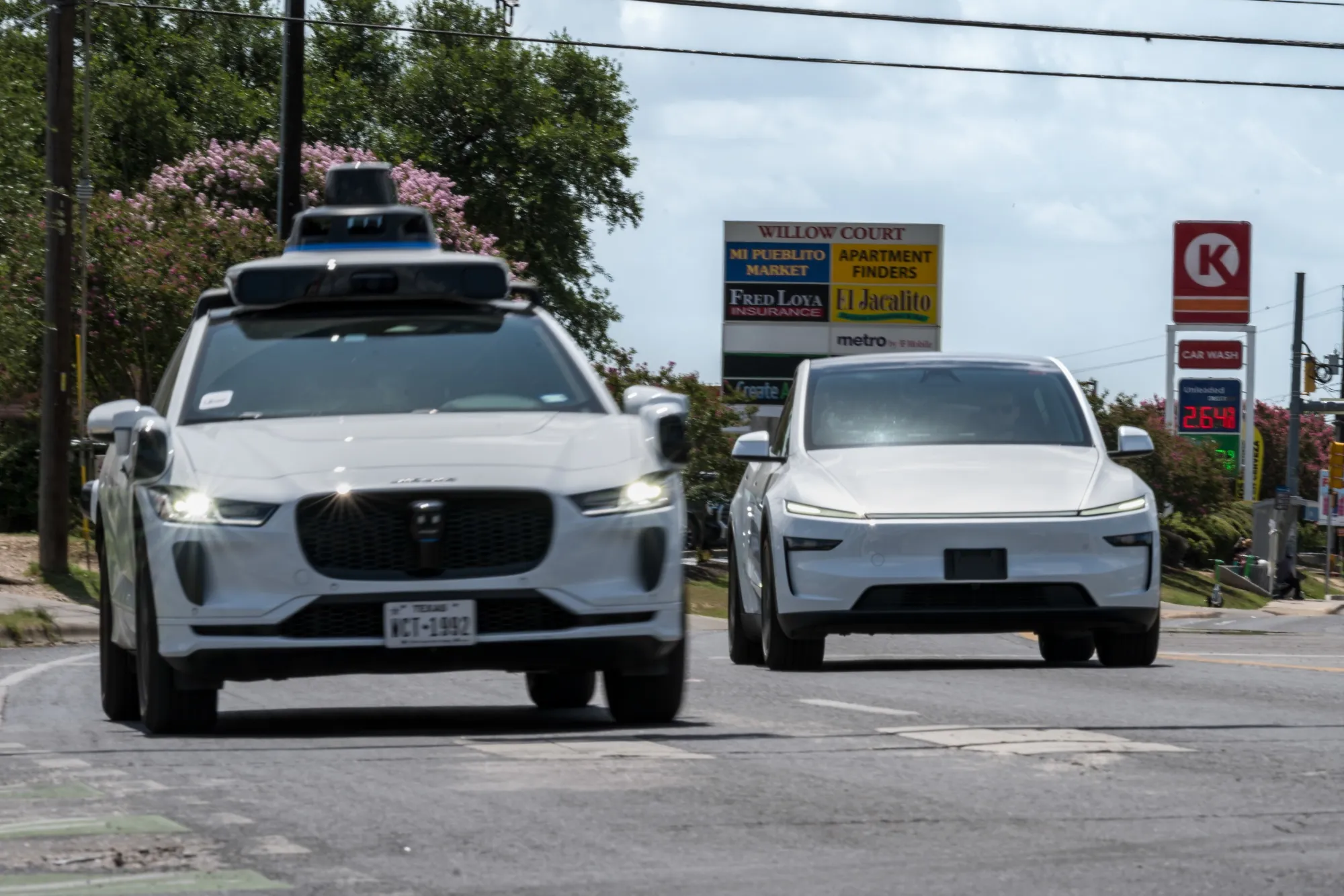
With hundreds of thousands of paid weekly rides across several cities, Waymo is the undisputed leader in operational, autonomous robotaxi services as of mid-2026, while Tesla leads in data collection and manufacturing scale, striving for an AI-driven, pure-vision approach. Waymo’s safer, sensor-heavy approach is dominant in urban settings, while Cruise is rebuilding and falling behind the top two.
Tesla, Waymo, and Cruise are leading the charge in the intensifying battle to perfect autonomous vehicles. Each business has approached self-driving technology in a different way, and this is reflected in their market share, deployment plans, and technological developments. In this piece, we’ll dissect the most important data influencing the self-driving market and examine the leaders.
1. Tesla has deployed over 4 million vehicles with its Autopilot and Full Self-Driving (FSD) beta globally
Tesla has a significant advantage in sheer numbers. With over 4 million vehicles on the road equipped with Autopilot and Full Self-Driving (FSD) beta, Tesla has more real-world driving data than any other company.
This data is crucial for improving the AI behind its self-driving technology. Unlike Waymo and Cruise, which focus on robotaxis, Tesla aims to upgrade its existing fleet to full autonomy.
For businesses looking to leverage autonomous technology, Tesla’s scalable approach offers an interesting model. Instead of building new fleets, retrofitting existing vehicles can be a cost-effective way to introduce automation into logistics, ride-hailing, or delivery services.
2. Waymo has logged over 20 million real-world autonomous miles and 1+ billion miles in simulation
Waymo’s strategy relies on both real-world testing and advanced simulations. This combination ensures that its autonomous vehicles (AVs) encounter a wide range of scenarios before hitting public roads. By simulating over a billion miles, Waymo rapidly trains its AI in complex traffic conditions.
If you’re in the autonomous vehicle space, investing in simulation technology could be a game-changer. It allows for rapid iteration and AI improvement without physical limitations. Companies can use this strategy to refine their AI models while keeping road testing to a minimum.
3. Cruise has surpassed 10 million driverless miles in multiple cities
Cruise has reached a major milestone by accumulating over 10 million driverless miles. Unlike Tesla, which still requires human supervision, and Waymo, which operates in a few select areas, Cruise has focused on expanding into multiple urban environments.
This approach is beneficial for businesses aiming to launch AV services in metropolitan areas. Testing in different cities ensures that autonomous systems can adapt to varying traffic rules, pedestrian behaviors, and road conditions.
4. Tesla’s FSD Beta has been rolled out to over 400,000 users in North America
Tesla’s ability to roll out Full Self-Driving (FSD) Beta to over 400,000 users gives it an unparalleled real-world feedback loop. With everyday drivers providing data, Tesla continuously refines its AI, unlike Waymo and Cruise, which rely on dedicated robotaxi fleets.
For businesses looking to enter the AV space, crowdsourcing data through large-scale deployments could be a cost-effective way to enhance AI learning. While regulatory challenges remain, Tesla’s model of wide user adoption provides valuable insights into real-world AV interactions.
5. Waymo operates in Phoenix, San Francisco, and Los Angeles, with expansion plans for Austin
Waymo has strategically launched in cities with favorable regulations and high ride-hailing demand. By focusing on Phoenix, San Francisco, and Los Angeles, it ensures high-density usage and valuable data collection.
For startups considering AV deployment, selecting the right city is crucial. Areas with supportive policies, minimal weather disruptions, and high population density provide the best environments for testing and scaling autonomous technology.
6. Cruise operates in San Francisco, Phoenix, and Austin with a plan to expand to more cities
Cruise has prioritized urban environments with high traffic complexity. By focusing on these cities, it gains experience navigating dense streets, pedestrians, and unpredictable traffic patterns.
For businesses entering the AV market, targeting urban centers with high demand for ride-hailing or delivery services can provide an immediate return on investment. Cruise’s strategy highlights the importance of testing in challenging conditions before expanding further.
7. Waymo’s fleet includes over 700 autonomous vehicles, mainly Jaguar I-PACE and Chrysler Pacifica
Waymo’s fleet of over 700 autonomous vehicles, primarily consisting of the Jaguar I-PACE and Chrysler Pacifica, is more than just a collection of self-driving cars.
It’s a carefully curated lineup that reflects the company’s long-term vision, strategic partnerships, and business expansion goals. The selection of these vehicles isn’t random—it’s a calculated move aimed at optimizing both passenger experience and operational efficiency.
Why Waymo Chose the Jaguar I-PACE and Chrysler Pacifica
Waymo’s vehicle selection tells a deeper story about its approach to the market. The company isn’t just focusing on autonomy—it’s refining how people experience self-driving technology.
The Chrysler Pacifica, a spacious minivan, is ideal for high-occupancy ride-hailing services. Its roomy interior, easy entry and exit, and family-friendly design make it a perfect fit for urban mobility and airport transfers.
Waymo’s focus on this model signals a push toward shared autonomous rides, targeting markets where convenience and affordability matter most.
The Jaguar I-PACE, on the other hand, serves a different strategic purpose. As a luxury electric SUV, it appeals to a premium customer base—business professionals, eco-conscious riders, and high-end transportation services.
Waymo’s use of the I-PACE suggests an interest in serving both everyday commuters and riders willing to pay a premium for an enhanced experience.
8. Cruise’s fleet consists of over 300 Chevrolet Bolt EVs, with plans for a custom-built Origin vehicle
Cruise’s decision to deploy Chevrolet Bolt EVs before transitioning to the custom-built Origin vehicle shows a phased approach. The Bolt EVs serve as a testing ground before a dedicated, driverless platform is introduced.
Read Also: The Economics of Autonomous Fleets for Ride-sharing Companies
For businesses developing AV technology, transitioning from traditional vehicles to purpose-built autonomous platforms can help minimize risks and optimize performance. Testing in real-world conditions before investing in custom hardware ensures smoother scaling.
9. Tesla’s valuation exceeds $800 billion, making it the largest company in the autonomous vehicle race
Tesla’s massive market capitalization allows it to invest heavily in AI, manufacturing, and software development. Its financial strength provides a significant advantage in scaling FSD capabilities.
For investors, Tesla remains a dominant player in AV technology. Companies looking to compete must secure substantial funding and develop differentiated solutions to gain market traction.
10. Waymo is owned by Alphabet, which has a market cap of over $1.5 trillion
Alphabet’s Deep Pockets Give Waymo an Unmatched Advantage
When a company has the financial backing of a tech giant like Alphabet, it’s not just about the money—it’s about the freedom to think big, take risks, and play the long game. Waymo isn’t just another autonomous vehicle startup scrambling for investor funding.
It operates with the confidence of a company that knows it has the resources to weather economic downturns, outlast competitors, and invest heavily in research without immediate pressure for profitability.
Alphabet’s $1.5 trillion market cap means Waymo can afford to push the boundaries of self-driving technology in ways that most competitors simply can’t.
Whether it’s securing the best engineering talent, refining AI algorithms through massive amounts of cloud computing power, or launching large-scale real-world testing, Waymo’s financial cushion enables it to do what many others can only dream of.
11. Cruise is owned by General Motors (GM), which has a market cap of approximately $50 billion
GM’s Investment in Cruise: A Long-Term Strategy
General Motors (GM) isn’t just a legacy automaker dipping its toes into the autonomous vehicle (AV) industry. Its investment in Cruise represents a long-term vision to dominate mobility in a future where human drivers are optional.
Unlike Tesla, which integrates autonomy into its consumer vehicles, or Waymo, which operates under Alphabet’s tech-first umbrella, Cruise is GM’s bet on a fully driverless, shared mobility ecosystem.
This distinction is key. GM isn’t trying to sell self-driving cars to everyday consumers just yet. Instead, it’s positioning Cruise as a commercial, fleet-based service.
This allows GM to bypass many of the logistical and financial challenges that Tesla faces in scaling Full Self-Driving (FSD) while competing head-to-head with Waymo in the robotaxi race.
12. Tesla FSD costs up to $12,000 as a one-time purchase or $199/month as a subscription
Tesla’s Full Self-Driving (FSD) pricing structure isn’t just about revenue—it’s a strategic move that positions the company differently in the autonomous vehicle race.
Unlike Waymo and Cruise, which focus on fully autonomous ride-hailing, Tesla is selling autonomy directly to individual car owners. This pricing model influences consumer adoption, competitive positioning, and Tesla’s long-term vision for autonomy.
Why Tesla’s FSD Pricing Model Matters for the Industry
Tesla offers two ways for customers to access FSD: a one-time $12,000 purchase or a $199/month subscription.
This dual-pricing approach allows Tesla to cater to different types of buyers—those willing to invest upfront for long-term savings and those who prefer flexibility without a large initial payment.
For businesses, this model signals a shift toward software-based revenue. Tesla isn’t just selling cars; it’s monetizing autonomy as an ongoing service. This strategy mirrors the broader shift in the auto industry, where software updates and subscriptions are becoming a major source of revenue.
13. Waymo’s autonomous rides in Phoenix cost around $0.40 per mile, competitive with Uber/Lyft
The Pricing Strategy That Could Disrupt the Rideshare Industry
Waymo’s $0.40 per mile pricing is more than just a number—it’s a signal of where the future of transportation is headed.
For years, Uber and Lyft have dominated the urban mobility space, but their Achilles’ heel has always been cost. With driver wages, insurance, and surge pricing factored in, traditional ridesharing remains expensive and inconsistent.
Waymo, on the other hand, is proving that autonomy isn’t just a tech showcase—it’s a real, cost-effective alternative to human-driven rides.
By offering fares that are on par with or even cheaper than Uber and Lyft, Waymo is positioning itself as a serious competitor in a space that has long relied on gig-economy drivers to keep prices low.
14. Cruise charges around $0.90 per mile, making it more expensive than Waymo
Why Cruise’s Higher Pricing Matters in the Autonomous Race
Cruise’s $0.90 per mile pricing places it at a premium compared to Waymo, raising a crucial question:
Can it sustain demand at this rate? Pricing in the robotaxi industry isn’t just about covering costs—it’s about shaping customer perception, gaining market share, and ultimately achieving profitability at scale.
In many industries, premium pricing signals quality, exclusivity, or superior service. But in autonomous transportation, where customers primarily seek affordability and convenience, Cruise’s pricing model needs to justify itself.
The challenge is clear—why would riders pay more for Cruise when Waymo offers a cheaper alternative?
15. Waymo One currently operates a fully driverless robotaxi service, without a safety driver
Waymo One’s fully autonomous robotaxi service isn’t just a technological milestone—it’s a market-shifting move that signals the future of mobility.
By operating without a safety driver, Waymo One proves that autonomous ride-hailing can function in real-world conditions at scale. This has far-reaching implications for businesses, investors, and competitors looking to navigate the evolving transportation landscape.
Why Waymo One’s Driverless Operation is a Game-Changer
Waymo isn’t the only player in the self-driving race, but it is the first to achieve fully driverless operations in multiple cities. This gives Waymo a critical advantage in regulatory trust, consumer adoption, and operational data—three factors that determine long-term leadership in autonomous mobility.
By eliminating the need for human safety drivers, Waymo One significantly reduces labor costs, making its service more scalable than traditional ride-hailing models. This not only increases profitability potential but also makes autonomous taxis a viable alternative to Uber and Lyft.
For businesses, this shift opens opportunities beyond ride-hailing. Companies in fleet management, vehicle maintenance, and urban infrastructure can leverage Waymo’s expansion to create new revenue streams around servicing, charging, and optimizing autonomous fleets.
16. Cruise also operates fully driverless taxis, but has faced regulatory scrutiny in California
Cruise has made significant strides in launching fully driverless taxis, joining Waymo in offering a truly autonomous ride experience.
However, operating without a safety driver has led to regulatory challenges, especially in California. The state has closely monitored Cruise’s performance, issuing temporary suspensions and recalls after incidents.
For businesses aiming to enter the autonomous vehicle space, regulatory compliance should be a top priority. As seen with Cruise, one mistake can lead to temporary shutdowns, public backlash, and loss of investor confidence.
Companies must engage with regulators early, establish transparent safety protocols, and continuously improve vehicle performance based on real-world data.
Bottomline
Tesla, Waymo, and Cruise are all pursuing distinct strategies to influence the future of self-driving technology amid the intense competition for dominance in the autonomous vehicle market. Even though it still needs human supervision, Tesla continuously improves its Full Self-Driving (FSD) capabilities by utilizing its enormous fleet and real-world data collection.







Comments