
 By
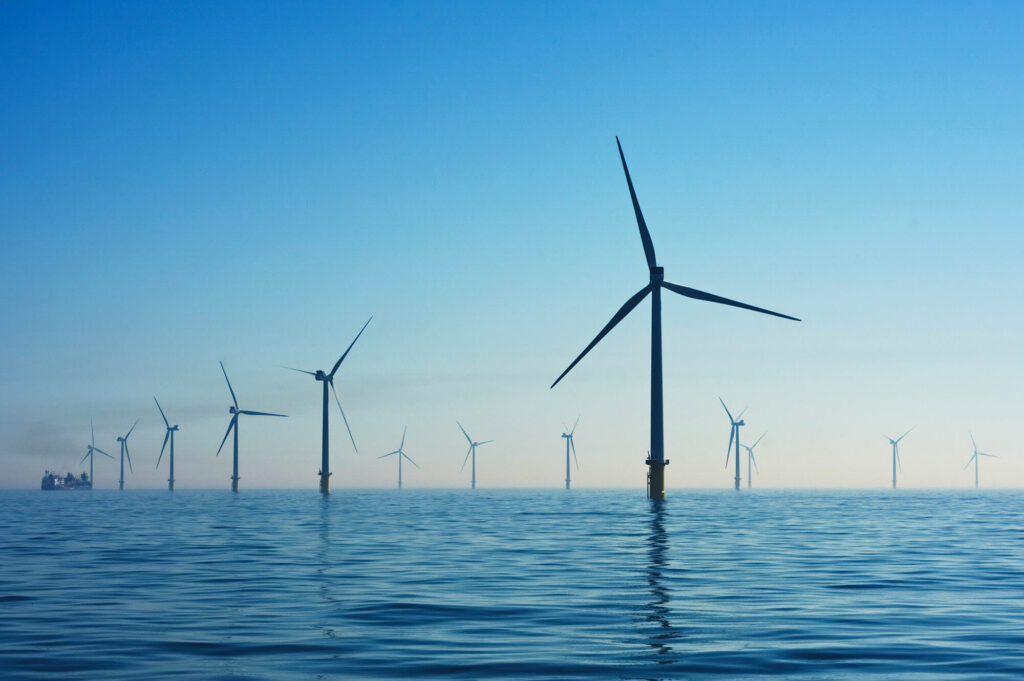
There is a significant unexplored energy resource in the waters. Utilizing this resource will be made feasible by offshore wind platforms, both those situated on fixed and floating platforms. They may also transform ports into centers of invention and development, which are crucial for building and maintaining their infrastructure.
The Potential of Offshore Platforms
Offshore wind is a clean, renewable and unlimited source of energy. As such, it is presented as an alternative to fossil fuels and as an important opportunity to advance decarbonization and address climate and environmental challenges.
“The oceans contain the largest energy resource on the planet. According to the World Bank, the global technical potential for offshore wind energy is estimated at 71 TW, 70% of which is in deep water, suitable for floating wind power. To put this in perspective, just 1% of the global offshore wind energy resource could generate enough electricity to meet current global demand”, points out Alex Raventos, CEO and co-founder of X1Wind, a company that develops innovative systems for the floating offshore energy sector.
Offshore wind farms harness the power of the wind produced at sea to generate electricity, which is then driven onshore. Currently, commercial offshore wind farms are mostly based on wind turbines on fixed foundations. However, the development of floating platforms promises major changes in the near future.
Floating platforms (also known as FOWP, for Flotating Offshore Wind Platform) are concrete, steel or hybrid structures on which wind turbines that capture wind energy are installed. These platforms anchor and provide buoyancy and stability to the wind turbine.
Unlike platforms with fixed foundations, these can be located in water depths of more than 60 meters to take advantage of the wind power produced offshore (where, with some exceptions, it is more intense and constant than on the coast or inland). The wind moves the blades of the wind turbine, which converts the kinetic energy into electricity. This electricity is then carried to the coast by submarine cables.
“A floating wind turbine works just like other wind turbines, but instead of having its tower fixed to the ground, it sits on a platform with mooring lines that connect to anchors on the seabed,” explains Raventos. “These mooring lines prevent the platform from drifting and give it the stability it needs to survive 25 to 30 years, with technology and design standards that come from the oil&gas sector with many decades of experience in the most extreme conditions,” he adds.
Floating platforms make it possible to take advantage of the great wind potential found in deep waters, those deeper than 60 meters. This is the continuation of an advance that began a few decades ago, when the first offshore platforms were erected, initially in shallow, shallow waters.
Figures, Challenges and Expectations
The past few years have been good years for the offshore wind industry. Over 2022 year, 8.8 GW of new offshore wind power was added to the grid, bringing total global capacity to 64.3 GW. These are data from the ‘Global Offshore Wind Report 2023’, by the Global Wind Energy Council (GWEC).
The entity also foresees an increase in capacity of 380 GW over the next few years, which would result in a total figure of 447 GW by the end of 2030. There are currently plans to increase capacity on all continents except Antarctica, although most of the projects will be developed in the Asia Pacific region.
The situation is different for floating wind power systems, which still need a boost to make commercialization a reality. According to the GWEC report, the global floating offshore wind portfolio doubled in the last 12 months and different projects are expected to be built in the coming years, which would allow commercialization by 2030. In this case, Europe is leading the race.
“Currently, the floating wind industry faces several factors that hinder growth: a lower technological maturity than other technologies (such as onshore wind or solar), its consequent higher unit cost and technological risk, and the lack of coordinated policies that allow both its deployment on a commercial scale and the associated cost reduction,” explains Raventos. “All these factors mean that the deployment of floating wind power is slower than expected.”
Read Also: Maritime Transport Decarbonization: Trends and Technologies
However, he adds, there is market interest, so it is important that pre-commercial projects are allowed to move forward to encourage technology development, better understand the impacts and ensure that the technology is ready for deployment by the end of this decade.
“In this sense, it is expected that testing platforms such as PLEMCAT in Catalonia, in which X1 Wind has been pre-selected to test its technology, play a decisive role, allowing not only to test and certify the technology, but also to better understand its potential impacts and introduce improvements that allow a sustainable and integrated operation with the environment and other uses of the sea,” adds Raventos.
Pros and Cons of Offshore Wind Farms?
Pros:
- Offshore wind speeds tend to be faster than on land. Small increases in wind speed yield large increases in energy production: a turbine in a 15-mph wind can generate twice as much energy as a turbine in a 12-mph wind. Faster wind speeds offshore mean much more energy can be generated.
- Offshore wind speeds tend to be steadier than on land. A steadier supply of wind means a more reliable source of energy.
- Many coastal areas have very high energy needs. Half of the United States’ population lives in coastal areas, with concentrations in major coastal cities. Building offshore wind farms in these areas can help to meet those energy needs from nearby sources.
- Offshore wind farms have many of the same advantages as land-based wind farms – they provide renewable energy; they do not consume water; they provide a domestic energy source; they create jobs; and they do not emit environmental pollutants or greenhouse gases.
Cons:
- Offshore wind farms can be expensive and difficult to build and maintain. In particular:
- It is very hard to build robust and secure wind farms in water deeper than around 200 feet (~60 m), or over half a football field’s length. Although coastal waters off the east coast of the U.S. are relatively shallow, almost all of the potential wind energy resources off the west coast are in waters exceeding this depth. Floating wind turbines are beginning to overcome this challenge.
- Wave action, and even very high winds, particularly during heavy storms or hurricanes, can damage wind turbines.
- The production and installation of power cables under the seafloor to transmit electricity back to land can be very expensive.
- Effects of offshore wind farms on marine animals and birds are not fully understood.
- Offshore wind farms built within view of the coastline (up to 26 miles offshore, depending on viewing conditions) may be unpopular among local residents, and may affect tourism and property values.
Offshore wind energy is offered as a key way to both expedite decarbonization and create a cleaner, more sustainable system, as well as diversify the function of ports and draw investment.




Comments