
 By

Pinterest isn’t just a place for inspiration. It’s a visual search engine that shapes how people find products, ideas and brands. With Gen Z and other high-intent users turning to Pinterest to shop, optimizing your profile for both in-platform and external search makes it a powerful part of your social media search strategy.
In this article, you’ll learn the essential strategies to use Pinterest SEO to capture intent, build authority and connect with your target audience where they’re actively engaged. First, let’s know what Pinterest SEO is.
What is Pinterest SEO?
Pinterest SEO is the practice of optimizing your Pinterest profile, Pins and boards for search discoverability. The network has become its own search engine as Pinners search for ideas, products and inspiration. But it also feeds search engines like Google, Bing and DuckDuckGo. Today, LLMs, AI snippets and other emerging tools are starting to surface Pinterest content. As these capabilities evolve, brands have a significant opportunity to use Pinterest to strengthen visibility across both social and AI-powered search.
By investing in Pinterest SEO, each Pin, interaction and a bit of traction you gain helps reinforce your E-E-A-T signals (experience, expertise, authoritativeness and trustworthiness) across search algorithms.
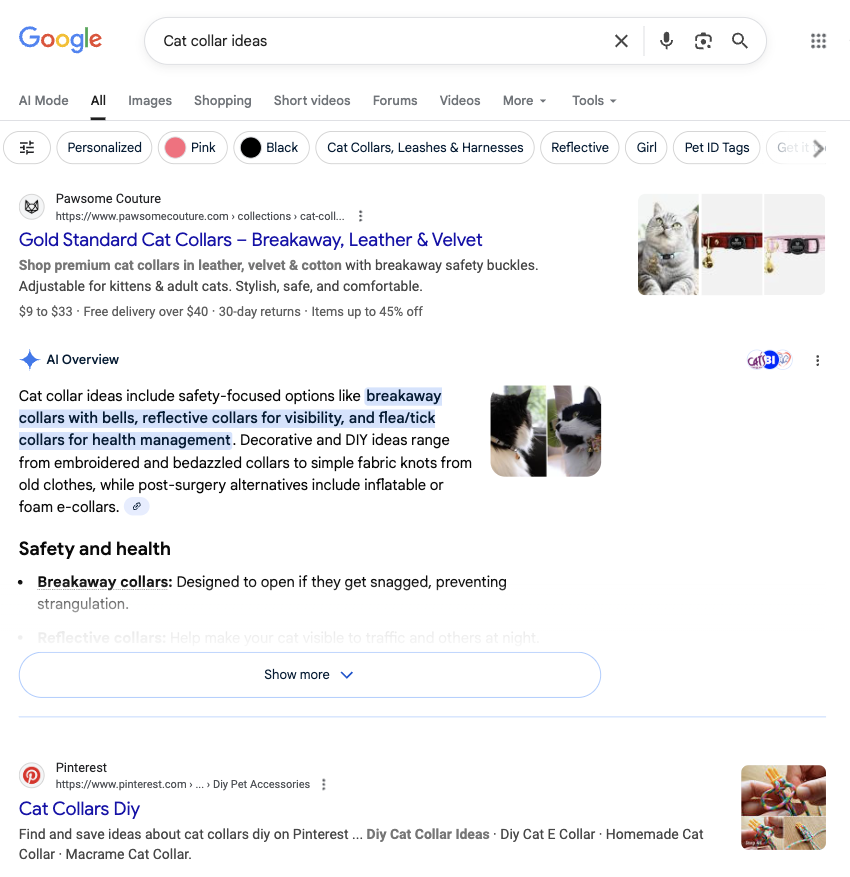
Pinterest is a visual-first search engine
Unlike many traditional search engines, Pinterest offers a visual-first experience. Users aren’t just searching for terms to find information. They also use Pinterest as part of their creative process, looking for inspiration, tutorials and products that meet their needs.
Here’s a Pin from Jones + CO Modern Mercantile, which features its face serum in an attractive display that appeals to its audience’s aesthetic preferences:
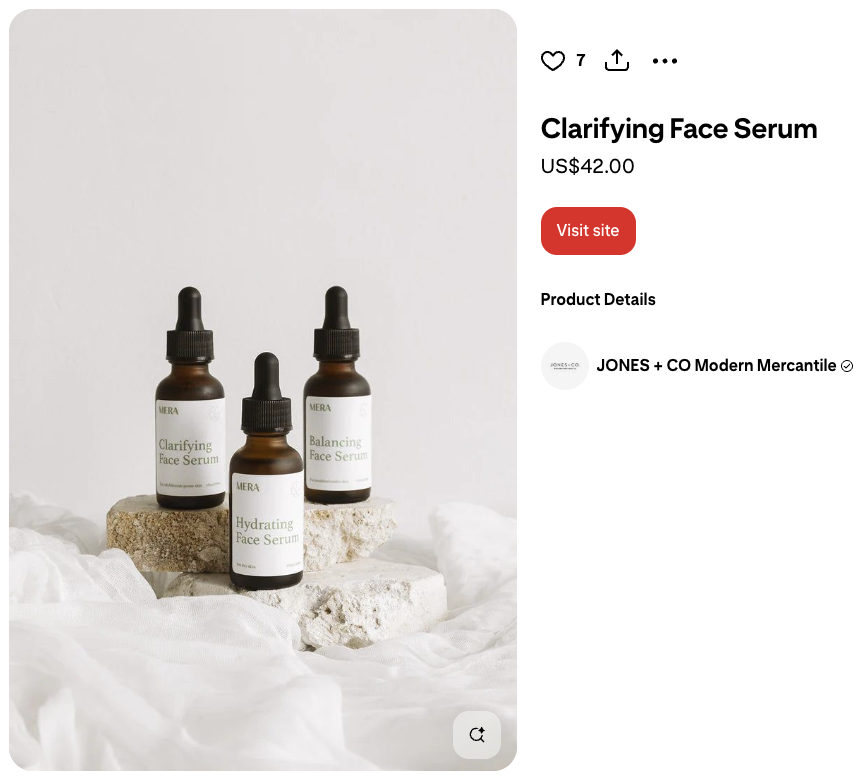
Source: Pinterest
The visual search experience reflects a shift in user behavior, especially among younger generations. Consider these Pinterest statistics about Gen Z habits:
- Gen Z makes up 42% of Pinterest’s monthly user base, which is especially significant since Gen Z spending power is expected to quadruple by 2030.
- According to Pinterest, Gen Z searches increase by 30% each year.
- Pinterest also notes that Gen Z users are 1.3 times more likely to make an online purchase each week.
These Pinterest trends reveal the opportunity your brand has to connect with audiences where they like to browse, plan and shop, while also supporting your broader SEO efforts.
Why Pinterest SEO Matters for Your Business
Unlike other platforms where users just doomscroll, Pinners are actively looking for inspiration and solutions to their problems. Consider this:
- 72% of users say Pinterest inspires them to shop even when they aren’t looking for anything specific.
- 66% of users make a purchase after seeing a brand’s Pins.
- 71% of users discover new products through the platform.
- 36% of users start a search on Pinterest instead of Google.
Pinterest has evolved from being only a social media platform into a standalone search engine where Pinners search for ideas, products, and inspiration. As technology redefines how users discover content, brands have an opportunity to use Pinterest to strengthen visibility across both social and AI-powered search.
Investing strategically in Pinterest SEO does more than just boost platform engagement; it builds a digital footprint that search algorithms can’t ignore. Every optimized Pin and engaged interaction serves to reinforce your brand’s E-E-A-T (experience, expertise, authoritativeness, and trustworthiness).
Perhaps the biggest shift is how Pinterest works in the broader search world. High-performing Pins are no longer confined to the app; they are frequently shown in Google AI Overviews and cited as sources by LLMs like Gemini and ChatGPT.
When search algorithms see your content consistently engaged with by real people, it validates your brand’s credibility. In a world where AI provides the majority of the answers online, being the cited visual authority on Pinterest is one of the most effective ways to keep your brand visible.
Here are some key reasons Pinterest works so well as part of a strong SEO strategy:
Audiences are searching on Pinterest
While Pinterest supports SEO across engines, it’s become a powerful network for internal search. Users often begin the buyer’s journey here as they look for ideas and products. Posting Pins through this top-of-the-funnel search channel helps you inspire your audience and guide them to action via CTAs within your posts.
Thankfully, with Pinterest marketing, you don’t have to guess what users are searching for. Pinterest data provides insights into search terms for keyword research, allowing you to create and optimize content aligned with user interests. Here’s a peek at some of the top trends and Pinterest keywords in the US:

SEO funnels are shifting away from Google alone
It’s not just SEO professionals who know search has changed. Your non-techy relative might use ChatGPT to find a recipe, and your best friend may rely on Google’s AI snippets to identify cold symptoms. As the traditional Google-first search funnel starts to fade, standard search engine optimization is evolving into search everywhere optimization. And Pinterest plays a central role in that shift.
According to SEO expert and uSERP co-founder Jeremy Moser, “Pinterest is unique because it structures visual content around intent-rich queries, essentially acting like a search engine built for discovery. From an AI perspective, that makes it incredibly valuable. When ChatGPT and other LLMs generate answers, Pinterest often appears as a source because boards and Pins are organized semantically: They combine keyword-optimized titles, descriptions and image context in a way that’s machine-readable. That means well-optimized Pins can influence not just Pinterest search visibility but also how AI systems interpret and return results on visual trends, lifestyle queries and even product discovery prompts.”
As Moser points out, Pinterest’s high-intent searches and crawlability make it a great opportunity for your social search strategy. Pinterest also offers analytics so you can track and measure results to prove ROI.
Read Also: LinkedIn Content Optimization for B2B Search
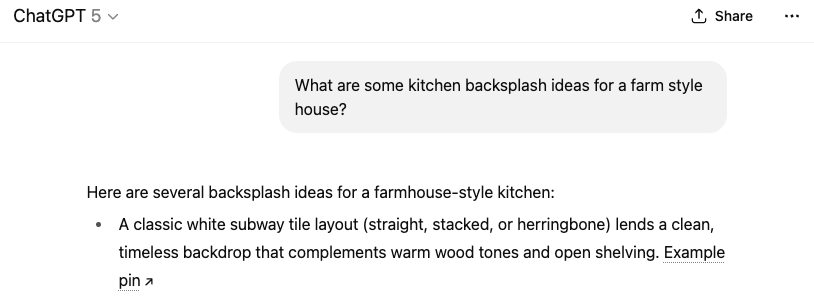
Here’s an example showing a user asking for kitchen backsplash ideas, and the AI returning a Pin as a source. That visibility could benefit a brand selling backsplashes or a local installation company looking to drive leads.
8 Strategies to Improve Your SEO on Pinterest
To grow your impact through Pinterest, include these key Pinterest SEO best practices in your marketing strategy:
1. Optimize your Pinterest profile and board descriptions
Your Pinterest profile should clearly communicate who you are, what you offer and whom you serve. For example, a bio description for a casual apparel brand might read:
“Comfortable apparel for active men who love nature. Get breathable shirts and flexible shorts for jogging, hiking and everyday outdoor activities.”
This brief description incorporates SEO keywords and signals while addressing these interests and needs:
- Active men’s lifestyles
- Nature
- Comfortable clothing
- Jogging and hiking
Your bio is just one opportunity to enrich your SEO. You can also optimize board titles and descriptions by focusing on the subcategory you want to feature and weaving in keywords that reinforce your brand positioning and topic authority.
2. Create visually compelling Pins that drive engagement
Since Pinterest is a visual search engine with a creative user base, you’ll want to publish appealing and engaging Pin designs. Pinterest offers a variety of formats for creating interactive, design-forward content, such as:
- Image Pins: A single featured image; the classic Pin that hosts a visual appealing image to share on your feed. With a business account and being in the ad market, you can also do a carousel of images or videos.
- Video Pins: A single video that plays automatically or multiple videos and images in one Pin. You can make them interactive by adding effects like text overlay, stickers and more.
- Rich Pins: A Pin type available through a business account that lets you sync website information to content like recipes, articles or products.
- Product Pins: A Pin type that shows products that are available to buy. When the user clicks, or taps a product Pin, they are directed to your product web page.
Each Pin should have fresh, modern visuals. If you use text, make sure the Pin title is clear, concise and doesn’t overwhelm the graphic. Prioritize value and give users a reason to engage.
Most importantly, make your Pins relevant to your audience. According to Sprout’s 2025 Content Benchmark Report, consumers prefer relatable, authentic and entertaining content, underscoring that quality matters more than volume.
3. Use Sprout’s tagging workflows to measure performance
Each Pin you publish should inform your SEO strategy. But tracking your progress, comparing it across organic and paid efforts and reporting business outcomes to stakeholders can be a challenge.
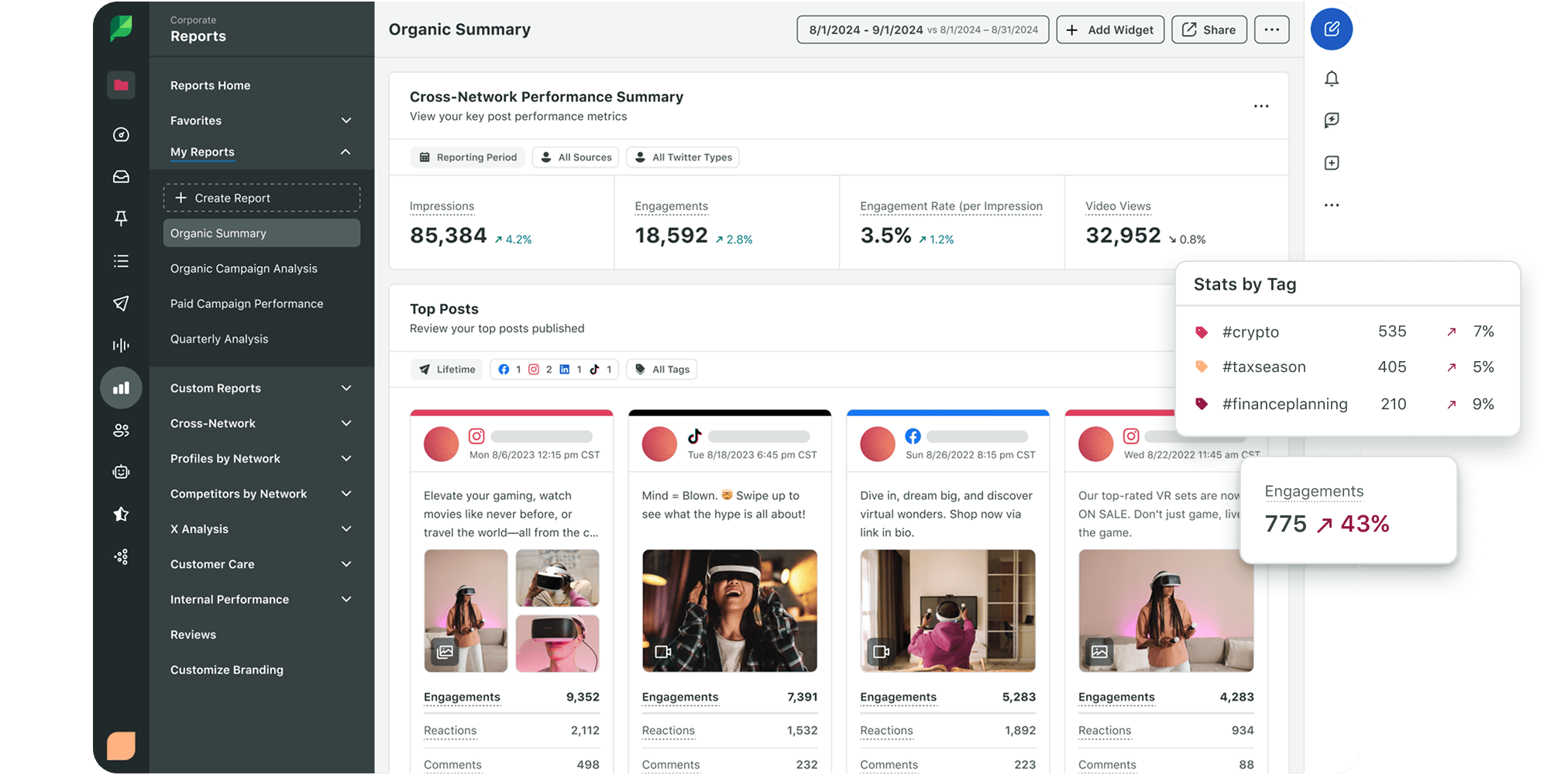
With Sprout’s Pinterest integration, you can tag posts to measure and report on your performance. For example, with the Post Performance Report and dashboard, you can track all your multi-channel social posts in one place and create comparison reports to communicate their results. Here’s an example of an outbound report:
4. Balance organic and paid strategies
Ads may not directly affect social media SEO, but paid and organic strategies work together to drive engagement and Pinterest saves. For example, Pinterest ads can help boost brand reach and awareness, indirectly supporting discoverability. Insights from both approaches also reveal emerging trends and consumer intent, helping inform your SEO strategy.
To avoid having your paid and organic strategies feel siloed, it’s helpful to develop unified reports that connect them. Sprout, for instance, lets you build reports for your organic Pinterest metrics and compare them to your other social media channels. Then, you can use Pinterest Analytics to look at your organic and paid strategies side by side.
5. Publish high-quality, original content consistently
According to the Index, originality leads to better results than simply posting for volume. Users crave authenticity and meaningful connections, and those experiences outperform fleeting trends. Since Pinterest supports longer-lasting content, the more relevant and intentional your Pins are, the more sustained engagement you’ll see.
6. Leverage Pinterest boards for keyword-rich engagement
Make keyword-rich, buyer-intent descriptions a priority in your Pinterest strategy. Boards and Pins have the potential to appear in both Pinterest and external search engine results.
By creating well-optimized boards with relevant Pins, you build indexable content that strengthens your authority and relevance in your target topic areas.
7. Optimize post timing with AI-driven insights
The first few minutes after publishing are often the most important, as strong early engagement signals value to Pinterest, increasing your reach and supporting your SEO.
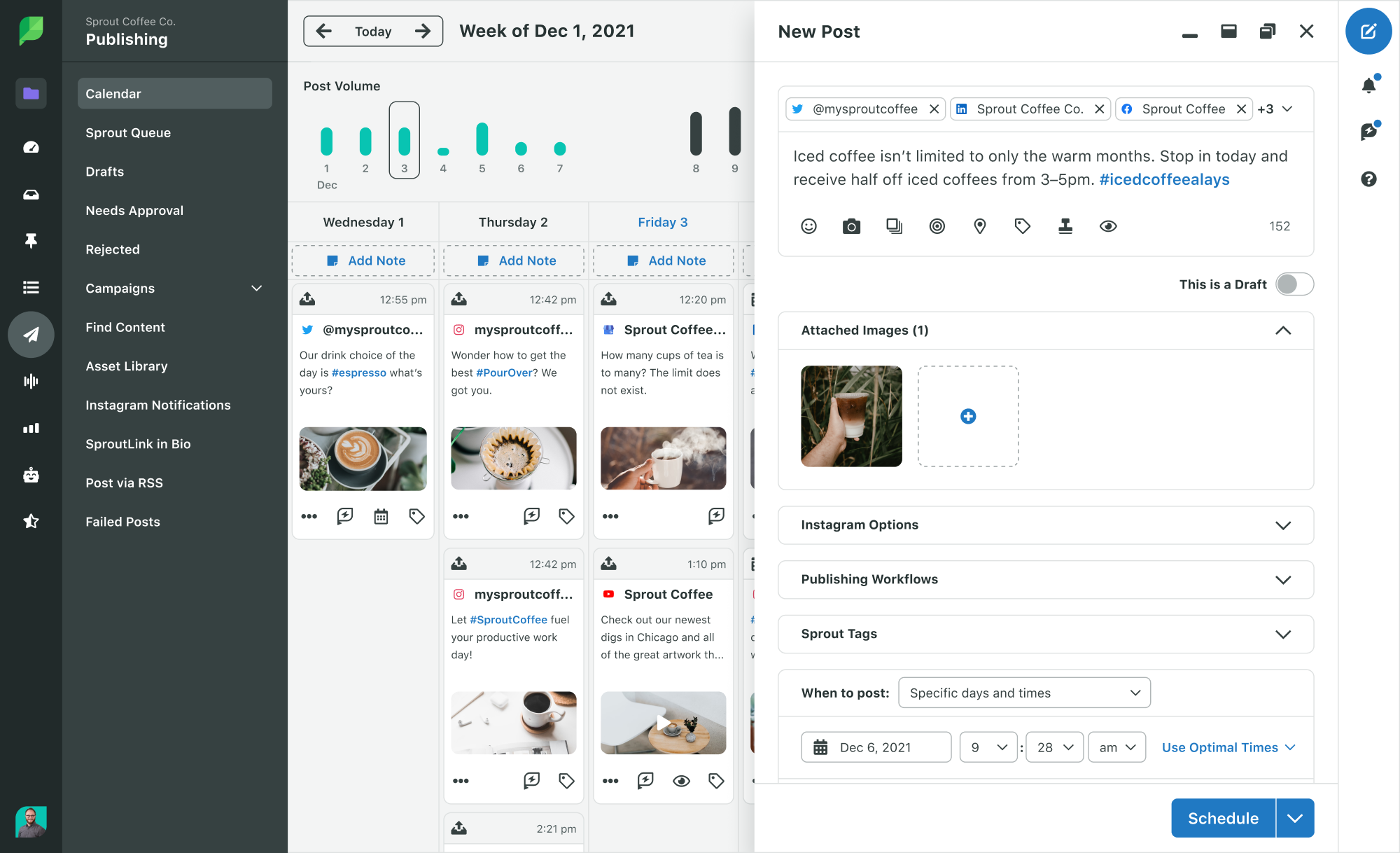
Using Sprout’s ViralPost®, you can maximize engagement by posting when your audience is most active. Its AI insights provide optimal send times based on activity, allowing you to schedule your Pins for the best ROI. Here’s how easy it is to schedule posts:

8. Build social signals with cross-channel amplification
Adding Pins in your blogs, newsletters and other online assets helps circulate your website content, encouraging organic sharing and impacting overall visibility. This can increase brand awareness, drive direct engagement and even lead to backlinks.
Some SEOs argue (and case studies support) that increased time on a page can positively influence how well your content ranks on Google. Amplifying your content on Pinterest can drive traffic from qualified users, increasing both engagement and rankings.
Sprout’s Publishing Calendar makes it easy to coordinate the cross-channel effort to share web pages from Pinterest and cross-post to other networks, like this:
The Most Important Pinterest SEO Ranking Factors
Several factors influence how your Pinterest content ranks. Here are a few Pinterest SEO tips to help strengthen your strategy:
Engagement signals that boost authority
The more that users engage with your posts, the more you’ll support E-E-A-T and build authority. Nat Miletic, founder of Clio Websites, a Calgary web design and SEO agency, explains the connection. “Publishing meaningful content […] on Pinterest strengthens expertise by demonstrating knowledge, supports authoritativeness by growing a visible following and builds trustworthiness. […] Platforms like Pinterest, LLMs and search engines can more easily connect the dots about your brand, which supports stronger rankings and visibility.”
Analyzing the “dots” that Miletic references starts with tracking engagement signals like saves (formerly Repins), clicks and comments. These indicators tell crawlers your content meets search intent.
Here’s a Video Pin from SDCTS, an apparel brand, featuring high-waist pants. It’s a good example of how to gauge engagement, boost authority and refine your digital marketing strategy for Pinterest SEO. It received 25 crawlable comments about the product, and users saving it signals value and increases reach.

Profile and board optimization
When building your profile, be sure to include relevant keywords that can appear in Pinterest search results and across other search engines.
Another way to optimize your profile is by creating boards. Pinterest boards are curated pages where you can collect and organize Pins. Think of them like library stacks with different areas devoted to a certain focus or genre. For example, a pet food brand might have boards like “Organic dog foods” and “Top dog treats.” If a board gets too large, you can create sections for micro-categories such as “dog treats for sensitive stomachs” and “dog treats for large dogs.”
Each board is an indexable page that provides opportunities to add keyword-rich titles and descriptions that improve search performance. Creating highly targeted boards increases your chances of showing up in results for specific needs.
Before you begin restructuring your boards for search, performing a Pinterest audit will help you identify which existing boards are already ranking for your target terms and which ones need a keyword refresh to better align with your SEO goals.
Keyword strategy for Pins and descriptions
The right keywords aren’t just effective for boards. They also help keep your Pins discoverable long after publishing. Since Pinterest content is evergreen, Pins continue to surface in search as users engage with and collect them over time. To increase your visibility and long-term reach, remember to use keywords in your titles, descriptions and alt text.
How to Use Keywords on Pinterest
Once you have your Pinterest keywords, you need to place them strategically to satisfy the Smart Feed.
Once you have identified your Pinterest keywords, the next step is to strategically use them across your profile to satisfy the Smart Feed. Think of Pinterest as a massive filing cabinet; your keywords are the labels that tell the algorithm exactly which drawer your content belongs in. To maximize your visibility, you must integrate these terms across four important areas.
1. Pinterest Profile Bio
Your profile bio is the first thing both users and the Pinterest algorithm see, and it serves as your primary identity tag. Instead of a generic description, use this space to define your niche immediately using your most important broad-level keywords. This makes sure that when users search for those keywords, your account comes up in their results.
2. Board Names and Descriptions
Boards are the structural backbone of your Pinterest SEO strategy. Pinterest uses board titles and descriptions to understand how to categorize your collections. In the board description, write two or three sentences that use secondary long-tail keywords. This helps the algorithm build a contextual map of your content. When you pin a new image to an optimized board, that Pin immediately inherits the board’s SEO authority, giving it a head start in the rankings.
3. Pin Titles and Descriptions
The Pin title is your strongest signal for search. It should be punchy, relevant, and lead with your primary keyword. Following the title, your Pin description provides the necessary context for the Pinterest search engine. While you should write for humans first, ensure you weave in related keywords that answer the user’s search intent.
4. Content and Image Text Alignment
Modern Pinterest SEO tips must include optimizing image text, as the algorithm now uses optical character recognition (OCR) technology to scan your graphics. If your metadata and image text have a logical connection, your topic relevance increases. Furthermore, make sure the visuals of your photo match your keywords, as the AI can now detect if a visual style conflicts with its labels, which can lower your ranking confidence score.
How to Measure Pinterest SEO Success
Each Pinterest SEO initiative should support credibility to strengthen E-E-A-T signals to Google and improve business outcomes. Use these two KPI categories to measure results and SEO success:
Pinterest search results:
- Saves signal that your content is resonating with audiences and is discoverable.
- Click-through rate shows if your descriptions, visuals and Pins effectively motivate searchers to take action.
- Keyword reach indicates whether your SEO strategy is targeting the right terms.
- Impressions reveal how often your content appears on Pinterest users’ screens, which also informs discoverability.
Overall SEO KPIs:
- Pinterest referral traffic indicates whether your audience is discovering your website through Pinterest searches.
- Pinterest page rankings for Google keywords indicates how popular your Pins are and the extent of visibility your Pins may be getting in Google search results.
- Domain authority (a Moz metric) can be used to estimate how strong your website’s authority is in the eyes of Google, with a higher score making it easier to rank on SERPs and within AI-generated results.
- Visibility in LLM and AI search results highlights how Pinterest SEO contributes to your discoverability across AI-powered tools.
Sprout’s Premium Analytics, an add-on capability to the Reporting suite, provides unified dashboards and advanced reporting capabilities that let you filter data and focus on the metrics that matter most. These insights make it easier to align your SEO strategy with measurable business goals.
Traditional Search vs. Pinterest Search
Pinterest is fundamentally different from a text-based information retrieval system like Google. While traditional search engines focus heavily on text density, backlink profiles, and technical site health, Pinterest search is a visual discovery engine.
Unlike a standard search engine that matches your search to a webpage’s metadata, Pinterest uses a system of annotations to categorize content. These are keywords between one and six words long that Pinterest uses to understand and categorize your images.
Because Pinterest is a visual-first platform, it doesn’t just rank based on a keyword match; it ranks based on a Confidence Score. This score is a combination of three critical pillars:
- Pin Quality: This measures how much information the AI can extract. Pins with high-resolution imagery and clear, readable text overlays receive higher scores.
- Pinner Quality: Your history as a creator matters. The algorithm evaluates your consistency, how often your content is saved by niche-specific communities, and your overall account authority.
- Topic Relevance: This assesses how accurately your Pin fits into the broader theme of your board. Accounts that pin unrelated topics struggle, while those that maintain tight topical authority see their Pins resurface daily in the Smart Feed.
Master Keyword Research for Pinterest
To effectively use SEO for Pinterest, you first need to understand what your audience is looking for. Much like using keywords for your content strategy, keyword research for Pinterest can be done in several ways:
- Manual Research and “Alphabet Soup”: Use the Pinterest search to see what it auto-suggests as you type. You can try the alphabet soup method: type your main keyword followed by “a,” then “b,” and so on (e.g., “spring outfits a,” “spring outfits b”) to find long-tail keywords.
- Pinterest Trends Tool: Use the official Pinterest Trends page to see what is currently gaining traction and to identify the best time of year to post specific content.
- Google Trends Tool: Another search tool you can use is the Google Trends tool. This will help you see what people are searching for on the web right now. It can help confirm what you’re seeing on Pinterest.
Focus on search intent. Instead of targeting broad terms like “pizza recipes,” look for more specific SEO-friendly pin keywords like “gluten-free pepperoni pizza recipes” to capture users closer to a decision point.
Summary
Checklist for Pinterest Success
- Optimize your profile and boards with Pinterest SEO best practices.
- Create high-quality, SEO-friendly pins that match user search intent.
- Use the Pinterest Trends tool to stay ahead of seasonal shifts.
- Monitor your progress through Pinterest analytics to see what content resonates.
By treating Pinterest as a visual search engine and implementing these Pinterest SEO techniques, you can turn your profile into a consistent driver of traffic and revenue.









Comments