
 By
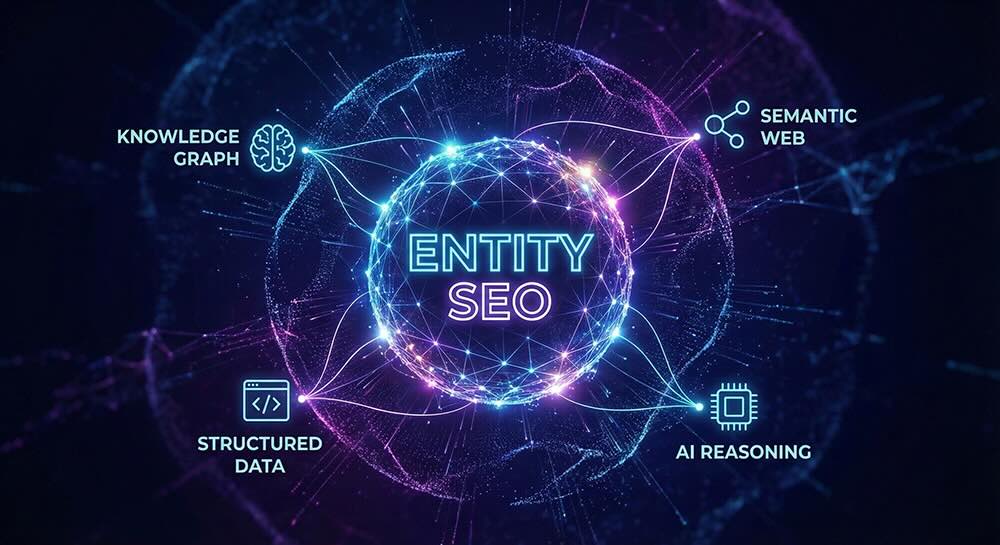
Entities in modern SEO are separate concepts, people, places, or things that search engines understand through semantic search and use to develop topical authority rather than keyword matching. They enable algorithms to grasp content context, disambiguate phrases, and map relationships, hence increasing search visibility, Knowledge Graph presence, and user intent alignment.
Key Aspects of Entities in SEO
- Context & Meaning: Entities help search engines understand the “why” behind a query, not just the keywords, allowing for better, more accurate results.
- Disambiguation: Entities clarify the specific meaning of terms (e.g., distinguishing the entity “Mercury” as a planet vs. the car brand).
- Topical Authority: By comprehensively covering entities within a niche, sites establish themselves as authoritative sources.
- Schema Markup: Using structured data connects content to recognized, authoritative concepts, increasing the likelihood of appearing in rich snippets and the Knowledge Graph.
- Future-Proofing: Entity-based SEO aligns with search engine evolution away from simple keyword matching towards semantic understanding, making strategies more resilient to algorithm updates.
How Entities Enhance Modern SEO
- Improved User Experience: Content that understands user intent leads to higher engagement and lower bounce rates.
- Voice Search & Natural Language: Entities enable search engines to answer complex, natural-language queries by understanding the relationships between topics.
- Mobile-First Indexing: Entities make content easier for algorithms to process across different platforms, including mobile, regardless of synonyms or language, enhancing visibility in diverse search formats.
Previously, search engine optimization (SEO) focused on the number and strategic placement of keywords, whether they were long-tail or short-tail, throughout website content or intelligently included into blog entries.
This all changed when Google introduced its knowledge graph, a storehouse of factual information that the company utilizes to improve its search results for users. This signaled a shift from relying solely on keywords, as search engine crawlers valued rich snippets and entities on search engine results pages (SERPs).
Today, Google employs additional technologies to determine the true meaning of keyword searches and inquiries. The advent of “entities,” information stored in a database or information management system, and idea categorization has transformed Google’s search capabilities.
While keywords are still vital since they relate your content to queries, SEO specialists are increasingly using entity-based SEO tactics to boost the ranking of their content. The landscape of search engine results is increasingly defined by context and relevance, with entities playing an important role in improving these critical characteristics.
What is Entity-Based SEO?
While keywords remain crucial in SEO strategies, they fail to capture the full spectrum of how people search for information. For instance, a search for “Paris” could lead to results related to various topics like Paris Jackson or Paris Hilton, the city of Paris (in France or Texas), movies such as Last Tango in Paris or Paris Is Burning, songs like From Paris to Berlin by Danish dance-pop group Infernal, or countless other options.
Entity-based SEO relies more on context, beyond keywords, to help users discover the information they’re looking for. Google’s algorithms analyze search queries to determine which entities are present and automatically group related entities into clusters. This clustering helps to improve the relevance and accuracy of search results, making it easier for users to find the information they’re looking for.
Although entity-based SEO benefits searchers, it has added a layer of complexity for content creators and marketers. Three ways entity-based SEO has reshaped the landscape include:
- Entities allowed SEO to improve mobile results. Entities also improved mobile-first indexing, which has become more prevalent than desktop searches.
- Entities can be found regardless of homonyms, synonyms, and foreign language use, thanks to context clues. For instance, a search for “red” will include results for “rouge” or “rojo,” if the searcher’s settings allow for this.
- Rich snippets, which include things like photos and customer ratings as part of their results, generally outperform even number-one search results.
What are the Benefits of Entity-Based SEO?
There are several benefits you can glean from embracing entity-based SEO.
1. Improved User Relevance
Targeting specific entities in SEO strategies goes beyond the traditional approach of just stuffing keywords into your copy. It involves a deeper understanding of the relationships between different entities, enabling websites to deliver content that precisely matches user intent. This improved relevance results in users finding the information they want more efficiently.
When users can find the content they want, it boosts engagement and contributes to higher satisfaction levels. Importantly, this targeted relevance directly impacts search engine rankings, as search algorithms increasingly prioritize content that addresses user needs effectively.
2. Better User Experience
Optimizing for specific entities improves user experience by providing a more organized and intuitive navigation journey. Think of it like organizing a library – when everything is neatly categorized and easy to find, people are more likely to explore. The same is true for websites. This optimization extends to aspects such as user interface design, site architecture, and content structure, all of which contribute to a website that is easy to navigate and understand. A positive user experience not only keeps visitors engaged but also contributes to brand loyalty and a positive online reputation.
3. Greater Flexibility
Entity-based SEO opens up a world of possibilities for websites in terms of targeting a broader range of keywords and topics. Unlike a rigid reliance on specific keywords, which may limit the scope of content creation, entity-based SEO allows for much more flexibility. Websites can explore a variety of themes, related entities, and subtopics within a broader context.
Read Also: How to Develop an Entity Optimization Strategy
This flexibility is particularly advantageous in adapting to evolving user trends and search engine algorithms. By diversifying content creation and targeting a wider range of entities, websites can cast a broader net, appealing to a larger audience and maintaining relevance in a dynamic digital landscape.
Types of Entities and Their Significance
Entities can be categorized into various types, each with its own significance in search. Common entity types include:
1. People: Individuals, historical figures, or fictional characters
2. Organizations: Companies, institutions, or groups
3. Places: Geographic locations, landmarks, or buildings
4. Products: Tangible goods or services
5. Events: Occurrences or happenings
6. Concepts: Abstract ideas or theories
Understanding these entity types is crucial for effective entity SEO. By identifying and optimizing for relevant entities within your content, you can help search engines better understand the context and relevance of your web pages. This, in turn, can lead to improved search rankings and increased visibility for queries related to those entities.
Implementing Entity SEO Strategies
To effectively implement entity SEO strategies, consider the following approaches:
1. Structured Data Markup: Use schema.org vocabulary to add structured data to your web pages, helping search engines understand the entities and relationships within your content.
2. Content Optimization: Create comprehensive, authoritative content that thoroughly covers relevant entities and their relationships.
3. Internal Linking: Develop a strong internal linking structure that connects related entities and reinforces topic relevance.
4. External Link Building: Acquire high-quality backlinks from authoritative sources that mention relevant entities and establish your website’s expertise in specific areas.
5. Entity-rich Snippets: Optimize your content for featured snippets and other SERP features by providing clear, concise answers to entity-related queries.
Measuring and Monitoring Entity SEO Performance
To gauge the effectiveness of your entity SEO efforts, focus on the following metrics and tools:
1. Search Visibility: Monitor your rankings for entity-related queries and track improvements in SERP features like knowledge panels and featured snippets.
2. Organic Traffic: Analyze increases in organic traffic for pages optimized for specific entities.
3. User Engagement: Measure improvements in user engagement metrics such as time on page, bounce rate, and pages per session for entity-optimized content.
4. Schema Markup Validation: Use tools like Google’s Structured Data Testing Tool to ensure your schema markup is correctly implemented and recognized by search engines.
5. Knowledge Graph Monitoring: Keep an eye on your brand’s presence in knowledge graphs and work on expanding your entity associations over time.
How to Optimize for Entity-Based SEO
The focus has shifted from keywords to constructing a content spiderweb based on your audience’s search patterns. Below, we offer tips to guide your transition from a keyword-centric strategy to entity-based SEO.
1. Analyze Your Website
First, you need to determine the main entities relevant to your website or business. Identify the main themes, subjects, and topics that define your online presence, considering your existing content, services, and the overall design of your online platform. This will help you decide your main entities. By carefully weighing these elements, you can effectively pinpoint and decide on your main entities.
For instance, if you’re running a fitness blog, your main entities could include essential topics like “nutrition,” “workouts,” “wellness,” and “healthy lifestyle.” These themes represent the foundational aspects that define your online presence, forming a basis for a more targeted and relevant approach to content creation.
In addition to determining your main entities, thoroughly assess your current Google ranking for relevant keywords. Identify the specific terms and phrases that have played a role in boosting your visibility in search results. This insightful assessment reveals your existing strengths and highlights areas that may need improvement regarding your overall search engine performance.
Competitor research adds another layer to your SEO strategy. Examine how your competitors are positioned within the digital landscape. Scrutinize their content strategies, delve into their keyword focuses, and gain an understanding of their overall approach to SEO. This comparative analysis serves as a roadmap, helping you identify untapped opportunities for differentiation and improvement.
2. Determine Relevant Topics
After conducting a thorough analysis of your website, ensure the chosen topics fit with your brand identity and messaging. The themes you select should echo your overarching business goals and values, contributing to the creation of a unified and cohesive online presence.
Equally important is making sure the topics you choose resonate not only with Google’s recognition algorithms but also with your target audience. Gain a deep understanding of the interests, preferences, and pain points of your audience to tailor your content effectively. By creating content that speaks directly to the needs and desires of your audience, you establish a more meaningful connection and increase the likelihood of engagement.
It is also worth discussing niche topics within your industry as well. These could be specific aspects or emerging trends that might not be extensively covered by your competitors. Exploring these niche topics allows you to diversify your content within your industry, positioning yourself as an authority in various subfields. This strategy improves your credibility and ensures your content remains fresh and relevant, meeting a broader spectrum of interests within your target audience.
3. Stay Informed on the Latest Trends
Start by setting up a continuous market research system to stay updated on industry trends and shifts in user behavior. This may involve subscribing to relevant publications such as industry journals, magazines, and newsletters, which provide detailed analyses, case studies, and expert opinions on emerging trends and changing consumer preferences.
Active participation in webinars and industry conferences is also crucial. These events offer opportunities to engage directly with thought leaders, experts, and peers, gaining firsthand knowledge of practical strategies, emerging technologies, and the evolving industry landscape. Networking during such events can provide valuable insights and potential collaborations.
Regularly analyze keywords and user search behavior to stay ahead. Tools like Google Trends visually represent keyword popularity over time, helping you identify trending queries. This analysis is essential for adapting your content strategy to align with evolving user interests, ensuring your content stays relevant and resonates with your audience.
4. Develop a Content Strategy
Finally, build a content strategy around clusters of related topics, following a simple entity-based framework. Group together related content, making your website more relevant and organized. Use a strong linking strategy within these content clusters. Linking related articles or webpages helps users navigate and strengthen the connections for search engines.
Perhaps consider implementing multimedia elements, like images, videos, or infographics to your content. This makes it more engaging for users viewing the content and provides additional context for search engines, contributing to a more comprehensive understanding of your content.
Most importantly, focus on specific keywords to make sure your content meets the needs of your audience. Understand what your audience is searching for and create content that answers those questions. This approach not only improves the user experience but also aligns your content with how search engines are evolving.
It’s crucial to depart from the outdated practice of keyword stuffing and embrace the dynamic evolution of SEO. Now is a good time to consider the modern SEO approach that focuses more on entities and context, moving beyond the reliance on traditional keyword-centric methods.
If you haven’t recently updated your website or digital assets, there is a risk you may fall behind. Entity-based SEO is a new concept that hasn’t fully caught the attention of many people yet. This gives you an amazing opportunity to gain a competitive edge.
Finally
Entity SEO is a paradigm change in search engine optimization that emphasizes optimizing for concepts and relationships rather than keywords. Understanding and executing entity SEO tactics can help website owners enhance their exposure in search results, provide more contextual information to search engines, and develop better links with relevant topics.
Entity SEO involves using knowledge graphs, optimizing for various entity kinds, implementing structured data markup, and providing thorough, authoritative content. As search engines evolve, embracing entity-based SEO will become increasingly important for preserving and improving search visibility in today’s digital landscape.





Comments