
 By
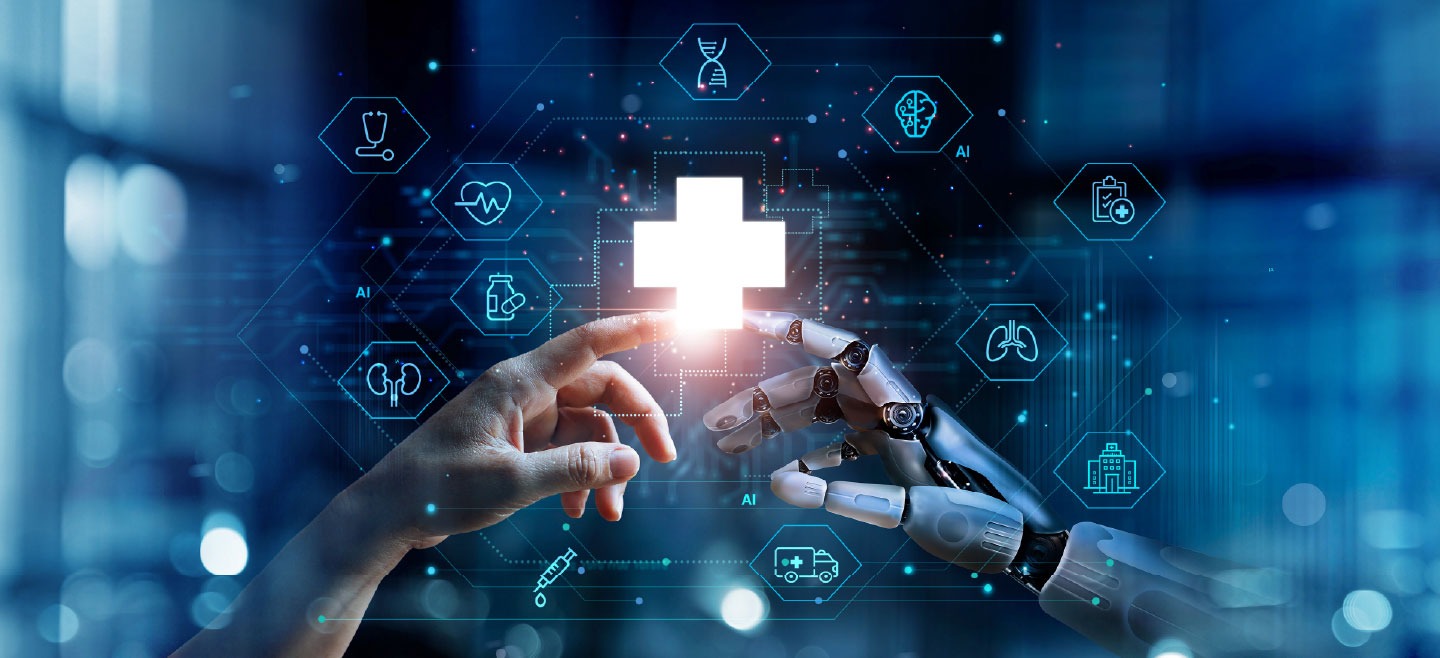
The artificial intelligence (AI) industry in healthcare is rapidly expanding, driven by the desire for increased efficiency, faster medication discovery, and improved diagnostic accuracy.
The global market is expected to exceed $765 billion by 2035, expanding at a CAGR of approximately 35-37%. AI-powered medical imaging, generative AI for drug development, and clinical decision support systems are among the most significant advancements.
Market Size and Growth Projections
- Current Market & Growth: The AI in healthcare market was valued at $15.4 billion in 2022 and is projected to grow at a CAGR of 37.5% through 2030. Another report projects the market reaching $765.12 billion by 2035 with a CAGR of ~35.9%.
- Leading Segments: AI in medical diagnostics holds the largest revenue share (21.1% in 2022), followed by predictive analytics and drug discovery.
- Generative AI Segment: The generative AI in healthcare market specifically is expected to grow from $3.74 billion in 2026 to $31.51 billion by 2034, with a CAGR of 30.53%.
- Regional Dominance: North America leads the market (35.3% share in 2022) due to high investment in infrastructure.
Key Breakthroughs & Applications
1. Medical Imaging & Diagnostics
- Real-time Analysis: AI systems can now provide real-time diagnostic imaging analysis during procedures, improving accuracy and reducing time, such as in stroke detection (91.7% sensitivity) and pneumothorax detection.
- Early Detection: AI analyzes scans to identify disease markers (e.g., Alzheimer’s, cancer) years before symptoms appear.
- Diagnostic Accuracy: In 83 studies, AI models achieved a pooled diagnostic accuracy of 87.0%, comparable to, or exceeding, human performance (86.4%).
2. Drug Discovery & Research
- Accelerated R&D: AI has reduced target validation times by up to 70% and increased success rates from 12% to 29%.
- Protein Folding: Generative AI is used to model protein structures to create new drugs, predicting structures with a mean error of just 2.1 Angstroms.
- “Undruggable” Targets: AI enables the design of small-molecule inhibitors for targets previously thought impossible to treat.
3. Clinical Decision Support & Patient Care
- Multimodal AI: Systems that analyze diverse data (imaging, EHRs, genomic data) simultaneously have shown a 47.3% reduction in diagnostic uncertainty.
- Virtual Nursing & Admin: AI assists with virtual nursing and automates administrative tasks, reducing documentation time by 51%.
- Predictive Wearables: AI-powered wearables can detect health deterioration, such as heart failure, up to 8 days before traditional symptoms appear.
4. Privacy-Preserving AI (Federated Learning)
- Collaborative Training: “Federated learning” allows AI models to be trained across multiple institutions without sharing sensitive patient data, reducing privacy risks by 96% while maintaining high accuracy.
Major Players & Partnerships
Leading companies driving these advancements include Google, GE Healthcare, IBM, Microsoft, NVIDIA, Oracle, and Medtronic. Recent collaborations include:
- Google Cloud & Mayo Clinic: Using generative AI to improve clinical workflows.
- NVIDIA & Medtronic: Accelerating AI-based solutions in patient care.
- Microsoft & Epic Systems: Integrating generative AI into electronic health records (EHR).
Challenges and Future Outlook
While AI is transforming healthcare, the industry is still considered “below average” in adoption compared to other sectors. Key challenges include data privacy, algorithmic bias, and the “black box” problem (lack of transparency in decision-making). The future will focus on explainable AI (XAI) to build clinical trust and better integration into everyday workflows.
With 4.5 billion people now lacking access to vital healthcare services and an 11 million health worker shortage projected by 2030, AI has the ability to help bridge the gap and improve global healthcare.
It may even put us back on schedule to accomplish the United Nations’ Sustainable Development Goal of reaching universal health coverage by 2030.
While the technology is fast evolving, healthcare’s adoption of AI is “below average” when compared to other industries, according to the World Economic Forum’s white paper, The Future of AI-Enabled Health: Leading the Way.
The extent of private investment in AI in the healthcare industry varies. Furthermore, “AI digital health solutions hold the potential to enhance efficiency, reduce costs and improve health outcomes globally,” according to the research. Here are some examples of how AI technologies are already making an impact in medicine.
AI can interpret brain scans
A new AI software is “twice as accurate” as professionals at examining the brain scans of stroke patients. Two UK universities trained the software on a dataset of 800 brain scans of stroke patients and then trialled it on 2,000 patients.
The results were impressive. Alongside the AI model’s accuracy, the software was also able to identify the timescale within which the stroke happened – crucial information for professionals.
As Dr Paul Bentley, consultant neurologist, told the Health Tech Newspaper: “For the majority of strokes caused by a blood clot, if a patient is within 4.5 hours of the stroke happening, he or she is eligible for both medical and surgical treatments. Up to 6 hours, the patient is also eligible for surgical treatment, but after this time point, deciding whether these treatments might be beneficial becomes tricky, as more cases become irreversible. So it’s essential for doctors to know both the initial onset time, as well as whether a stroke could be reversed.”
AI can spot more bone fractures than humans can
Surprisingly, urgent care doctors miss broken bones in up to 10% of cases. What’s more, X-ray technicians are both in short supply and overloaded.
Read Also: Machine Learning vs Deep Learning: Market Impact
So using AI to do the initial scan could potentially avoid both unnecessary X-rays and missed fractures. The UK’s National Institute for Health and Care Excellence (NICE) says the technology is safe, reliable and could reduce the need for follow-up appointments.
But there are concerns around the fast rollout of AI in healthcare.
“It is important that people using these tools are properly trained in doing so, meaning they understand and know how to mitigate risks from technological limitations … such as the possibility for wrong information being given,” Dr Caroline Green of the Institute for Ethics in AI at the University of Oxford told the BBC.
Assessing ambulance needs with AI
In the UK, around 350,000 people are taken by ambulance to hospital each month. It’s down to paramedics to decide who does or doesn’t need to go, and always with an awareness of how few beds are available.
A study in Yorkshire in the north of England found that in 80% of cases AI could correctly predict the patients that needed to be transferred to hospital. The AI model was trained on factors such as a patient’s mobility, pulse and blood oxygen levels and chest pain – it also proved to respond without bias. NICE did caution, however, that before being put into more widespread use, more training was needed.
Detecting early signs of more than 1,000 diseases
A new AI machine learning model can detect the presence of certain diseases before the patient is even aware of any symptoms, according to its maker AstraZeneca. Using medical data from 500,000 people who are part of a UK health data repository, the machine could “predict with high confidence a disease diagnosis many years later”.
Slavé Petrovski, who led the research, told Sky News: “For many of these diseases, by the time they manifest clinically and the individual goes to the doctor because of an ailment or visible observation, that is far down the line from when the disease process began.
“We can pick up signatures in an individual that are highly predictive of developing diseases like Alzheimer’s, chronic obstructive pulmonary disease, kidney disease and many others,” he said.
Another UK study has found that an AI tool can successfully detect 64% of epilepsy brain lesions previously missed by radiologists. Trained on the MRI scans of over 1,100 adults and children globally, the AI tool was able to spot lesions more quickly than a doctor, but also discover tiny or obscured ones that had evaded the human eye.
“It’s like finding one character on five pages of solid black text,” lead researcher Dr Konrad Wagstyl told the BBC. “AI can find about two-thirds that doctors miss – but a third are still really difficult to find.” Combining AI’s findings with human oversight and expertise has the potential to speed up both diagnosis and cure, the researchers say.
Clinical chatbots to guide healthcare decisions
Doctors must make informed, swift medical decisions: AI could potentially speed these up, but it could also provide unreliable or biased information.
A US study found that standard large language models (LLMs) like ChatGPT, Claude or Gemini were unable to provide clinicians with sufficiently relevant or evidence-based answers to their medical questions. But ChatRWD, a retrieval-augmented generation (RAG) system – which essentially combines LLMs with retrieval systems to improve output – produced useful answers to 58% of the questions (compared with 2%-10% for the LLMs).
Digital interfaces are increasingly being rolled out to help triage patients, too. In an insight report from 2024, part of the World Economic Forum’s Digital Healthcare Transformation Initiative, a case study on digital patient platform Huma, revealed it could reduce readmission rates by 30%, time spent reviewing patients by up to 40% and “alleviated the workload of healthcare providers”.
The report anticipates a future in which technologies like these could “dramatically transform the patient experience. People who are generally healthy can use self-monitoring devices to optimize their mental and physical health, while those with health issues will have access to a wide range of digital solutions”.
AI and traditional medicine
Practiced in 170 countries and used by billions of people, traditional medicine has maintained its relevance in the modern world in part because of its emphasis on a holistic approach to healthcare. And while AI and traditional medicine might seem an unlikely pairing at first, studies demonstrate the two can complement each other well. A new brief from the World Health Organization (WHO) and partners, ‘Mapping the application of artificial intelligence in traditional medicine’, shows how AI can enhance traditional, complementary and integrative medicine (TCIM) while protecting cultural heritage.
India is the first country to launch a traditional knowledge digital library, utilizing AI tools to catalogue and analyze indigenous medical texts. The country is also exploring how AI and Ayurgenomics – a field which combines the ancient Indian medical system of Ayurveda with modern genomics – can intersect, to see what herbal formulations could help tackle modern diseases.
Similarly, in Ghana, researchers are using a learning model to help identify and classify medicinal plants, while in South Korea, AI is being used to analyze traditional medicine compounds to treat blood disorders.
The global TCIM market is expected to reach nearly $600 billion in 2025 – and AI looks set to accelerate that market further and faster. The new brief stresses the importance of safeguarding Indigenous data sovereignty in the process.
“AI must not become a new frontier for exploitation,” said Dr Yukiko Nakatani, WHO Assistant Director-General for Health Systems. “We must ensure that Indigenous Peoples and local communities are not only protected but are active partners in shaping the future of AI in traditional medicine.”
AI for healthcare admin
Administrative tasks are both inevitable and time-consuming in the medical field. Using AI co-pilots could free up clinicians to focus more of their time on patients.
Microsoft has recently announced its Dragon Copilot, an AI healthcare tool that can listen to, and create notes on, clinical consultations. And Google already has a suite of AI models specifically tailored to alleviate some of the administrative burdens in healthcare. In Germany, an AI platform called Elea has cut testing and diagnosis times from weeks to hours and its founders are determined to show that the technology “can be an ally, not an obstacle”. Co-founder Dr Sebastian Casu told EU-Startups: “No one joins the healthcare sector to spend hours on admin”.
Of course, having an AI tool listening in and taking notes on your doctor’s appointment will not appeal to everyone. A recent study in the UK found that just 29% of people would trust AI to provide basic health advice (although over two-thirds are comfortable with the technology being used to free up professionals’ time). Then there is the question of accuracy. A report last year found that OpenAI’s Whisper, used by many hospitals to summarize patient meetings, was hallucinating some of the transcriptions.
This is why regulation of AI tools is so vital. In the UK, AI-powered medical devices are strictly regulated by the Medicines and Healthcare products Regulatory Agency. In the US, the Food and Drug Administration (FDA) last year examined the regulation of AI in healthcare and concluded that, while the FDA will “continue to play a central role in ensuring safe, effective, and trustworthy AI tools” it was also essential that “all involved entities … attend to AI with the rigour this transformative technology merits”.











Comments