
 By
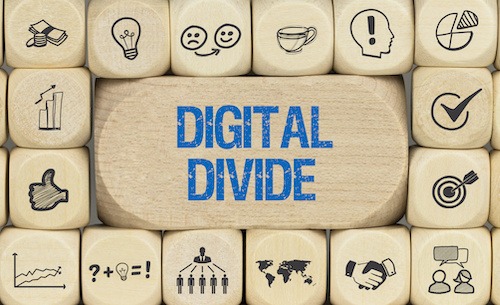
People who lack access to technology, the internet, and digital skills are left behind by the “digital divide,” including many members of low-income and rural areas, elderly persons, people with disabilities, and those living in developing nations. Existing socioeconomic disparities in areas like work, education, and access to basic amenities are made worse by this disparity.
The disparity in access to contemporary telecommunications technology between various demographic groups and geographical areas is known as the “digital divide.” Inequalities in access to computers, smartphones, and the internet are examples of this.
In the late 20th century, the phrase “digital divide” was initially used to characterize the disparity between people who had access to smartphones and those who did not. Since then, the phrase has grown to encompass both the financial and technological capacity to access the internet and utilize current technology. However, as technology advances, the definition of the “digital divide” is always changing.
The digital divide describes the gap between people who have access to affordable, reliable internet service (and the skills and devices necessary to take advantage of that access) and those who lack it.
This is an issue within many countries, with rural populations much more likely to be cut off from digital technologies than city residents are. The divide also exists between men and women: In 2024, 70% of the global male population was using the internet, compared with 65% of the female population, a gap that has been narrowing over the past decade.
Beyond the gaps between developed and developing countries, rural and urban populations, and men and women, there are other types of digital divides:
- The Access Divide: This is the most visible digital divide. It refers to the socioeconomic differences among people and the impact on their ability to afford the devices necessary to get online. In developing countries, many people have limited access to technology and/or the internet and do not have the skills necessary to use it effectively.
- The Use Divide: This refers to the difference in the level of skills possessed by individuals. There is a generation gap when it comes to the skills necessary to use the internet. It is also affected by the quality of education that an individual receives. Younger, educated people tend to have more skills than older, less educated people.
- The Quality-of-Use Gap: This measure refers to the different ways that people use the internet and the fact that some people are far more able to get the information they need from it than others.
These gaps in connectivity and skills reflect existing differences in wealth and access to education, as well as gender discrimination. The digital divide also exacerbates these same differences by barring many people from the information necessary to break out of their current living situation.
What Are the Causes of Digital Divide?
In the previous several years, technology has changed a lot, and it continues to progress and bring numerous benefits to modern life. Unfortunately, a lot of individuals have been left behind in the process. The growing socioeconomic inequality brought about by an increased reliance on technology, the Internet, and related advancements is known as the “Digital Divide.”
Prior to addressing this expanding issue, it’s critical to comprehend the fundamental causes of these disparities. By laying the groundwork, we can reduce the technological divide and provide families and individuals with opportunities that everyone should enjoy.
Age-Related Issues
Every new generation has lived in a fully connected and digital world. It is very rare for children, teens, and young adults below the age of thirty to avoid or not have access to the Internet or technology. On the other hand, statistics for people over the age of sixty-five show that 44 percent have no access or do not use it. This generally comes down to poor education about its benefits and use and lifestyle situations that do not necessitate connectivity.
Socioeconomic Factors
People with more money have more access to technology and the Internet. Those who have achieved higher educational levels obviously have more knowledge about its use and benefits. The digital divide mimics the divisions caused by income, education, and social standing all around the world. It is intrinsically linked to these gaps in all socioeconomic factors. These gaps in access only serve to expand socioeconomic gaps and inequalities across the board.
Geographic Causes
As omnipresent as the Internet seems to be these days, there are many locations in the US and around the world that have no or limited high-speed access at all. Urban cities have full coverage. Most suburbs enjoy ready access. Rural areas are much less likely to offer digital services to all residents. Solutions to this specific problem must overcome both geographic and accessibility issues and financial ones.
Racial, Cultural, and Language
Unfortunately, many of the above-mentioned issues that affect access to the Internet and technology occur along racial, cultural, and language lines. Again, this matches most discrepancies like the wage gap, access to high-level education and healthcare, and even health-related environmental factors. For example, families who speak primarily Spanish or another non-English language at home are less likely to use online resources because many of them are not accessible in a format they can understand fully.
Read Also: The Rise of the Digital Economy: What It Means for Emerging Markets
A small part of the digital divide exists because some people are simply not interested in plugging in to the Internet. Either they do not know its benefits or they prefer a different type of lifestyle. This is the only reason that does not need a definitive solution. While education about the full potential of the Internet and advanced technology helps, it is still not an essential tool that everyone must have if they choose not to.
The Global Digital Divide
The worldwide digital gap was long thought to be a result of economic growth. It was widely believed that as nations and individuals grew wealthier, they would buy digital infrastructure and gadgets, and the digital divide would eventually close.
However, over the past 20 years, incomes have increased globally, and in many poor nations, access to digital services has remained stubbornly low. This is frequently the result of insufficient funding for internet infrastructure. Even with internet-capable gadgets, citizens may not be able to access the World Wide Web. There are still significant regional differences in the rate of internet penetration. In 2024, 38% of Africans and 91% of Europeans had access to the internet.
However, there is a lot of variety among nations and areas that is hidden by those numbers. Even when they are undeveloped in other areas, large nations with ocean borders typically have far better internet connectivity. For this reason, the United Nations organization for information and communication technology, the International Telecommunication Union (ITU), began to offer statistics on small island developing states and landlocked developing nations based on global statistics.
In a similar vein, even in highly developed nations, there are significant differences in internet availability. Many rural Americans still lack sufficient internet connectivity, and even more lack the knowledge necessary to make the most of what they do have.
According to recent studies, people living in urban areas globally have roughly twice the level of internet access in their homes compared with those who live in rural areas. According to recent studies, people living in urban areas globally have roughly twice the level of internet access in their homes compared with those who live in rural areas.
Some analysts fear that, instead of narrowing, the digital divide is getting wider. In addition, some business practices appear to be widening the gap even within developed nations: The ongoing debates about net neutrality and versioning can be seen as issues about equitable access to the digital world.
Consequences of the Digital Divide
In the past, having access to the internet was considered a luxury, and differences in digital access were seen similarly. However, because it denies some citizens access to vital resources for wealth creation, there is now broad agreement that technical discrimination constitutes a type of social exclusion.
The global economic balance and the sharp rise in the number of employment requiring digital skills and access make this most evident. For example, computers accounts for almost half of all STEM (science, technology, engineering, and math) professions in the United States. One obstacle to these professions and the associated revenue is the inability to acquire these abilities.
You don’t have to aspire to a career in tech to be affected by the digital divide. The impacts of the phenomenon reach many people, in several important ways:
- Isolation: The COVID-19 pandemic brought into sharp focus the isolation that people without internet access or skills can experience. This can have serious concomitant effects—from not being able to secure appointments for vaccinations to limiting individuals’ job prospects and affecting their mental health.
- Barriers to Education: As education is increasingly delivered online, those without the resources to access the internet, including schoolchildren limited to remote learning during the pandemic, can be cut off from opportunities to develop their skills. As a result, children may have educational gaps, and adults may miss out on job opportunities or be unable to gain the basic skills necessary to contribute to their community.
- Worsening Gender Discrimination: As noted above, the digital divide exacerbates many existing forms of discrimination. One of the most widespread is gender discrimination. Some women who lack equal access to the internet are unable to gain an education and/or access crucial information.
As the world becomes increasingly dependent on digital technologies, these consequences are likely to become more serious and widespread.
Bridging the Digital Divide
In recent years, programs have been launched that aim to combat particular aspects of the digital divide. Many of these are being coordinated at the highest level, including within the U.N.’s Sustainable Development Goal (SDG) 9, which allows individual countries to coordinate their activities toward ending digital discrimination.
Within the developed world, some analysts point to successful 20th-century programs that lifted millions of people out of poverty. One example is the Rural Electrification Act during the Great Depression, which showed how the government can help provide technology to underserved areas that private companies don’t consider profitable enough to include in their networks.
In addition, two programs have been launched in the past few years to address other aspects of the digital divide:
- The Alliance for Affordable Internet (A4AI) aims to reduce the cost of broadband internet in certain areas in the world.
- Starlink provides high-speed internet and global coverage at affordable prices via satellites it has launched into space.
Many countries now also run digital literacy programs aimed at teaching adults and children the skills necessary to combat the digital divide.
The Infrastructure Investment and Jobs Act
On Nov. 15, 2021, then-President Joe Biden signed the Infrastructure Investment and Jobs Act into law.
The White House. “President Biden to Sign Bipartisan Infrastructure Investment and Jobs Act Monday.” Passed with bipartisan support in both the Senate and the House, the many-faceted bill takes aim at reducing the digital divide by providing $65 billion to bring high-speed internet to rural areas of America.
Providers who accept the funds are required to offer a low-cost, affordable plan to consumers and display a broadband nutrition label, which will allow people to compare-shop for the best offer. It states that the Federal Communications Commission (FCC) must adopt rules prohibiting digital redlining. It also creates a permanent new perk to help low-income households access the internet in the form of an affordable connectivity benefit, for which more than one-fourth of American households will be eligible.13
Wrapped into the bill is the Digital Equity Act, originally proposed by Sen. Patty Murray (D-Wash.) in 2019 and co-sponsored by Sen. Rob Portman (R-Ohio), which establishes two federal grant programs “to promote digital equality nationwide.” One program is run by state governments. It provides “state-by-state digital equity planning followed by implementation grants to qualifying programs.” The other program creates a yearly national competitive grant program “to support digital equity projects undertaken by individual groups, coalitions, and/or communities of interest anywhere in the U.S.”
Finally
The unequal access and use of technology, especially the internet, among various social categories is known as the “digital divide.” This discrepancy frequently results from socioeconomic level, region, age, education, and other characteristics, making it difficult for people without sufficient digital resources to fully engage in the digital world and take advantage of its benefits. Numerous legislative initiatives are being made to support digital accessibility.








Comments