
 By
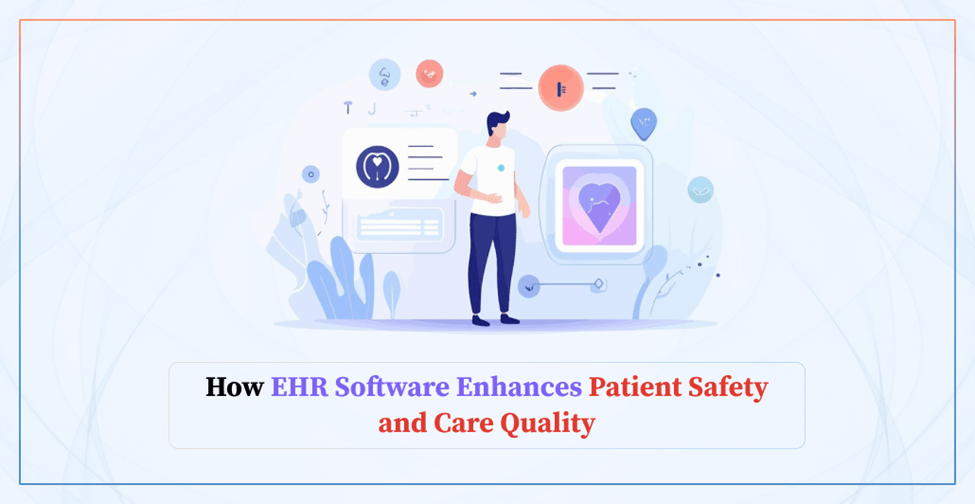
Quality and patient safety are the highest in today’s busy healthcare settings.Hand processes generate error, slow-down, and information silos, thus compromising the patients. EHR Software (Electronic Health Record Software) is technology that combines patient information, streamlines processes, and supports clinical decision-making more effectively. It minimizes medication errors, care coordination groups, and provides timely access to the appropriate history of the patient. Through integration of such vital modules as e-prescribing, clinical decision support, and lab tracking, EHR systems are at the forefront in providing safer, higher quality care. The article below explains how EHR software enables providers to provide improved patient outcomes.
What Is EHR Software?
EHR Software (Electronic Health Record Software) is an Information Technology-based system to store, manage, and exchange patient health information in real time among authorized healthcare practitioners. In contrast to paper records, the EHR systems offer safe, authorized, and centralized access to the full patient data such as treatment history, medication, lab work, allergy, and care plans.Open access makes it easy for the clinicians to make informed decisions, avoid duplication, and enable timely care.The utilization of EHR Software renders the patients safer as it reduces medical errors and delivers quality care with enhanced coordination and documentation. E-prescribing and clinical alert integrated modules, EHR systems are ideal to deliver precise, efficient, and patient-centered care.
The majority of Critical EHR Software Modules enabling Patient Safety
An Electronic Health Record System Software model must be composed of some of the following modules that directly affect designing care patients and care safety. These modules combined reduce errors, optimize clinicians’ workflow, and facilitate communications. The division of the most important constituents is as follows:
Computerized Physician Order Entry (CPOE)
Organizes healthcare providers to submit electronically orders and prescriptions eliminating the handwriting or transcription error.
e-Prescribing Module
E-prescribes medications to pharmacies to reduce prescription errors and enhance patient compliance.
Patient Portal
Offers patients secure access to medical records, laboratory test results, and follow-up orders to promote participation and transparency.
Medication Management
Monitors current and historical medications, allergy alert reminders, and dosing checks essential to avoiding drug-induced adverse effects.
Lab & Imaging Integration
Enables availability of lab report and image report in a timely manner to enable the clinicians to make decisions prior to and in an informed manner.
Interoperability Tools
Enables data sharing among different care environments, a necessity in EHR Software India and the health systems worldwide.
Ensures security of information so that individual data is accessed by concerned individuals.
Analytics & Reporting
Monitors trends in care and areas of care inadequacy to facilitate ongoing improvement.
Regardless of whether or not one will be utilizing EMR Software, EMR Software Development courses of study, or even Free EMR Software, modules need to be present to support quality, secure care.
How EHR Improves Quality of Care
What is EHR Software It is a computer program that allows providers access to and monitoring of patient information in real time to facilitate improved clinical decision-making. EHR Software enhances the quality of care with accurate, current health records, reduced medical errors, and care team coordination of care.
It provides timely, personalized treatment by way of its computerized reminders, tracking of patient history, and laboratory connectivity. Patient portals are one of the most powerful EHR software options, encouraging patient engagement and adherence. Though utilized separately or with the use of EMR Software, utilization of the top-rated EMR software offers hassle-free workflows, enhanced communication, and finally quality and improved patient care in every healthcare facility.
Real-Life Advantages in Hospitals and Clinics
Advanced application of EHR computer-hospital and clinic application offers additional in-real-life advantages to enhance patient safety and quality of care.EHR system advanced usage decreases medical mistakes, accelerates diagnosis, and facilitates more effective care coordination by transforming from paper-based to centralized electronic data.Computerized reminders, clinical decision support, and lab interfaces all reduce workflow and decrease the likelihood of human error.With EMR Software development, it is made to meet specific requirements, healthcare organizations are able to customize features for optimal efficiency and regulation.
EHR software development provides the ability to scale systems as volumes are building. Operating expenses are cut for clinics with EMR software or Free EMR Software without reducing care quality. Real-time constant information on the patient leads to faster intervention and less wasteful testing. All in all, EHR implementation is linked with improved patient outcomes, improved clinical documentation, and increased staff productivity thus an effort worth pursuing for contemporary healthcare organizations.
Choosing the Best Quality & Safety EHR Software
It is a quality care and safety issue for your patient to pick the right-fit EHR Software for your clinic. Begin with the identification of your own clinical needs and compare systems which feature strong modules such as e-prescribing, laboratory integration, and real-time alert. The Best EMR software should be easy to use, ONC-certified, and HIPAA-compliant and should allow providers to share information as per their desire.
EMR Software integration simplifies work, reduces tedious admin work, and reduces errors.Sleek alternatives in the present day provide AI-Powered EMR Software that facilitates enhanced decision-making using predictive analytics, auto-charting, and smart alerts.These technologies not only automate the efficacy of care, but also facilitate the early identification of health risks.Ensure that the systems are scalable and grow with your clinic and have a responsive customer service.
Final Thoughts
EHR Software is the cornerstone of contemporary medicine, a quality and safety revolution in patient care. Computer-based and central patient records avoid the risks of paper-based systems, including lost charts, illegible handwriting, and lost data. In real-time clinical decision support, computer-based alerts, and laboratory test results integrated into the computer, timely and accurate treatment becomes feasible. EHR Software improves care team communications, avoids medication errors, and facilitates evidence-based practice. Due to the capability of EMR Software, and even more so with AI-Powered EMR Software, clinicians are given the advantage of predictive analytics and automation that further result in enhanced patient outcomes. From enrichment of coordinated care to engaged patients via portals and reminders, advantages are evident. Choosing for better EMR software depending on your facility’s requirement is not just regulation adherence, but to enhanced safety, quality, and efficiency as well. While the world is in need of value, technology expenditure is no longer an imperative choice.








Comments