
 By
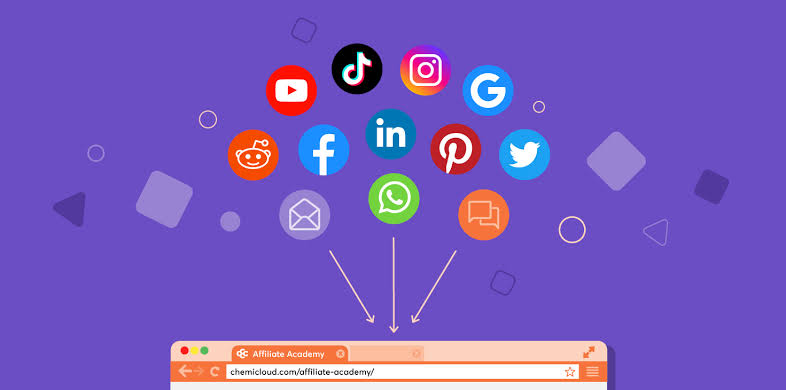
What are the best free traffic sources for affiliate marketing? The seven strongest options are Google Search, YouTube, Pinterest, Reddit, Facebook groups, Quora and email marketing through an organically built list. Each can generate visitors without paying directly for advertising, although none is truly “free” because creating useful content requires time and effort.
For most affiliate marketers, the strongest long-term strategy is not depending on a single platform. Instead, build a traffic ecosystem:
Search traffic + Video + Social discovery + Communities + Email
Google itself recommends creating “helpful, reliable, people-first content” rather than pages designed primarily to manipulate search rankings.
The same principle applies across every free traffic source: help first, promote second.
Best Free Affiliate Marketing Traffic Sources
| Traffic Source | Best For | Speed | Long-Term Potential |
|---|---|---|---|
| Google Search | Reviews and comparisons | Slow | Excellent |
| YouTube | Tutorials and demonstrations | Medium | Excellent |
| Visual niches | Medium | High | |
| Niche communities | Fast–medium | High | |
| Facebook Groups | Community marketing | Medium | Good |
| Quora | Questions and answers | Medium | Good |
| Email Marketing | Repeat traffic | Medium | Excellent |
1. Google Search: Best for Evergreen Affiliate Traffic
For long-term affiliate marketing, SEO remains one of the most valuable free traffic strategies. Imagine publishing an article titled:
Best Budget Laptops for University Students
Someone searching that phrase isn’t randomly browsing. They may already be considering a purchase. That’s called commercial search intent.
Other valuable affiliate keywords include:
- Product A vs Product B.
- Product A review.
- Best X for Y.
- Product A alternatives.
- Is Product A worth it?
- Best X under $100.
- Product A pricing.
- How to use Product A.
The major advantage is longevity. A social post may disappear quickly from people’s feeds, whereas a useful article can potentially attract search traffic for months or years.
Google’s Search Essentials specifically recommends using words people actually search for in prominent locations such as titles and headings. But don’t simply manufacture hundreds of generic affiliate articles.
Google warns against creating large amounts of search-engine-first content without substantial original value. A better formula is:
Keyword → Search intent → Original expertise → Useful answer → Relevant affiliate recommendation
2. YouTube: Turn Product Searches Into Video Traffic
YouTube is especially powerful when customers want to see a product before purchasing it. Affiliate marketers can create:
- Product reviews.
- Tutorials.
- Comparisons.
- Unboxings.
- Demonstrations.
- Buying guides.
- Troubleshooting videos.
Imagine you’re promoting a video-editing platform. Instead of publishing:
“VideoEditor Pro Review”
create:
“How to Edit Your First YouTube Video With VideoEditor Pro”
The second video solves a problem while naturally demonstrating the product. A single video can then generate multiple assets:
YouTube video → Shorts → Blog post → Pinterest graphics → Email → Social posts
That makes video particularly efficient for affiliate marketers with limited resources. The goal shouldn’t be inserting affiliate links everywhere. The goal is creating content that makes the viewer think:
“That product could solve my problem.”
3. Pinterest: Powerful for Visual Affiliate Niches
Pinterest can be an unusually valuable source of free referral traffic because users actively search for ideas, products and inspiration. Pinterest reported an all-time high of 640 million global monthly active users in Q2 2026, up 11% year over year.
That’s a substantial potential audience. Pinterest is particularly suited to niches such as:
- Fashion.
- Home décor.
- Travel.
- Food.
- Fitness.
- Weddings.
- Beauty.
- Crafts.
- DIY.
- Blogging.
- Digital products.
Suppose you operate a travel affiliate website. An article:
“15 Essential Items for Long-Haul Flights”
could become several Pinterest graphics:
- Long-Haul Flight Checklist
- 10 Things to Pack for an Overnight Flight
- Best Travel Accessories for International Flights
Each Pin can direct visitors toward your useful content. The important principle is:
One article → Multiple visual entry points
rather than creating one Pin and expecting unlimited traffic.
4. Reddit: Build Authority Before Dropping Links
Reddit can send highly targeted traffic because conversations are organized around specific interests. And its audience is enormous.
Reddit reported 130.3 million daily active uniques in Q2 2026, an 18% year-over-year increase. Weekly active uniques reached 514.6 million, up 24%.
CEO Steve Huffman described the opportunity this way:
“The value of real human perspective has never been higher.”
That’s particularly relevant to affiliate marketing. People visit communities looking for human experiences, not another generic sales page. The wrong approach is:
Join subreddit → Drop affiliate link → Leave
Instead:
Join → Read rules → Answer questions → Share experience → Build credibility → Recommend when relevant
If someone asks:
“What’s a good microphone for starting a podcast?”
A useful response might explain:
- USB vs XLR.
- Budget considerations.
- Room acoustics.
- Several suitable options.
- Advantages and disadvantages.
Only share links when appropriate and permitted by the community’s rules. Your expertise should be valuable even if nobody clicks anything.
Read Also: High-Ticket Affiliate Marketing vs Low-Ticket Volume: Which Strategy Scales Better?
5. Facebook Groups: Build Community-Based Traffic
Facebook groups can work well for niches where people regularly seek recommendations. Examples include:
Parenting, fitness, travel, small business, technology, photography, beauty and personal finance.
Suppose your affiliate niche is website hosting.
Instead of repeatedly posting:
“Buy this hosting service!”
answer questions such as:
- How do I start WordPress?
- Why is my website slow?
- Which hosting features do beginners need?
- How do I move my website?
Then create useful resources answering those questions. The funnel becomes:
Useful discussion → Trust → Helpful resource → Product recommendation
You can eventually create your own group around your niche. That gives you something more valuable than temporary clicks:
An audience.
However, always follow group rules. Many communities prohibit affiliate links or unsolicited promotion.
6. Quora: Capture Question-Based Traffic
Affiliate marketing works particularly well when content answers questions immediately before a purchase decision. That’s exactly what question-and-answer platforms such as Quora are built around.
Potential questions include:
- Which email marketing software is best for beginners?
- What camera should I buy for YouTube?
- What’s the best website builder for a small business?
- Which CRM is best for freelancers?
Instead of replying:
“Use Product X. Here’s my link.”
write a genuinely useful response.
For example:
- Option A: Best for beginners.
- Option B: Best for advanced users.
- Option C: Best for small budgets.
Explain why.
Then, where platform rules allow, direct interested readers toward a detailed comparison or useful resource on your website. The strategy is:
Answer → Demonstrate expertise → Create curiosity → Earn visit
not:
Spam → Link → Hope
7. Email Marketing: The Traffic Source You Can Reuse
Email is different from the previous six channels. Google, YouTube, Reddit and Pinterest control their platforms. Your email list gives you a more direct relationship with subscribers.
Imagine generating:
10,000 Google visits
and converting 3% into email subscribers.
That’s:
300 subscribers
If you simply let those visitors leave, you may never reach them again. But if they voluntarily join your list, you can potentially send future:
- Tutorials.
- Product comparisons.
- Reviews.
- Discounts.
- Buying guides.
- New articles.
This turns:
One visit
into:
Multiple opportunities for future engagement.
A simple lead magnet can help build the list:
- Checklist
- Mini-course
- Template
- Buying guide
- Calculator
- Resource library
For example:
“Download the 20-Point Laptop Buying Checklist”
can naturally complement an affiliate site reviewing computers.
How the Seven Traffic Sources Work Together
The most powerful strategy isn’t choosing only one. Create a content ecosystem. Suppose you publish:
Best Home Office Equipment for Remote Workers
You could transform it into:
| Platform | Content |
|---|---|
| 2,000-word buying guide | |
| YouTube | Home-office setup video |
| Workspace checklist infographic | |
| Helpful workstation discussion | |
| Remote-work tips | |
| Quora | Answers about equipment |
| Home-office buying checklist |
One core idea now reaches audiences through seven different channels. That’s far more efficient than constantly inventing completely new content.
Example Free-Traffic Affiliate Funnel
Suppose your content generates:
20,000 monthly visitors
and 20% click an affiliate link:
20,000 × 20% = 4,000 clicks
If 3% of those clicks convert:
4,000 × 3% = 120 sales
If your average commission is $25:
120 × $25 = $3,000 monthly commission
These figures are purely illustrative, not expected earnings. Actual performance depends on traffic quality, conversion rates, commission structures, product-market fit and numerous other factors.
The example illustrates why targeted traffic matters more than vanity metrics.
10,000 purchase-intent visitors can be more valuable than 100,000 uninterested visitors.
Finally
The biggest mistake new affiliate marketers make is thinking free traffic means instant traffic. It doesn’t.
Organic traffic is an exchange:
Money is replaced by time, expertise and consistency.
Pinterest had 640 million monthly active users in Q2 2026, while Reddit reported 514.6 million weekly active uniques during the same quarter.
Large audiences clearly exist. Your challenge is earning their attention.
Start with:
- 1. Google Search for evergreen buyer intent.
- 2. YouTube for reviews, tutorials and demonstrations.
- 3. Pinterest for visual discovery.
- 4. Reddit for niche conversations.
- 5. Facebook Groups for community authority.
- 6. Quora for question-based discovery.
- 7. Email for turning temporary visitors into a reusable audience.
But don’t build seven completely separate content machines. Use:
One valuable idea → Multiple formats → Multiple platforms → Email subscriber → Relevant affiliate offer
Google’s guidance provides perhaps the best principle for the entire strategy: prioritize content created to benefit people rather than content designed primarily to manipulate rankings.
Help people make better decisions first. Monetization follows from the trust you build.
FAQ
What is the best free traffic source for affiliate marketing?
Google Search is particularly powerful for evergreen buyer-intent traffic, while YouTube is excellent for demonstrations and product reviews. The ideal source depends on your niche.
Can I start affiliate marketing without paid ads?
Yes. SEO, YouTube, Pinterest, Reddit, Facebook communities, question-and-answer content and organically built email lists can generate traffic without buying advertisements.
How long does free traffic take?
It varies. Community platforms can generate attention quickly, while SEO may take considerably longer to develop. Sustainable organic traffic usually requires consistent content and audience building.
Is social media traffic really free?
There’s no required advertising cost for organic distribution, but your time, software, production equipment and content creation still have economic value.
Should beginners use all seven platforms?
Not immediately. A more manageable strategy is to master one primary discovery channel and one audience-retention channel, then expand.
For example:
Google + Email
or:
YouTube + Email
Source: clickbank.com







Comments