
 By
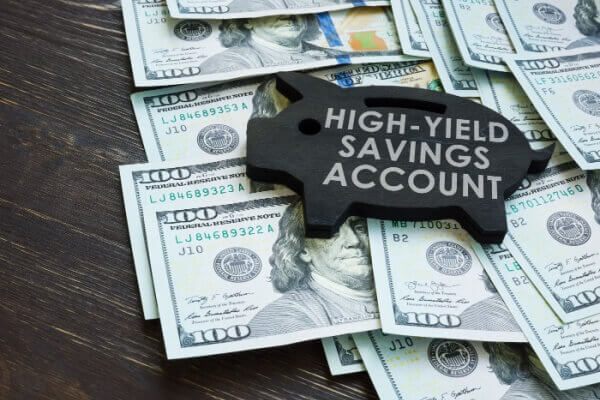
Saving money is easier when you do not have to rely on willpower. The right account, combined with automatic transfers, can turn saving into a routine while allowing your money to earn interest or potentially grow over time.
For U.S. savers, the landscape in 2026 includes high-yield savings accounts, money market accounts, CDs, Treasury bills, retirement accounts, HSAs and other tax-advantaged options. The best choice depends on when you need the money, how much access you require and how much risk you can accept.
Current rates also make shopping around worthwhile. NerdWallet reports that the national average savings rate is just 0.38%, while its favorite high-yield savings accounts average about 3.66%; some competitive accounts are currently offering more than 4% APY.
“The best savings accounts generally have interest rates that are about 10 times the national average.” — NerdWallet
Below are 12 accounts and savings vehicles worth considering if your goal is to automate saving while putting idle cash to better use.
Quick Comparison: 12 High-Yield Accounts and Savings Vehicles
| Account type | Best for | Access | Typical yield potential* | Main advantage |
|---|---|---|---|---|
| 1. High-yield savings account | Emergency funds | High | ~3–4%+ | Liquidity + interest |
| 2. Money market account | Accessible savings | High | ~3–4%+ | Interest + banking features |
| 3. High-yield CD | Known future expenses | Low | ~4%+ | Fixed rate |
| 4. No-penalty CD | Short-term savings | Medium | Competitive | More flexibility |
| 5. CD ladder | Planned expenses | Medium | Competitive | Staggered maturities |
| 6. Treasury bills | Cash reserves | Medium | Market-dependent | U.S. government backing |
| 7. TreasuryDirect reinvestment | Automated T-bill strategy | Medium | Market-dependent | Automatic reinvestment |
| 8. Roth IRA | Retirement | Low for retirement funds | Market-dependent | Tax advantages |
| 9. Traditional IRA | Retirement | Low | Market-dependent | Potential tax deduction |
| 10. 401(k) | Employer retirement savings | Low | Market-dependent | Payroll automation + potential match |
| 11. Health Savings Account | Healthcare + long-term wealth | Medium/low | Market-dependent | Powerful tax treatment |
| 12. Cash management account | Flexible cash | High | Market-dependent | Savings + brokerage integration |
*Rates change frequently. The figures above are illustrative ranges, not guaranteed returns.
1. High-Yield Savings Account
A high-yield savings account (HYSA) is arguably the simplest place to automate savings.
Instead of leaving excess cash in a traditional savings account, you can schedule an automatic transfer every payday. Online banks frequently offer competitive rates because they have lower overhead than traditional branch-based institutions.
As of September 2026, NerdWallet lists high-yield savings accounts paying as much as 4.21% APY, although the best rate can depend on balance requirements, promotions and account conditions.
Best for: Emergency funds, vacations, home repairs and other goals within roughly 0–2 years.
2. Money Market Account
A money market account (MMA) combines some characteristics of checking and savings accounts. Depending on the institution, you may receive check-writing or debit-card access while still earning a competitive interest rate.
NerdWallet’s September 2026 comparison lists money market accounts offering up to 3.90% APY, although rates vary by institution. Money market accounts can be useful when you want your savings accessible but don’t want the money sitting entirely in a low-interest checking account.
Best for: Larger emergency funds and savings that occasionally need to be accessed.
3. High-Yield Certificate of Deposit
A certificate of deposit (CD) allows you to lock money away for a predetermined period in exchange for a fixed interest rate. The trade-off is liquidity. Withdraw money before maturity and you may face an early-withdrawal penalty.
Current rates illustrate why CDs can be attractive. NerdWallet reported September 2026 high-yield CD rates reaching 4.50%, substantially above the national average for several CD terms.
Best for: Money you know you won’t need until a specific future date.
4. No-Penalty CD
A no-penalty CD provides a middle ground between a conventional CD and a savings account. You generally receive a fixed rate for a defined period while retaining the ability to withdraw without the standard early-withdrawal penalty, subject to the institution’s rules.
This can work well if you expect to need your money eventually but want some protection against falling savings rates.
Best for: Short-term goals where flexibility still matters.
5. CD Ladder
A CD ladder isn’t technically a separate account type. It is a strategy involving multiple CDs with different maturity dates. For example, instead of putting $12,000 into one 12-month CD, you could divide it into four $3,000 CDs maturing at different intervals.
Read Also: The 7 Best Investment Banks of 2026
A simple structure might look like this:
| CD | Amount | Term |
|---|---|---|
| CD 1 | $3,000 | 3 months |
| CD 2 | $3,000 | 6 months |
| CD 3 | $3,000 | 9 months |
| CD 4 | $3,000 | 12 months |
As each CD matures, you can use the money or reinvest it.
Best for: Savers who want higher yields without locking their entire balance away at once.
6. Treasury Bills
U.S. Treasury bills (T-bills) are short-term government securities rather than bank accounts, but they can be an effective destination for automated cash savings. TreasuryDirect says T-bills are available in maturities ranging from 4 weeks to 52 weeks, with purchases starting at $100.
Treasury bills are sold at a discount or at face value and pay the difference when they mature. TreasuryDirect also notes that T-bill interest is exempt from state and local income taxes.
Best for: Cash you can set aside for several weeks or months.
7. Automated Treasury Bill Reinvestment
One of the most useful features of TreasuryDirect is the ability to reinvest maturing Treasury securities. TreasuryDirect explains that investors can establish reinvestment so that securities of the same type continue automatically after maturity.
This creates a useful automation loop:
Bank account → T-bill purchase → maturity → automatic reinvestment
Rather than allowing every maturity to become spending money, you can keep the savings working.
Best for: People building a cash reserve who don’t need immediate access to every dollar.
8. Roth IRA
A Roth IRA is designed for retirement rather than short-term savings, but it deserves consideration in an automated savings strategy because of its tax advantages. The IRS says the 2026 IRA contribution limit is $7,500, or $8,600 for people age 50 or older, subject to the applicable rules.
Unlike a savings account, a Roth IRA can hold investments such as stocks, bonds and funds. That means its long-term value can fluctuate.
Best for: Long-term retirement savings.
An important distinction: a Roth IRA is an account or tax wrapper, not an investment itself. What you buy inside it determines the investment risk and potential return.
9. Traditional IRA
A Traditional IRA is another retirement account that can automate long-term wealth building. Depending on your circumstances, contributions may be tax-deductible, while withdrawals in retirement are generally taxed as income.
The 2026 contribution limit is also $7,500, with an additional $1,100 catch-up contribution for eligible individuals age 50 and older.
Best for: Retirement savers who may benefit from current-year tax deductions.
10. 401(k)
For employees, a workplace 401(k) may be one of the easiest accounts to automate because contributions can come directly from each paycheck. The IRS increased the 2026 employee contribution limit to $24,500. Eligible workers age 50 and older generally have an $8,000 catch-up limit, while certain workers ages 60–63 can qualify for a higher catch-up amount.
The biggest advantage isn’t just automation. Employer matching contributions can add money to your retirement savings.
Best for: Long-term retirement savings, especially when an employer offers matching contributions.
11. Health Savings Account
A Health Savings Account (HSA) can be particularly powerful for people who qualify. For 2026, the IRS set the HSA contribution limit at $4,400 for self-only coverage and $8,750 for family coverage.
HSAs can provide tax advantages when used according to the applicable rules for qualified medical expenses. Some providers also allow balances above a threshold to be invested.
That makes an HSA potentially useful for both current healthcare costs and longer-term healthcare planning.
Best for: Eligible individuals seeking tax-efficient healthcare savings.
12. Cash Management Account
A cash management account (CMA) is typically offered by a brokerage or financial platform and is designed to combine cash-management features with access to investing services. Depending on the provider, excess cash may be placed into partner-bank deposits or other cash vehicles.
However, don’t assume that every CMA is FDIC-insured in the same way as a conventional savings account. Always check how your cash is held and who provides the insurance.
Best for: People who want savings and investing under one financial platform.
How Much Can a Higher Yield Make?
The difference between a low-yield account and a high-yield account can become significant as your balance grows.
For example, suppose you keep $10,000 in savings for one year:
| APY | Approximate interest on $10,000 |
|---|---|
| 0.38% | $38 |
| 1.00% | $100 |
| 3.00% | $300 |
| 4.00% | $400 |
| 4.21% | $421 |
These are simplified illustrations assuming the stated APY remains unchanged for the entire year and ignoring taxes. The gap is especially meaningful over multiple years because interest can compound.
How to Automate Your Savings
The account matters, but automation is what turns the strategy into a habit. Try this five-step system:
- Choose a specific savings goal.
Examples include an emergency fund, home down payment, annual insurance bill or retirement. - Calculate your monthly target.
If you want $6,000 in 12 months, automate approximately $500 per month. - Schedule transfers around payday.
Moving money shortly after receiving your paycheck reduces the temptation to spend it. - Separate goals into different accounts or buckets.
A vacation fund should not necessarily sit alongside your emergency reserve. - Increase contributions automatically.
Consider increasing your transfer after a raise, debt payoff or annual bonus.
Which Account Should You Choose?
Your timeline is one of the simplest ways to narrow the options.
| Financial goal | Potentially suitable choice |
|---|---|
| Emergency fund | High-yield savings account |
| Money needed within months | HYSA, MMA or T-bills |
| Known expense in 6–24 months | CD or CD ladder |
| Long-term cash reserve | T-bills |
| Retirement | 401(k), Roth IRA or Traditional IRA |
| Healthcare expenses | HSA |
| Savings + investing in one platform | Cash management account |
Remember that higher yield does not automatically mean better. A 4.5% CD isn’t necessarily preferable to a 4.0% savings account if you suddenly need the money and face an early-withdrawal penalty.
Bottomline
The best high-yield investment account is the one that matches your goal, timeline, liquidity needs and tax situation.
For most people, a sensible starting point is an FDIC-insured high-yield savings account for emergency savings, followed by CDs or Treasury bills for money with a known time horizon. Retirement accounts such as a 401(k) or IRA can then handle money intended for the long term.
The most important step is to automate the process. Even a modest recurring transfer can build substantial savings when it happens consistently.
As NerdWallet’s current comparisons demonstrate, the difference between the national average savings rate and competitive high-yield accounts can be substantial.
FAQ
What is a high-yield investment account?
A high-yield investment account is a savings or investment vehicle designed to earn a higher return than a standard savings account. Options include high-yield savings accounts, CDs, Treasury bills, money market accounts, and retirement accounts.
Which account is best for automated savings?
A high-yield savings account is often a good choice for automated savings because it combines competitive interest rates with easy access to your money. You can schedule recurring transfers directly from your checking account.
How much money should I put into a high-yield account?
The right amount depends on your financial goals. A common starting point is building an emergency fund covering three to six months of essential expenses before focusing more heavily on long-term investments.
Are high-yield savings accounts safe?
Many high-yield savings accounts offered by FDIC-insured banks are protected up to applicable FDIC limits. However, investment accounts such as IRAs and brokerage accounts are not the same as insured bank deposits and can lose value depending on their investments.
Source: nerdwallet.com











Comments