
 By
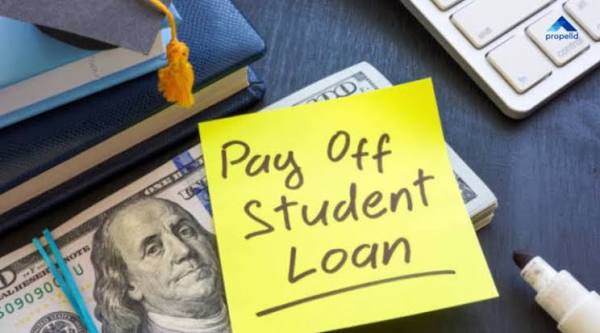
Try to repay loans from the past to start saving for the future is too often the case with young adults today. The average Canadian student will complete his higher education with more than $ 26,000 in debt. To pay off student loans faster, maximize your income through side hustles, employer benefits, and loan assistance programs while minimizing expenses through strict budgeting.
Use these actionable strategies to aggressively tackle your debt:
1. Increase Your Income
- Employer Assistance: Seek out companies that offer student loan repayment assistance as an employee benefit (e.g., matching payments or direct monthly contributions).
- Side Hustles: Generate extra funds for debt by freelancing, starting a side business, or working part-time. Use every dollar of this additional income strictly for loan repayment.
- Public Service Loan Forgiveness (PSLF): If you work full-time for a qualifying government or non-profit organization, your remaining balance can be forgiven after 120 qualifying payments. Check your eligibility using the StudentAid PSLF Help Tool.
- State & Federal Programs: Look into specific programs like the military, AmeriCorps, or state-specific health and legal loan repayment assistance.
2. Restructure and Optimize Payments
- Refinancing: Lower your interest rate and monthly payments by refinancing through a private lender. Use the Credible Student Loan Refinancing Marketplace or the LendingTree Student Loans Platform to compare multiple rates at once.
- Biweekly Payments: Pay half of your monthly bill every two weeks. This results in 13 full payments a year, accelerating your payoff timeline.
- Autopay Discounts: Enroll in auto-pay with your loan servicer; many lenders offer an interest rate reduction (often 0.25%) for doing so.
3. Cut Expenses and Reallocate
- Strict Budgeting: Reduce living expenses (e.g., cutting subscription services, cooking at home, refinancing insurance) and put the saved money directly toward your loans.
- Lump Sums: Apply windfalls such as tax refunds, work bonuses, or monetary gifts entirely to the loan principal.
To help you and others in your situation to overcome this financial barrier, we offer the following tips to help you repay your student loan faster. They may not apply to you all, but perhaps you’ll find something that will allow you to deleverage you earlier that if you persist in paying the monthly minimum.
Make additional payments, even if they are small amounts: Both the advanced student loans by banks or the government are subject to prepayments, which means that you have the right to pay more than the minimum required each month without penalty, and that the additional amount will be applied to capital. (To do this, write a letter that you send with your payment indicating what must be assigned this extra money, so it is not reported by error on the next month’s payment.)
Any additional sum you can assign to all prepayments you closer the final repayment of your debt. For example, let’s say the minimum monthly payment you make to repay your debt is $ 345 (which is the amount due every month by a person who borrowed $ 30,000 for 10 years at a rate of 6.8% ). If you round that amount to $ 400 per month and you assign the difference of $ 55 to the capital, it will shorten by nearly a two-year repayment period.
If you have multiple loans, targeting first those whose interests are highest, then attack the other as and when the first will be refunded. This way, you will save on the whole more in interest payments than if you were doing simultaneously more modest prepayments on all your loans.
Bend over borrowing radiation programs : Borrowers who are moving towards certain careers may be eligible for a termination or partial relief of their loan. The repayment of a student loan exemption for family doctors and nurses is open to all who practice in rural or remote communities in Canada who lack primary health care . Doctors can get relief of up to $ 40,000 and nurses up to $ 20,000.
Other programs such as the Repayment Assistance Program is for students who can not make payments with their meager wages or benefit of extenuating circumstances. The government covers the amount of interest due that the applicants can not afford to pay . This can last up to 60 months during the 10 year period following graduation .
Do not wait to start paying : Borrowers usually have six months after graduation or the date of graduation to start making their first payments. Usually it’s called the grace period. The problem is that the interest federal loans continue to accrue during this period and eventually be added to the loan principal, thus increasing the overall cost of the loan.
If you can pay at least the loan interest during the grace period, you will save more money in the future. The exception to this rule is that provincial loans generally do not accrue interest during the grace period. However, it is best to check with the provincial authorities that you are indeed in this case.
Make good use of your tax credit: The student loan interest is deductible from federal income tax. You can deduct the interest paid for the current fiscal year or for the previous five years. If you receive a tax refund, resist the temptation to waste in weekend getaways and use that money to make advance payments and thus repay your loan faster.
Assign them your gifts in cash or bonus : Your aunt Jeanne sends you a check again for your birthday? Use of funds and other cash gift or bonus for work make prepayments inflates the value of money by saving you interest later. And believe me, your aunt will be proud of you.
Make a personal budget: There are few things that will help you repay your loan (and elsewhere to manage your financial life) rather than developing a personal budget. It may be that you wont look the balance of your checking account each month without much to do more. But by looking more closely at your spending habits, you can get a better idea of your financial priorities and areas where cuts are needed. What is good is that it has never been easier.
Many credit card companies provide cardholders a breakdown of expenses by category, and services like Mint.com (which is free and online) and Quicken (which charges a fee for its downloadable software) can help you easy to keep you aware of your monthly expenses.
Once you control your budget better, you can establish a priority order for prepayments of your student loan. It may be that it returns to tighten your belt (eg eating more often at home, terminate a membership to a gym you use little or seek cheaper phone service plan), but you’ll have a better idea of where Forgot your money every month.
Take roommates, even if they are your parents: Many university graduates prefer not to move back in with Mom and Dad in the long term , yet it has become common. The New York Times recently reported that an American 20 to 35 years out of five lived with his parents. While this is undoubtedly binding, live with your parents is an amazing way to repay your loans faster , even if you participate in food shopping and other family expenses.
Read Also: How You Can Manage Your Student Loans Effectively
Or else, share with roommates, ” your own ” housing can also save you a lot more money than if you live alone. Share your living space may seem a little student (fortunately or unfortunately ) , but if it helps you get out of debt sooner and find your own accommodation, it probably justifies the inconvenience.
Take part-time job: Nowadays, finding a well-paid full-time is very difficult for new graduates. Almost half of the jobs available to them do not require a university degree. But even if you do not have entirely been found your dream job, the fact remains that the more you work, the more you earn money, and the more you earn, the sooner you can repay your student loans. If you have a job that offers overtime, pull in the most.
Consider also earn some money by taking part-time jobs as babysitters, helping traders during holiday periods, or doing odd jobs. It is perhaps not that what you dreamed for all your sleepless nights spent studying, but plugging away even more and use that money to repay your loans will provide you later with greater financial flexibility
Grants to Pay Off Student Loans
Career-based grants are national grants that provide funds to qualified people in specific careers, like teachers, medical personnel, and more. They can be awarded by the government, colleges and universities, hospitals, and businesses.
Grants for doctors, nurses, and other healthcare professionals
- National Health Services Corps
The National Health Services Corps has several grant programs designed to help medical professionals in different fields repay their student loans. Check out this comparison of all the NHSC loan repayment programs.
- Nurse Corps Loan Repayment Program
The Nurse Corps Loan Repayment Program will give you funds to pay off 60% of your student loan debt if you work for at least two years in a critical shortage area. For a third year, eligible nurses may get another 25% of their student loans paid off.
- IHS Loan Repayment Program
For two years of service in American Indian and Alaska Native areas, the IHS Loan Repayment Program gives out grants to pay off up to $50,000 of your eligible student loans. Plus, you may be able to extend your contractfor more than two years to pay off all your student loan debt.
Grants for teachers
- Teacher Loan Forgiveness Program
The Teacher Loan Forgiveness Program (TLF) can offer student loan forgiveness of up to $17,500 off of Direct Subsidized and Unsubsidized loans and Subsidized and Unsubsidized Federal Stafford Loans. In exchange, you’d have to teach full time for five complete, consecutive academic years in a low-income school or within an educational service agency, among other qualifications.
- Teacher Cancellation of Perkins Loans
Although there haven’t been any Perkins loans distributed since 2017, you may qualify for student loan forgiveness if you got one before then. Qualifying teachers with Perkins Loans teach high-needs subjects or work in low-income schools. If you’re a qualifying teacher, you may get all your Perkins Loans debt forgiven in five years.
Grants for veterinarians
- Veterinarian Medical Loan Repayment Program
The Veterinarian Medical Loan Repayment Program can pay up to $40,000 a year towards your student loan if you work for at least three years in an area that’s low on veterinarians.
Grants for lawyers
- John R. Justice Student Loan Repayment Program
State prosecutors and public defenders can apply for the John R. Justice Student Loan Repayment Program through the state in which they live and work for three to six years. The award is worth up to $10,000 a year (maxed at $60,000 or the current total of the student’s debt) to pay toward law school student loans.
- Department of Justice Attorney Student Loan Repayment Program
For three years of service, attorneys working in the Department of Justice with at least $10,000 in federal student loan debt may be able to win $6,000 a year and up to $60,000 total to pay off their student loans through the Department of Justice Attorney Student Loan Repayment Program.
There are a lot more resources out there for graduates working in the public sector, public-service lawyers, and more through the American Bar Association.
Grants for researchers
- National Institutes of Health (NIH) Loan Repayment Programs
The National Institutes of Health (NIH) Loan Repayment Programs are for various health industries. You don’t have to work for the NIH to qualify, and you could get up to $50,000 a year for a total of two years if you conduct research the NIH defines as “critical.” Critical research depends on whether you are or aren’t an NIH employee.
The critical research topics for NIH employees include:
- AIDS research
- Clinical research from disadvantaged backgrounds
- General research
The critical research topics for non-NIH employees are:
- Clinical research
- Pediatrics
- Health disparities research
- Contraception and infertility
- Clinical research for individuals from disadvantaged backgrounds
State-based grants
There are state grant programs nationwide, and the state you live in probably has at least one. Many state-based grants are tied to certain jobs and industries, so it’s worth researching your state and the industry you’re interested in to see what grants may be for you.
Grants for members of the military (and their families)
Military grants are for members of the military, veterans, and relatives of active military members and veterans. They are need-based and often funded by the government, but some may be offered by colleges and universities. To be eligible, students must have a military status or have a family member with a military status, and they need to complete the FAFSA® to be considered.
- Army Loan Repayment Program
The Army Loan Repayment Program can cover up to $65,000 of student loan debt for active-duty soldiers, Army Reserve soldiers, and Army National Guard soldiers.
- Army Reserve College Loan Repayment Program
If you work in a Military Occupational Specialty (MOS), enlist in the army for at least six years, and have student loans before going on active duty, the Army Reserve College Loan Repayment Program can pay for 15% of your student loan balance up to $20,000.
- Iraq-Afghanistan Service Grant
To be eligible for the Iraq-Afghanistan Service Grant , you must have a parent or guardian who was a member of the U.S. armed forces and died while serving in Iraq or Afghanistan; you had to be under 24 years old or enrolled in college at least half-time at the time of your parent’s or guardian’s death; and you must meet the eligibility requirements of the Federal Pell Grant. The award amount is the same as the maximum Pell Grant available for that award year. The award for the 2025-26 year is $7,395.
Health Professions Student Loan Repayment Program
Healthcare professionals like doctors, dentists, and more who are on active duty or in the Army Reserve may be eligible for up to $120,000 ($40,000 per year for three years) to pay off their student loans through the Health Professions Student Loan Repayment Program.
The National Guard, the Navy, and the Air Force JAG program also have student loan forgiveness programs.
Grants for volunteers and non-profit employees
Volunteers and non-profit employees are eligible for grants through the Public Service Loan Forgiveness (PSLF) program and through national organizations, like AmeriCorps, the Peace Corps, and Teach for America.
Grants for employees at private companies
Some private companies have their own grant and loan forgiveness programs for their employees. This is often offered as part of their benefits package. If you’re interested, ask your employer if your company has a grant or loan forgiveness program you qualify for.
Finally
Grants can be a great way to help you pay off your student loans. Just remember to look for grants that suit your needs, keep track of grant opening and closing dates, and always look into other repayment options if you’re having trouble paying back your loans.


Comments