
 By
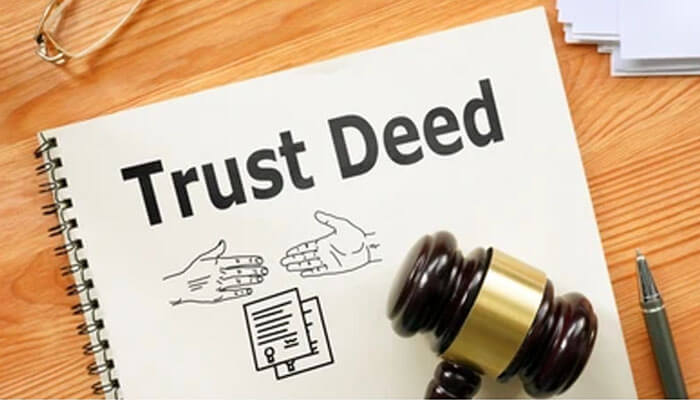
A formal, legally binding substitute for bankruptcy (also known as sequestration) is a trust deed, more precisely a Protected Trust Deed (PTD) in Scotland. It enables you to repay a portion of your debt over a predetermined period of time at a reasonable rate before the remaining qualified debt is wiped out.
Preventing bankruptcy with a trust deed is a good option in managing your debts without legal issues. A trust deed is an alternative to bankruptcy and it is a legal arrangement to pay off your creditors through a trustee. Hence, if you arrange a trust deed and adhere to the repayments, creditors cannot take any other legal action against you.
There are, however, a number of benefits to using a trust deed as opposed to filing for bankruptcy. This article aims to analyze the trust deed option available to you.
Trust Deed Process
If you are in debt, a trust deed will enable you to pay off your creditors at the end of a three-year period from the monthly payments you have made to the trustee. There is also less expense and time spent arranging a trust deed than a bankruptcy court procedure.
Your creditors will normally be willing to accept a trust deed if the alternative is filing for bankruptcy, because a trust deed will usually allow your creditors to see more of a return of their money than a bankruptcy would.
Trust Deed Set-Up Procedure
You can only arrange a trust deed through a Licensed Insolvency Practitioner who will act as a trustee. As a debtor, you must provide the trustee with all of your financial details, including all information on creditors. The trustee will then draw up a proposal to all your creditors, including how much you are willing or able to pay, which will then be sent to your creditors for approval.
If your creditors agree with the proposal, then debts will be divided between them at the end of the three-year repayment period from the trust deed fund. You can access a protected trust deed, which means that your creditors cannot take action to recover money from you while the trust deed is in place and repayments are made.
However, in some cases, lenders may have the right to any equity that is available on a home, though there are methods that can be used to avoid this procedure, such as paying extra contributions or a buy-back process.
You should bear in mind that secured lenders are not bound by the rules of a trust deed and may not be included in the trust deed arrangement.
Fees For Setting Up A Trust Deed
Usually, there are no set-up fees involved in the trust deed process. The fees for your trustee will be agreed with the creditors and then disbursed from the trust deed account during the length of the arrangement. You will not pay anything before the process has begun, and a reduction in debts to lenders should be agreed to cover the trustee’s fees.
Benefits Of A Trust Deed To Debtors
1. Correspondence from the creditor will go through the trustee, taking off some pressure from you.
2. The length of repayment time would be set by the arrangement, giving you more room to organize your finances.
3. You will be relieved of any court appearances when a trust deed is in place.
4. You can retain directorships of your companies or businesses even while the trust deed arrangement is in place.
5. Your creditors cannot take any further action during the trust deed period, giving you peace of mind.
6. Your debts will usually be paid at a reduced rate with interest and charges frozen.
7. All your debt balances at the end of the three-year period are normally written off if the trust fund amount does not clear the debts.
Consequences Of Defaulting On A Trust Deed
Missing one or two payments will lead to extension of the trust deed, but if you are having trouble adhering to payments, then the trust deed may be re-evaluated, and payments may be lowered. However, if you continually indulge in non-payment of the trust fund then the deed may be terminated, and legal action by lenders may be sought to recover their money. Note that a trust deed is an excellent option if creditors and lenders are applying pressure for repayment of debts. You should always take professional financial advice if considering the deed process or alternative repayment options.
Read Also: This is What Happens to Your Debt When You File Chapter 13 Bankruptcy
Trust Deed Pros and Cons
Pros of a Trust Deed
- The fixed payment term
Trust Deeds generally last for four years. This means that you could become free of your unsecured debts in a few years.
- Your debts are written off
After you have satisfied the conditions of your Trust Deed, your remaining debt will be written off. This allows you to have a fresh start significantly sooner.
- Creditors stopped
We understand that phone calls, letters and even home visits are a huge reason for the stress that comes with being in debt, but as it is a legal solution, once your Trust Deed becomes ‘protected’, your creditors who are named in the Trust Deed are no longer allowed to contact you. They can only communicate with your Trust Deed provider.
- Keep your assets
Sequestration or bankruptcy can be hugely disruptive, and the biggest reason for that is that, often, your assets, such as your home, your car and your belongings, are sold off in order to pay off your debts. With a Trust Deed, selling your assets is not a method used to pay your creditors.
- No hidden fees or application fees
Your Trustee is paid using your monthly contributions, which is determined by calculating what you can genuinely afford. This means that there are no extra, hidden fees to surprise you. Although some providers may charge you for the costs associated with setting up a Trust Deed if your Trust Deed is rejected, we will never.
This does not mean that there are no risks or disadvantages in a Trust Deed.
Cons of a Trust Deed:
- Creditors can object
In order for your Trust Deed to gain ‘protected’ status, your creditors must approve it, and there is always a risk that they might not vote to approve it. However, they don’t all need to vote in favour of the Trust Deed. You need a majority of your creditors to agree, and for those who object to own less than one-third of your debt.
- Your credit score can be negatively impacted
As you are placed on the Register of Insolvencies, your Trust Deed is likely to be noted on your credit file. This can have the effect of lowering your credit score, which can make it harder to take out credit in the future. This is removed, however, six years after the beginning of your Trust Deed.
- Your employment can be affected
Some employment restricts whether you are able to get a Trust Deed in Scotland or not. For example, you may not be able to act as a director of a limited company while you have a Trust Deed. It is a good idea to check your employment contract and consider your ideal career progression before you enter into a Trust Deed.
- Asset equity may be included
As well as your monthly affordable payments, it is possible that your creditors will want to utilise your assets for payment. Unlike with sequestration and bankruptcy, this does not mean you have to sell your property, but it may mean you are required to release its equity if it is considered large enough. Equity is the amount of money you would make were you to sell the asset. For example, if you own a car worth significantly more than £3,000, then you will be asked to trade it in for a less expensive model and add the profits to your Trust Deed. You would never be left without a car.


Comments