
 By
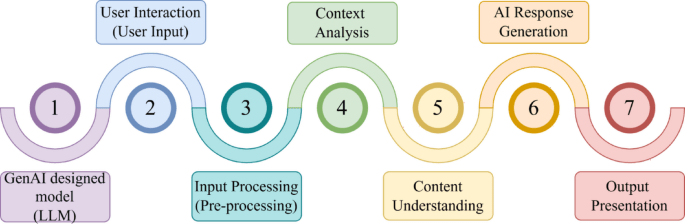
Citations are evolving from a human, retrospective process to an automated, immediate, and forward-looking system with generative AI (GenAI). While traditional citation focuses on giving credit and locating sources, AI-driven citation, also known as Generative Engine Optimization (GEO), integrates content directly into automated answers to increase authority and visibility. This progression is distinguished by the transition from AI-generated hallucinations to validated, AI-assisted provenance.
The Evolution of AI Citation (2020–Present)
The integration of AI into citations has followed a rapid, developmental trajectory:
- The Prehistoric Era (Pre-2020): Early language models had no concept of citations, focusing solely on predicting the next word rather than referencing literature.
- The Hallucination Era (2020–2022): As models grew, they began to mimic academic style, often generating plausible-sounding but completely fake citations (e.g., Smith et al., 2014), creating a significant breach of trust.
- Awareness & Accountability (2023–2024): Following widespread criticism of “hallucinated” citations, platforms like Bing Chat and Perplexity began integrating real-time web searches to verify information.
- The Age of Verification (2024–Now): Leading AI systems now use “live” web search to verify citations, providing links to actual sources and, in some cases, highlighting the specific text within the source that supports the claim.
Key Transformations in Citation Practices
- Automated Generation & Formatting: AI tools now instantly format citations in multiple styles (APA, MLA, IEEE) and extract metadata from PDFs, reducing hours of work to minutes.
- Intelligent Source Discovery: AI tools can analyze a research topic to suggest, find, and rank relevant sources, sometimes identifying connections human researchers might miss.
- Contextual Citations & Analysis: Advanced Natural Language Processing (NLP) is moving beyond formatting to understanding the context and meaning of a citation, identifying where a citation is most effective and analyzing patterns to find research gaps.
- Generative Engine Optimization (GEO): A new field has emerged, similar to SEO, focused on optimizing content to be used as a trusted source by AI models.
Challenges and Ethical Considerations
- Citation Hallucinations: Although reduced, AI still has the potential to produce fake, incorrect, or “hallucinated” citations that must be verified by humans.
- Algorithmic Bias & Visibility: AI systems may privilege open-access, well-indexed, or popular sources, leading to a “citation funnel” that sidelines less accessible or niche scholarship.
- Over-automation and Reduced Critical Thinking: Over-reliance on AI for literature reviews may diminish the deep reading and critical synthesis skills of researchers.
- Misattribution & Plagiarism: AI-generated content may inadvertently plagiarize, and the “black box” nature of some models makes it hard to trace the provenance of information.
Future Directions (2025–2030)
- Dynamic, Interactive Publications: Academic papers will likely become living documents, updated in real-time with new citations as research evolves.
- AI-Generated Literature Reviews: Advanced AI systems will be capable of analyzing hundreds of sources to generate comprehensive literature reviews and annotated bibliographies, with proper citations, in seconds.
- Transparency as Standard: Future best practices will require transparent labels distinguishing between verified, illustrative, orAI-generated citations, ensuring traceability.
- Contextual Understanding: AI will shift from simple citation matching to understanding the epistemology—knowing not just what the model says, but why it thinks it’s true.
The future of academic citations is not about replacing human judgment but using AI as an “authorial assistant” to enhance accuracy, efficiency, and discovery, while maintaining the essential human role in critical evaluation and ethical attribution.
The world of academic citations is undergoing a transformation that would have seemed like science fiction just a decade ago. Artificial intelligence is not just changing how we write papers—it’s revolutionizing the very foundation of academic referencing, from how we discover sources to how we format citations and verify their accuracy. This technological shift is happening at breakneck speed, and students and researchers who understand and embrace these changes will have a significant advantage in the evolving landscape of academic writing.
Imagine a world where your research assistant can instantly find the most relevant sources for your topic, automatically format them in any citation style, verify their accuracy, and even suggest additional sources you might have missed. This isn’t a distant future—it’s happening right now, and the implications for academic writing are profound.
The traditional model of academic referencing, where students manually search databases, format citations by hand, and painstakingly verify each source, is being replaced by intelligent systems that can handle these tasks with unprecedented speed and accuracy. But this transformation raises important questions about the role of human judgment in academic work, the nature of scholarly expertise, and how we maintain the integrity of academic discourse in an AI-powered world.
The Current State of AI in Academic Citations
Before we explore the future, it’s essential to understand where we are now. AI has already made significant inroads into academic citation practices, and these developments are laying the groundwork for even more dramatic changes ahead.
Automated Citation Generation
- What’s Available Now: AI-powered citation generators can automatically format references in multiple styles, extract metadata from PDFs, and even suggest corrections for incomplete citations.
- How It Works: These systems use natural language processing to understand source information and apply formatting rules consistently. They can handle everything from journal articles to websites, books, and multimedia sources.
- Examples: Tools like Sourcely, Zotero, and Mendeley now incorporate AI to streamline the citation process, reducing the time spent on formatting from hours to minutes.
Intelligent Source Discovery
- What’s Available Now: AI systems can analyze your research topic and suggest relevant sources from vast databases, often finding connections that human researchers might miss.
- How It Works: Machine learning algorithms analyze your text, identify key concepts, and search through millions of academic papers to find the most relevant sources.
- Examples: Sourcely’s AI can analyze your essay or research paper and instantly find credible sources that support your arguments, complete with proper citations.
Citation Verification and Quality Assessment
- What’s Available Now: AI can verify the accuracy of citations, check for broken links, and even assess the credibility of sources.
- How It Works: These systems cross-reference citation information with multiple databases, check DOI links, and analyze source metadata to ensure accuracy.
- Examples: Tools can now automatically detect and flag potential citation errors, missing information, or outdated sources.
Future Predictions: What’s Coming Next
Based on current trends and technological developments, here are some predictions for the future of AI-powered academic citations.
Read Also: What Are AI Citations and Why Do They Matter?
2025-2027: Enhanced Integration and Personalization
What to Expect:
- AI systems that learn from your writing style and research preferences
- Seamless integration with word processors and research databases
- Real-time collaboration features for team research projects
Impact on Students:
- More personalized research assistance
- Reduced time spent on citation formatting
- Better source discovery and organization
2028-2030: Advanced Synthesis and Analysis
What to Expect:
- AI systems that can automatically synthesize multiple sources
- Intelligent identification of research gaps and opportunities
- Automated generation of literature reviews and research proposals
Impact on Students:
- More sophisticated research assistance
- Reduced time spent on literature reviews
- Better understanding of research trends and patterns
2031-2035: Autonomous Research Assistance
What to Expect:
- AI systems that can conduct preliminary research and analysis
- Automated identification of research questions and hypotheses
- Real-time updates and corrections of research findings
Impact on Students:
- More efficient research processes
- Better research quality and accuracy
- Reduced time spent on routine research tasks
Finally Thoughts
The future of academic citations involves more than just new technology; it’s about reinventing how we conduct research, share information, and build on one another’s efforts. AI does not replace human intelligence; rather, it augments it, allowing us to be more efficient, accurate, and creative in our academic pursuits.
The transition we’re seeing is significant, but also thrilling. Students and scholars who embrace these developments and learn to properly use AI tools will have a considerable edge in the rapidly changing academic scene. They will be able to perform more in-depth research, create higher-quality work, and contribute more effectively to the global scholarly conversation.
The key to success in this new environment is to comprehend, adapt to, and use change to improve our human skills, rather than resisting it. AI systems like Sourcely do more than just make citations easy; they also open up previously unthinkable possibilities for discovery, analysis, and synthesis.
As we progress, the most successful students and researchers will be those who can effectively combine human understanding and creativity with the power of AI tools. They will be able to ask the proper questions, understand the data, and use technology to further knowledge in their professions.
The future of academic citations is bright, and it is happening now. The question is not if AI will affect academic referencing; it already has. The question is if you are willing to be a part of this transition and help define the future of academic knowledge.
So embrace the shift, master the skills, and apply them to make your academic work stronger, more accurate, and more impactful than ever before. The future of academic citations is in your hands, and with the correct tools and mindset, the possibilities are endless.









Comments