
 By
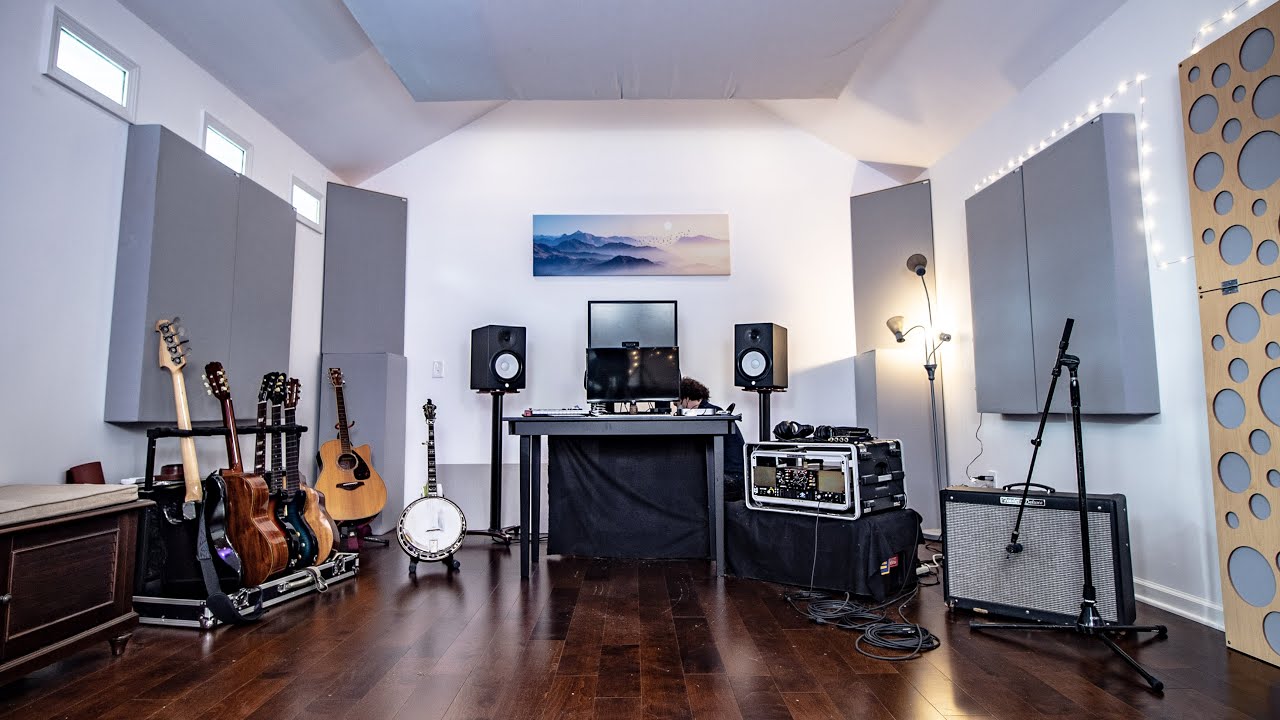
In order to soundproof a metal workshop for use as a studio or music venue, you must first construct decoupling to stop sound waves from passing through the building, cover all openings and gaps, then insulate the metal walls to add bulk and absorb sound. While internal acoustic treatments will manage reflections, these methods will prevent sound from entering and leaving the room.
Podcasters, musicians, voice actors, and film actors who record audio at home can all benefit from a soundproof space. A room can be soundproofed in a variety of ways to make it a viable home recording studio.
The practice of making a space impervious to sound waves is known as soundproofing. The goal of soundproofing is to prevent both internal and external sounds from fleeing the space. Although it’s challenging to completely stop sound waves from entering or leaving a space, it is possible to significantly reduce noise.
You can use four primary methods to soundproof a room:
- Absorption: Adding materials that absorb and trap sound waves.
- Damping: Removing vibrational energy from a structure before it builds up and emits sound waves.
- Decoupling: Blocking sound transmission between two structures in direct contact with each other by creating separation between the structures.
- Filling gaps: Plugging up air gaps in a structure so sound waves cannot easily pass through.
Although the terms “soundproofing” and “acoustic treatment” are sometimes used synonymously, they have different meanings. The practice of preventing sound from entering and leaving an area is known as soundproofing. Controlling echoes and reverberations to improve the space’s sound quality is known as acoustic treatment. In order to provide the best possible environment for sound recording, you can utilize acoustic panels to both reduce reverberations and deflect echoes during the acoustic treatment process.
4 Reasons to Soundproof a Recording Space
Studio soundproofing is a critical part of making high-quality recordings for the following reasons:
- To minimize outside noises: Soundproofing prevents outside sounds from ruining a recording, so you don’t have to worry about noises from airplanes, car horns, people, loud weather, animals, etc.
- To minimize inside noises: It’s not just outside sounds that are a problem when recording audio; noises inside your recording studio can also ruin a recording session. Soundproofing helps dampen sounds made by air conditioning and heat systems, computer fans, keyboard clicks, recording equipment, etc.
- To minimize echo: Some soundproofing materials reduce echoes within a confined space.
- To produce professional-quality sound: Whether you’re recording music, voice-over, or videotaping an acting audition, you want to prevent unwanted sounds from popping up throughout your recording. If you want to become a professional in your chosen creative field, it’s crucial that you soundproof your recording space so that you sound the part of a professional.
How to Soundproof a Recording Space
Read Also: How Metal Hay Barns Keep Your Feed Fresh and Safe
To set up a professional studio in your own house, follow these instructions. If you want to make this a do-it-yourself project, stick to the soundproofing techniques that you are comfortable doing on your own because some are more construction-intensive than others.
- Choose a suitable space. Your equipment is pointless unless you have a suitable space to record. While you may not have a free existing room that you can fully repurpose into a recording studio, you may have a closet or some other small space that could be cleaned out. A tight space can restrict your movement, but if you’re starting out, it’ll do just fine. Your primary concern should be quiet. Avoid sharing a wall with a bathroom, laundry, or kitchen, where appliances make a racket. Exterior noise can compromise your recordings, too. Ideally, use a room with no windows. If your recording room does have a window, seal it tightly with high-density foam tape, acoustic putty, or acoustical caulk.
- Use insulation to create a silent work environment. Acoustic foam tiles, sound absorption panels, and bass traps (acoustic energy absorbers designed to damp low-frequency sound energy) are the best way to outfit your room. You can find cork, rubber, and foam panel insulation at most home improvement stores. Cheaper methods, like hanging thick blankets or heavy curtains on walls and in corners, can lessen echo and boom. You can even push mattresses and couches up against walls to absorb soundwaves and prevent them from bouncing. Clothes and linens do the same thing—just make sure they’re far enough away from you that you don’t rub up against them and create additional noise. To prevent sound from entering through air gaps in your electrical outlets, seal your outlets with foam gaskets.
- Modify your door to block out sound. When it comes to doors, heavier is better; if yours is hollow, you can fill it with spray insulation. Close the air gap between the door and the floor by installing a door sweep on each side of the door.
- Purchase thick carpeting or construct a floating floor. As for the floor, laying down thick carpeting or rugs will help. You can probably find them cheap at a thrift shop, or even convince a carpet store to give you miscuts, scraps, or sample squares. A more effective option that requires professional assistance (or some advanced construction know-how) is to build a floating floor that blocks sound vibrations. The easiest way to construct a floating floor is to use hard rubber pucks or floor floaters to add a new layer of flooring that’s decoupled from your current floor. A more difficult and expensive route is to float your existing floor, but that requires reaching the joists below your sub-flooring and isn’t a feasible option in many locations.
- Add a second layer of drywall lined with sheet block to your walls. If your walls are made of drywall, you’re willing to hire professional construction help, and you can afford to lose a few inches of space around the room, consider creating a sound isolation barrier in your wall by adding a second layer of drywall. Install sheets of mass-loaded vinyl or sheet block (a dense material made to prevent sound transmission) on the inside of the new layer of drywall, leaving an air gap between the two walls. The sheet block and the second wall keep sound waves from entering or exiting through your walls.











Comments