
 By
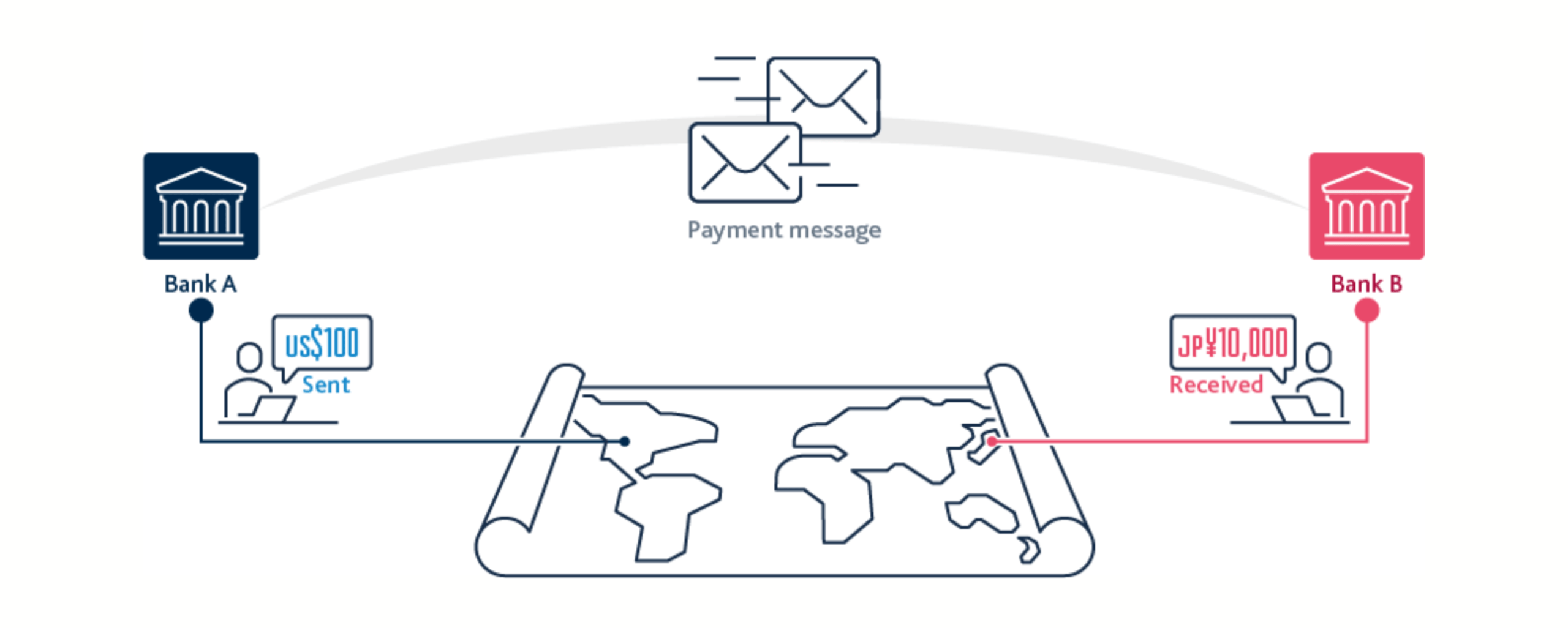
Cross-border payments involve the transfer of funds between parties in different countries, which usually necessitates currency translation, regulatory inspections, and the use of intermediary (correspondent) banks to connect institutions. The process, which frequently uses the SWIFT network, includes commencement, foreign exchange, and a multi-step settlement that can take 1-5 working days.
Step-by-Step Overview of Cross-Border Payments:
- Initiation: The payer initiates the transaction, providing recipient bank details (e.g., IBAN, BIC/SWIFT code), amount, and currency.
- Compliance & Validation: The financial institution or payment service provider (PSP) verifies the sender’s account, checks for sufficient funds, and performs Anti-Money Laundering (AML) and Know Your Customer (KYC) checks.
- Currency Conversion: If the currencies differ, the funds are converted. The exchange rate may be set by the sender’s bank, an intermediary, or the recipient’s bank, often including a spread or fee.
- Intermediary/Correspondent Banking: If banks lack a direct relationship, the payment travels through intermediary banks (correspondent banks) to connect them.
- Settlement: The funds are transferred to the recipient’s bank. This final step involves clearing, where funds are officially settled between banks, and the recipient’s account is credited.
- Confirmation & Reconciliation: Both banks update their internal ledgers, and a final confirmation is sent to the sender and recipient.
Key Factors Affecting the Process:
- Time: Ranging from a few minutes (with modern fintech) to 1–5 business days, heavily influenced by weekend or holiday, and time zone differences.
- Costs: Fees include flat fees, percentage fees, and currency conversion spreads, which can be high with traditional bank transfers.
- Methods: Options include traditional bank wire transfers,, fintech platforms like Wise, card payments, or crypto-based flows.
Being able to process cross-border payments can make a significant difference in expanding your business globally. A smooth and trustworthy payment system enables you to tap into foreign talent, enter new markets, and keep your worldwide supply chains working efficiently.
As organizations grow into more worldwide markets, new cross-border payment systems can improve the speed, reliability, and cost-effectiveness of financial transactions.
What are Cross-border Payments?
Cross-border payments are transactions between a sender and receiver located in separate countries, sometimes in different currencies. This includes individuals sending money to their relatives abroad and businesses paying their international suppliers and employees.
These days, businesses rely heavily on cross-border payments for their day-to-day operations. However, legacy systems such as telegraphic transfers and the SWIFT (Society for Worldwide Interbank Financial Telecommunications) network transactions weren’t originally designed to handle transactions of this scale.
International bank transfers can take up to five days via wire transfer, although the actual time can vary depending on the countries involved, the banks, and the transaction details. Another obstacle is that manually initiating multiple payments to multiple recipients in various countries each month can be time-consuming for a growing business.
Transaction fees and currency conversion fees can also build up, making cross-border payments quite expensive. When you’re making cross-border payments on a global scale, you’ll need a robust international payment solution.
This is where modern providers like us come in to help you make fast, cost-effective cross-border payments.
How do Cross-border Payments Work?
Cross-border payments involve several key steps to ensure secure and efficient transactions. Below is a concise overview of the steps:
- Initiation of payment: Asender initiates a transfer with their financial institution, specifying a recipient, country, and currency. Payment methods include bank transfers, credit or debit cards, or an online payment platform.
- Currency conversion: If different currencies are used, the amount is converted based on the exchange rate, and the sender may pay conversion and transaction fees.
- Intermediary banks: If the sender’s bank lacks a direct relationship with the recipient’s bank, intermediary banks are used. Most transfers are processed through the SWIFT network.
- Processing and settlement: The payment undergoes compliance and regulatory checks, depending on the countries and banks involved.
- Notification: Both sender and recipient receive notifications confirming the successful completion of the transaction.
With the speed at which global trade takes place, fintech companies have answered the call for faster and more cost-effective solutions. By leveraging local payment networks, fintechs can offer businesses access these networks no matter where they’re based. For instance, a Europe-based business can use the Automated Clearing House (ACH) to facilitate quick and affordable transactions with US vendors.
How can Businesses Make Cross-border Payments?
Businesses can make cross-border payments via traditional SWIFT payments, local payment systems, debit or credit card payments, and digital wallets. Each has its benefits, but tapping into local payment rails can be the quickest, most cost-effective choice for cross-border businesses.
| Transfer method | Speed | Cost | Ease |
|---|---|---|---|
| SWIFT payments | Low – Medium | Medium – High | Medium |
| Local payment rails | High | Low | High |
| Card payments | High | High | High |
SWIFT payments
SWIFT has existed for over 50 years, making it a familiar and reliable system for international wire transfers. While banks use SWIFT to facilitate international transfers, the network doesn’t transfer any funds itself.
SWIFT transactions charge transaction and foreign exchange fees, and transfers can take up to five days or more to process. While it’s one of the safer options, it’s not the fastest or most cost-efficient system available.
Local payment rails
Local payment rails are a game-changer for businesses looking to expand their operations globally. Many modern fintech platforms offer cross-border transfers by integrating with local payment infrastructure.
These fintechs enable you to open local bank accounts in key countries, letting you make payments like a local, bypassing the challenges and costs typically associated with what would otherwise be an international transfer. By using these region-specific systems, you can significantly reduce costs and improve the speed and efficiency of your transactions.
Card payments
Credit and debit card payments might be the most obvious and accessible solution. A corporate card lets you make in-person and online payments almost anywhere instantly.
However, cards are also your most expensive option, with foreign transaction fees as high as 3.25% of the payment. Not all suppliers are receptive to cards. Some countries charge recipients an additional fee for card payments on top of interchange fees and other existing costs.
Why They’re So Complex
Cross-border payments are complex because payment regulations, transfer systems, identifying numbers, banking systems, currencies, and fees vary significantly from one country to another. In some less-developed countries, banking systems are not as advanced.
Cross-border payments often involve currency conversion, and foreign exchange (FX) rates are subject to fluctuation. Financial intermediaries may be required to complete transactions.
It’s important to understand how the step-by-step process of sending cross-border payments works. Let’s walk through it.
Steps to Sending Cross-Border Payments
With cross-border international payments, extra steps and factors must be considered beyond basic steps for domestic payment processing. The following 10 steps for sending cross-border payments include factors unique to cross-border transactions.
1. Purchasing
When sourcing globally, you will find an international supplier you want to purchase from. If you’re buying online through eCommerce, you’ll be directed to the payee’s checkout page to make your B2B payment. If you’re buying over the phone, a sales representative will conduct the checkout process. Either way, you’ll be presented with payment options for your B2B purchase.
Ideally, if you’re buying online, the checkout page will offer a localized experience, meaning it features your native language. and will hopefully offer local payment methods that you are familiar with.
2. Preparing for Cross-Border Payments
When sending cross-border payments, you’ll need to provide specific information based on the recipient country. Additionally, not all payment methods are supported globally. For instance, even if you use Global ACH for most payments, you may need alternative methods for recipients in countries where ACH isn’t supported.
Here are a few country-specific examples:
- China: Payee’s telephone number required for Global ACH
- Ukraine: Tax ID number required
- United Kingdom: SORT Code needed
- Most European countries: IBANs required for SEPA ACH
- Various countries: BIC/SWIFT code may be necessary
Simplify Onboarding with a Global Payables Platform
A global payables platform streamlines the onboarding process by allowing payees to input their payment preferences and banking details directly. This creates a centralized, secure record for each payee, making it easier to manage compliance and reduce manual entry errors.
- Take Advantage of Early Payment Discounts
Ask suppliers or payees about early payment discount options when setting up cross-border payments. In a recent study, 40% of companies reported receiving discounts between 1% and 10% from suppliers. If you qualify for these discounts, use prioritization tools within your global payments platform to ensure timely payments to those vendors.
3. Verifying Compliance with Global Payment Rules
Verify that you are sending the payment, following all applicable global payment rules. There are more than 26,000 rules, which makes the use of an automated global payments solution all the more valuable. Can you imagine if your AP department had to check each cross-border payment against that many factors? With a global payments service provider that understands the payments industry, your AP team can focus on core AP tasks, rather than on verifying global compliance.
4. Monitoring and Oversight of Global Payments Status
Sending international payments requires maintaining complete oversight of each payment. When making hundreds or thousands of international money transfers, achieving complete oversight can be time-consuming. Using a global payments platform gives you a single platform to view the status of each payment, providing an effective user experience. Instead of checking each payment individually for reconciliation, you can filter them according to ones that are past due or have yet to be reconciled. From there, you can use invoice automation and mass payments tools to see who is responsible for approving the payment and why it hasn’t been approved.
5. Routing and Processing
Ensure Smooth Payment Authorization
Once payment details are entered, the transaction is sent through an encrypted gateway for authorization. However, if your global payments platform is connected to only one bank, the transaction may be flagged. Using a platform integrated with multiple global banking partners increases the likelihood of successful, first-time payment processing.
- Automate One-Time and Recurring Payments
Whether you’re paying publishers, creatives, or suppliers, a global payments platform can automate both one-time and recurring transactions—reducing manual effort and errors.
- Leverage Recurring Payments for Discounts
For regular payees, setting up recurring payments can help you negotiate better pricing terms and ensure timely delivery—supporting stronger vendor relationships and reducing the risk of payment delays.
- Protect Business Continuity with Timely Payments
Prompt payments to freelancers and affiliates help prevent churn and reduce recruitment costs. Similarly, paying suppliers on time helps avoid shipment holds and production delays caused by unpaid invoices.
6. Payment Approval or Denial
Your payment will be approved or declined. Verification takes place to ensure you have sufficient funds in your account, and if necessary, a currency conversion will take place at the current exchange rate. This applies only if you are sending USD to an account that accepts a different currency and the payee has requested a different currency.
Read Also: What Are Cross-Border Transactions? A Beginner’s Guide
Hopefully, the cross-border payment is using banks that support international trade by using international payments. If so, the transaction is more likely to be approved. A global payments platform excels in intelligently routing the payment through a bank that is most likely to approve the transaction.
7. and 8. Confirmation (Approval or Denial) and Fulfillment
You will receive confirmation that the transaction has been approved or declined. If declined, you’ll receive a return code outlining why it wasn’t processed. If approved, your order then goes into fulfillment.
9. Settlement
At this point, depending on the type of cross-border payment you’ve used, there’s a good chance the funds will still appear in your account and not in the payee’s. A Global Automated Clearing House (ACH) payment takes anywhere from two to five days to reconcile.
10. Tracking
You will receive a reconciliation report from each bank that you work with. This can be extremely confusing and is an inefficient way to keep track of your cross-border payments. With a global payments platform, you can receive a consolidated reconciliation report showing all payouts through all banks and which transactions have been reconciled, as well as which ones have not.
Cross-Border Payment Pitfalls and Costs
Pitfalls or challenges of cross-border payments include:
- Manual payment workflows and siloed systems
- Poor payee experience
- Regulatory risk and tax complexity
- Limited visibility into payouts
1. Manual Payment Workflows and Siloed Systems
Manual processes, spreadsheets, and siloed, fragmented systems often result in bottlenecks, payment delays, duplication of efforts, and rising overhead costs, with no scalability for growth.
2. Poor Payee Experience
Creators, affiliates, and freelancers expect fast, timely, and accurate payouts. A poor payout experience could lead to payees leaving, resulting in extra time needed to recruit replacements, as well as reputational damage.
3. Regulatory Risk and Tax Complexity
Compliance with OFAC and AML, FATCA, DAC7, and local tax requirements is increasingly complex as your payee network expands globally.
4. Limited Visibility into Payouts
With manual or siloed systems, payers and payees have limited visibility for cash flow, liabilities, and payment status.
Costs of cross-border payments include payment method fees, currency exchange fees, sending and receiving bank charges, intermediary fees, and any investigation fees for tracing payments not received. Potential payment fraud initiated by scammers is an additional cost that companies may incur on cross-border payments.
Choosing a Global Payout Partner
Choosing the best cross-border payment provider is crucial. Your ideal solution should offer:
- Global functionality meeting payee needs: Payouts to 200+countries and territories, 120+ currencies, and 50+ payment methods
- Regulatory and tax compliance: Built-in tax compliance across the US with a KPMG-approved engine, UK, EU, and Canada, and compliance with sanctions, KYC, and AML requirements
- Outstanding payee experience: Self-service onboarding with multilingual support in 27 languages, with a payment method choice and real-time payout status visibility
- Integration flexibility: Seamless API and ERP integrations with ERP and accounting software like NetSuite, Xero, QuickBooks Online, and Sage Intacct, and performance marketing systems for payouts
- Automation with scalability: Eliminate 80% of your payout workload through end-to-end payables and payouts automation
Comparison Table: Cross-Border Payment Methods
| International Wire Transfers | International ACH | Prepaid Debit Cards | PayPal | Paper Checks | |
|---|---|---|---|---|---|
| Electronic funds transfer (EFT)? | Yes | Yes | Yes | Yes | No |
| Cost-effective? | No – fees are high | Yes | Yes | Yes, but payment fees are higher than ACH | Yes, but checks can be stolen and altered |
| Use for high volume transactions? | No – too expensive | Yes | No – limits on card value | No – too expensive | Not advisable – labor intensive |
| Fast or slow? | Slower than SEPA global ACH (1 – 5 business days) | Fast – SEPA (in the EU) can be within 1 business day | Fast | Fast instant transfers, but bank transfers can take 1-5 days | Slow – the in-transit mail time is long |
| Easy to return funds if canceled? | No – limited traceability | Yes | Yes | No – Instant transfers are not returnable after receipt | Yes – stop payment |
How Businesses Benefit from Cross-border Payments
Cross-border payments help you gain access to global markets, which can significantly improve your cost competitiveness. You can source supplies from a broader range of international vendors to find the highest-quality materials at the most competitive prices, which can significantly reduce costs and improve the quality of their products.
It also aids n hiring a global talent pool, which can be important for businesses aiming to stay competitive in today’s globalised workforce. By enabling efficient international transactions, businesses can attract and retain top talent from around the world, regardless of geographical boundaries.
When it comes to international payments, every business has its own set of unique challenges. From procurement delays and supply-chain bottlenecks to stretched credit cycles, the challenges compound more when you have an unreliable payment process.
- Low fee payouts: For instance, startups looking to raise funds globally need reliable, cost-effective ways to transfer capital across borders. IT service exporters on the other hand require efficient systems to receive payments from international clients without excessive fees eating into their margins.
- Local Payments and Reach: E-commerce businesses also need to offer localized payment methods to customers worldwide while managing cross-currency settlements. Whereas SMBs expanding internationally need affordable solutions that don’t require sophisticated treasury operations.
- The Cost of Inefficiencies: Inefficient cross-border payment processes can hugely impact a business’s bottom line and operations.
Hidden fees and unfavorable exchange rates can reduce payments by 3-5%, directly eroding profit margins. Payment delays disrupt cash flow and limit working capital availability, hindering business growth and daily operations. To top it, reconciliation issues create accounting headaches, consuming valuable time and resources and often requiring dedicated staff to resolve discrepancies. The cherry on the cake is compliance issues which can lead to rejected payments or regulatory penalties, adding further complications and costs.
As one IT service exporter noted: “Cross-border payments for businesses in India often come with endless fees and frustrations. Xflow has been a game-changer–streamlined, transparent and hassle-free.”
How to Choose a Cross-border Payments Platform
Deciding on the right cross-border payment solution for you comes down to cost, speed, reach, and the ability to make mass payments, especially as your business grows.
Here are some key features to consider as you compare providers:
- Cost of transfers: See if the provider uses real-time mid-market exchange rates, which are more favourable than the typical bank rate, allowing you to save on cross-border payments.
- Speed of transfers: Evaluate how quickly the platform can process payments. Platforms that utilise local payment rails can offer faster and more affordable transfers.
- Global reach: Check the number of countries and currencies the platform supports. A broader reach can be helpful for businesses with overseas suppliers or employees.
- Batch payments: If you need to make multiple payments at a go, look for platforms that support batch payments. This can improve your business productivity.
Selecting the optimal payment solution needs a thoughtful assessment of your business needs. Consider these factors when evaluating providers:
Business size and payment volume
Different payment solutions are tailored to different business scales. For small businesses with lower payment volumes, cost-effective, straightforward solutions may be sufficient. Larger enterprises may need systems supporting higher transaction limits, bulk payments, and automated reconciliation.
Markets served
It is important to ensure the payment solution covers all regions where your business operates or plans to expand. Some providers excel in specific corridors or regions, offering better rates or faster settlement times for particular markets. Verify that the provider supports all countries you send to and receive from.
Payment frequency and value
The frequency and size of your payments will determine the ideal solution. High-frequency, lower-value payments require efficient microtransaction handling, while occasional large transfers may prioritize favorable exchange rates and terms for high-value payments.
Integration requirements
A payment solution must be compatible with your existing systems, whether that’s your ERP software, accounting system, or e-commerce platform. This ensures seamless data flow and reduces manual entry errors. Evaluate the quality of documentation and implementation support available.
Currency needs
Assess the range of currencies you need to send or receive. If you deal in multiple currencies, selecting a provider that offers competitive exchange rates across all your required currencies is essential. Consider whether you need to hold balances in multiple currencies or convert immediately.
Regulatory requirements
Choose a knowledgeable provider of the regulatory landscape in all your operating jurisdictions, ensuring your payments comply with local laws and reporting requirements.
All in all, when evaluating potential partners, consider asking these set of questions-
- What are the all-in fees, including FX conversion costs?
- How quickly will funds be available to the recipient?
- Do senders and recipients have visibility of the transaction status?
- How do you handle compliance documentation?
- What currencies and countries do you support?
- Can you guarantee the final amount the recipient will receive?
Red flags to watch out for
- Be cautious of providers that-
- Don’t disclose their FX markup
- Have opaque fee structures
- Offer limited support options
- Can’t provide clear compliance information
- Have significant negative reviews about settlement delay


Comments