
 By
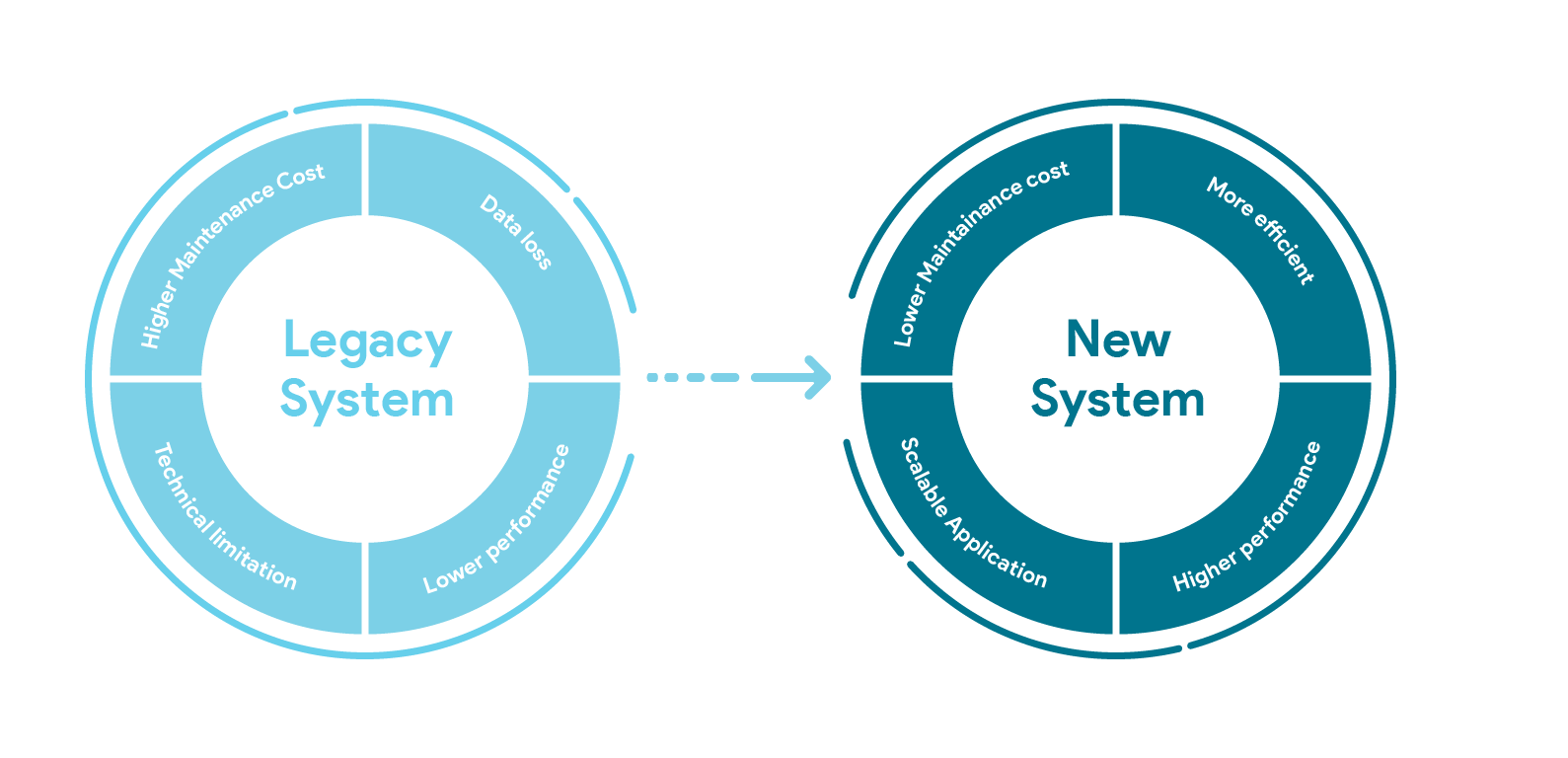
Companies that offer end-to-end legacy system transformation specialize in updating out-of-date software and IT infrastructure to increase productivity, lower costs, and enable future innovation. Key players include IT consultancies and software engineering firms such as Deloitte, Endava, Aziro Technologies, and Euvic IT, which provide comprehensive services ranging from initial discovery and strategic planning to migration, implementation, and ongoing support, frequently utilizing cloud, AI, and agile methodologies.
A legacy system is obsolete computing software and/or hardware that is still in use. The system still serves the purpose for which it was originally created, but it does not allow for expansion. A legacy system will only ever do what it is doing today for the company. A legacy system’s outdated technology prevents it from interacting with modern systems.
As technology evolves, most businesses face challenges caused by an existing legacy system. Instead of providing businesses with cutting-edge capabilities and services such as cloud computing and improved data integration, a legacy system leaves them stuck in a rut.
The reasons for a company’s continued use of a legacy system are varied.
- Investment: Although maintaining a legacy system is expensive over time, upgrading to a new system requires an up-front investment, both in dollars and manpower.
- Fear: Change is hard, and moving a whole company —or even a single department — to a new system can inspire some internal resistance.
- Difficulty: The legacy software may be built with an obsolete programming language that makes it hard to find personnel with the skills to make the migration. There may be little documentation about the system and the original developers have left the company. Sometimes simply planning the migration of data from a legacy system and defining the scope of requirements for a new system are overwhelming.
Some prominent examples that rely on legacy systems are as follows.
Banking systems
Banks rely on decades-old legacy systems, like those built on COBOL, for key tasks like managing accounts, processing transactions, and detecting fraud.
Despite their age, these systems are incredibly stable, so major players like JPMorgan, Chase, and Bank of America still use them, even hiring COBOL experts to keep things running smoothly.
Enterprise resource planning (ERP) platforms
Older ERP systems, like early versions of SAP R/3 or Oracle E-Business Suite, are still standard in industries like manufacturing and retail. They manage tasks like inventory, supply chains, and finances.
These systems persist because they’re deeply tied to business workflows, and upgrading often involves costly disruptions. Companies like Ford and Boeing continue to rely on these legacy platforms for their stability and functionality.
Thus, legacy systems offer businesses robust software and hardware, enabling them to meet the needs of their market and adapt to the demands of the modern digital world.
Why do Companies Still use Legacy Systems?
Legacy systems continue to form the backbone of many firms, despite their limitations and the fact that they use antiquated technologies. Why?
One issue is the difficulty of modernizing legacy systems. Let’s look at the primary reasons organizations keep these antiquated systems.
Cost of replacement
Replacing legacy systems comes at a cost. It is an expensive process, and companies must account for the price of migrating data, training employees, and potential downtime. These systems often support millions of transactions or records for large enterprises daily, so even a short disruption can be financially and reputationally disastrous.
In many cases, businesses continue to use outdated software because of the steep prices of creating new systems.
Critical business functions
Reliability is essential for critical business functions where legacy systems are still reliable. These outdated systems have stood the test of time, making them a core reliance component for complex business processes.
Companies are wary of switching to new software technologies or newer systems that may introduce bugs or instability, jeopardizing essential operations.
Regulatory and compliance requirements
Surprisingly, legacy systems excel at meeting compliance regulations. These systems were built when businesses had fewer options, so they were designed to conform meticulously to industry regulations.
While more advanced, new systems may require customization to meet the exact requirements. Legacy systems are sometimes safer and more dependable in healthcare, banking, and government industries, where compliance is non-negotiable.
Hence, sticking with legacy systems isn’t always about resisting change. It is linked to carefully weighing costs, risks, and the irreplaceable value these systems bring.
Problems Caused by Legacy Systems
A legacy system can generate a slew of issues, including high maintenance costs, data silos that inhibit system integration, a lack of compliance with government standards, and decreased security. These difficulties eventually outweigh the benefits of continuing to use an existing legacy system.
1. Maintenance is costly (and futile)
Maintenance is to expected with any system, but the cost of maintaining a legacy system is extensive. Maintenance keeps the legacy system running, but at the same time, the company is throwing good money after bad. The status quo is maintained, but there’s never a chance for growth with the legacy system.
At some point, there won’t be any more support for a legacy system and there won’t be any more updates. If the system fails, there’s nowhere to turn.
Think of a weak dam with holes that you keep plugging and plugging, yet water keeps seeping through. A legacy system continues to cost a company money for maintenance while never providing new and innovative services.
2. Data is stuck in silos
Data silos are a byproduct of legacy systems. Many older systems were never designed to integrate with each other in the first place, and many legacy software solutions are built on frameworks that can’t integrate with newer systems. This means that each legacy system is its own data silo.
Read Also: How Email Archiving Protects Your Organization From Data Loss
In addition to siloing the data they contain, legacy systems keep the departments that use them out of data integration happening in the rest of the organization. If one team maintains a legacy system while the rest of the company upgrades, that one team is isolated from business intelligence and insights being created in integrated systems.
3. Compliance is much harder
Organizations today must abide by strict sets of compliance regulations. As these regulations continue to evolve, a legacy system may not be equipped to meet them.
Compliance regulations like the GDPR, for example, require a company to know (and prove) what customer data they have, where it is, and who is accessing it. Companies with customer data need to maintain well-governed records, which is much harder (if not impossible) in outdated, siloed systems.
4. Security gets weaker by the day
A data breach can cost a company dearly, and legacy systems are more vulnerable to hackers than newer systems. Legacy systems by definition have outdated data security measures, such as hard-coded passwords. That wasn’t a problem when the system was built, but it is now.
A legacy system not only leaves a company behind with old technology, it can also seriously damage a company’s reputation by putting data at risk of a breach. At some point, a vendor no longer supports the legacy system or provides much needed updates, opening the legacy system up to a security risk. Even if a critical update is available, installing it can be risky and is postponed for fear of breaking the system. As technology advances, risks increase for legacy systems.
5. New systems don’t integrate
As a company matures, adding new systems is necessary to stay competitive in today’s world. But the older technology of a legacy system may not be able to interact with a new system. A department still using a legacy system won’t receive all the benefits that a new system offers.
Developing processes to make the systems work together is cumbersome and still leaves the company open to security risks. This causes an inability for technological growth within a company.
Final Words
Legacy systems represent more than simply outdated technology. They are the foundation of many enterprises, combining stability with the weight of modernizing difficulties.
Whether you’re dealing with high maintenance expenses, looking at modernization methods, or relying on legacy systems for compliance and reliability, aligning your IT infrastructure with your business objectives is critical.
If you are dealing with legacy system modernization, contact a reputable web app development company to discuss new solutions that protect what works while preparing your systems for the future. Your next step could be critical to attaining your business objectives.










Comments