
 By
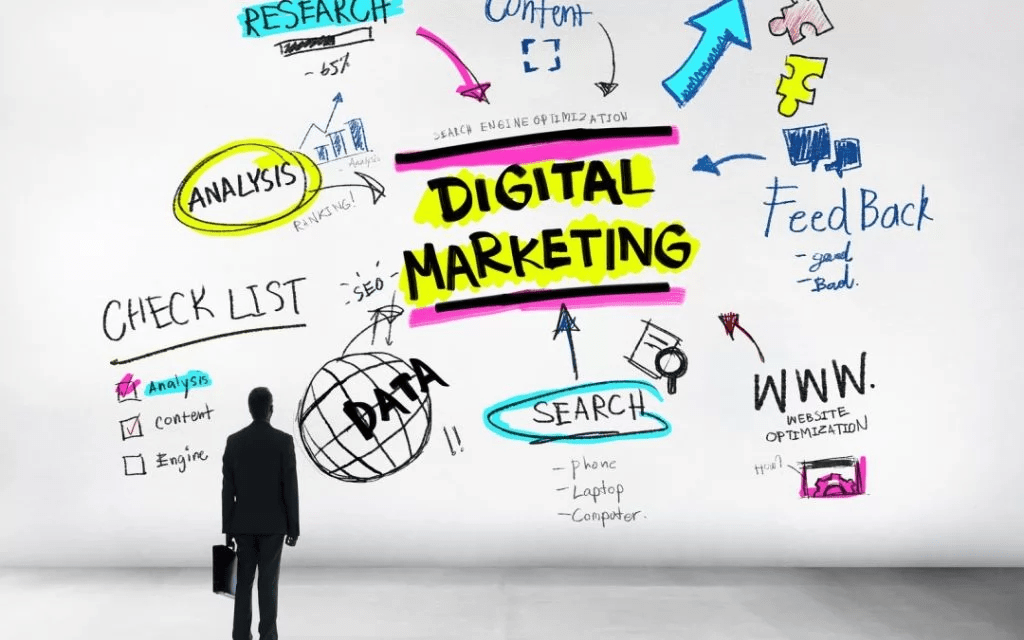
The strategic integration of AI for personalization and automation, a greater emphasis on community-building, and the rise of immersive technologies such as AR/VR are all digital marketing trends that are driving corporate success. Other important developments include short-form video, optimizing for voice and visual search, and emphasizing first-party data and ethical marketing techniques.
Key digital marketing trends for business growth
- Artificial Intelligence (AI): AI is being used to personalize customer experiences, automate tasks, analyze data, and create content. This can lead to more effective and efficient marketing campaigns.
- Immersive Technologies: Augmented reality (AR) and virtual reality (VR) create interactive experiences, like virtual product try-ons, that can boost engagement, brand recall, and conversion rates.
- Personalization and Community:
- Personalization: AI and data analysis are crucial for creating hyper-personalized customer experiences.
- Community: Brands are focusing on building online communities and leveraging user-generated content (UGC) to build trust and authenticity.
- Content and Search:
- Short-Form Video: Platforms like TikTok and Reels are driving engagement, and this trend is likely to continue.
- Voice and Visual Search: With the increase of voice assistants and visual search tools, businesses need to optimize for natural language queries and image metadata.
- Strategic Content: High-quality editorial content, like blog posts, and case studies remain important, as does content co-creation with customers.
- Ethics and Data:
- First-Party Data: The decline of third-party cookies makes collecting and using first-party data essential for personalization and targeting.
- Ethical Marketing: Consumers are demanding more transparency, sustainability, and social responsibility from brands.
How these trends drive growth
- Increased Engagement: Immersive experiences, short-form video, and community-building activities grab and hold audience attention more effectively.
- Better Conversion Rates: Personalized content, virtual product trials, and streamlined experiences lead customers to make more confident purchase decisions.
- Enhanced Brand Loyalty: Authentic communication, community interaction, and a commitment to ethical practices build deeper connections and trust with consumers.
- Improved Efficiency: AI-powered automation and analytics help businesses create and manage campaigns more efficiently, freeing up resources for strategic planning.
Over 60% of small businesses already utilize AI to improve their marketing strategy and reach new clients. The major surprise is that it is no longer only about technology and large resources. Today’s winning businesses create intensely personal experiences that make customers feel visible with every tap and click.
Emerging Technologies Shaping Digital Marketing
Digital marketing is evolving at an unprecedented rate, with emerging technologies radically changing how small businesses interact with their audiences. The fast progress of technical solutions is giving businesses unprecedented chances to engage clients more intelligently and efficiently.
AI-Powered Marketing Intelligence
Artificial intelligence has become a game-changing force in digital marketing strategies. According to the University of Houston’s Small Business Development Center, small businesses are increasingly adopting AI to develop sophisticated marketing strategies that deliver personalized experiences. These intelligent systems can analyze vast amounts of customer data, predict consumer behavior, and generate targeted content with remarkable precision.
Hyper-personalization, predictive analytics, and automated content generation are three of the primary benefits of AI-driven marketing. Businesses may now use machine learning algorithms to analyze client preferences at the granular level, allowing them to create messaging that resonates strongly with certain audience segments. ComModern digital marketing has moved beyond one-size-fits-all tactics, with personalization emerging as a vital strategy for small firms looking to build meaningful client relationships. The capacity to provide individualized experiences has emerged as a critical difference in an increasingly competitive market.panies can use AI tools to enhance their marketing efforts, reduce human work, and increase engagement rates.
- Voice and Visual Search Optimization
The proliferation of smart speakers and superior visual search technology is radically altering how customers discover and interact with items. The North Carolina Small Business and Technology Development Center emphasizes that marketers must now alter their strategy to fit these new search modalities.
Voice search optimization necessitates a more conversational approach to content, with emphasis on natural language patterns and long-tail keywords. Businesses must structure their digital material to address specific inquiries that users may ask using voice-activated devices. Similarly, visual search necessitates high-quality, well annotated images that are easily processed by search algorithms.
- Predictive Marketing and Real-Time Customer Insights
Advanced technologies enable unparalleled levels of customer understanding. The Association to Advance Collegiate Schools of Business says that digital technology now enable businesses to anticipate customer needs in real time, resulting in more responsive and dynamic marketing campaigns.
Predictive analytics technologies can now estimate customer behavior, detect prospective market trends, and aid firms in making data-driven decisions. These systems leverage historical data, current market situations, and individual user interactions to generate actionable insights. Small businesses can use these tools to create more focused marketing campaigns, optimize product offers, and enhance the entire customer experience.
As digital marketing technologies evolve, small businesses that use these advances will gain substantial competitive advantage. The goal is to be agile, constantly learn, and intelligently integrate new technology into existing marketing frameworks.
To assist small firms in determining which upcoming technology trends to focus on, the table below summarizes the essential features and strategic benefits of each topic in this article.
| Technology Trend | Key Features | Strategic Benefits |
|---|---|---|
| AI-Powered Marketing Intelligence | Data analysis, machine learning, automated content creation | Hyper-personalization, efficiency, higher engagement |
| Voice & Visual Search Optimization | Natural language focus, high-quality images, image tagging | Enhanced discoverability, SEO opportunities |
| Predictive Marketing & Real-Time Insights | Behavioral prediction, real-time data, actionable analytics | Targeted campaigns, trend identification, improved customer experience |
Personalization and Customer Experience Trends
Modern digital marketing has moved beyond one-size-fits-all tactics, with personalization emerging as a vital strategy for small firms looking to build meaningful client relationships. The capacity to provide individualized experiences has emerged as a critical difference in an increasingly competitive market.
- Data-Driven Customer Insights
Customer data is now the foundation of smart marketing initiatives. According to study conducted by the National Center for Biotechnology Information, the availability of real-time data from web and social media platforms provides unparalleled opportunity for analyzing customer behavior and preferences.
Businesses may now use advanced analytics to generate very detailed client profiles, allowing them to anticipate requirements, preferences, and deliver precisely targeted content. This strategy goes beyond typical demographic segmentation, allowing businesses to better understand individual customer journeys and provide highly individualized interactions.
- Co-Creation and Customer Engagement
The introduction of the ‘prosumer’ notion has caused a transformational shift in the marketing landscape. According to research conducted by the Association of Advance Collegiate Schools of Business, leading organizations frequently involve clients in product development and promotional strategies.
Read Also: How do you Evaluate Digital Marketing Performance?
Businesses that embrace co-creation can build stronger consumer loyalty and boost innovation. This collaborative approach makes customers feel truly valued and connected to the brand. Companies that successfully employ co-creation strategies can see a 20% boost in customer satisfaction and loyalty, significantly altering the traditional producer-consumer relationship.
Hyper-Personalized Customer Experiences
Advanced technologies enable organizations to develop increasingly sophisticated tailored experiences. Machine learning algorithms can now evaluate complicated behavioral patterns, allowing businesses to provide information, recommendations, and interactions that feel personalized to each individual customer.
Businesses can now develop simple and seamless experiences ranging from dynamic website content that adjusts in real time to personalized email marketing campaigns and customized product suggestions. The goal is no longer merely to sell a product, but to build a comprehensive, personalized journey that addresses each customer’s unique wants and preferences.
As digital marketing evolves, customisation will become a fundamental expectation rather than a competitive advantage. Small businesses that spend in really understanding their clients and providing truly tailored experiences will be best positioned to prosper in this new marketing ecology.
Content Strategies That Drive Engagement
Content marketing has progressed from a supplementary approach to an essential component of digital interaction for small businesses. Effective content strategies now necessitate a more nuanced strategy that goes beyond traditional marketing approaches, focusing on producing value, establishing trust, and cultivating real connections with target audiences.
- Strategic Content Development
According to ResearchGate, strategically crafted content can drastically cut customer decision-making expenses while also increasing engagement rates. Small businesses must prioritize developing content that adds true value, addresses specific customer problem areas, and gives actionable information.
Successful content strategies require a thorough grasp of the audience, as well as the integration of storytelling approaches and practical information. This approach elevates content from a basic promotional tool to a useful resource that clients actively seek. Businesses can establish themselves as trusted industry authority by demonstrating competence and giving solutions.
- Multi-Platform Content Optimization
According to the Pew Research Center, different social media platforms require tailored content strategies to maximize audience engagement. Each platform has unique audience demographics and content consumption preferences, demanding a sophisticated, platform-specific approach.
Effective multi-platform content optimization involves:
- Video Content: Creating short, engaging videos for platforms like TikTok and Instagram
- Long-form Articles: Developing in-depth content for LinkedIn and professional blogs
- Visual Storytelling: Using infographics and image-based content for Pinterest and Instagram
- Interactive Content: Designing quizzes, polls, and interactive experiences for platforms like Facebook and Instagram Stories
- Building Authentic Audience Connections
Content marketing success is dependent on authenticity and true value creation. Small businesses must move beyond standard sales presentations and focus on providing content that actually benefits, educates, or entertains their target audience. This technique fosters trust, increases audience loyalty, and converts passive customers into active brand champions.
Personal storytelling, real-world experiences, and open communication are all key components of the most effective content strategies. Businesses may build deeper connections that go beyond typical marketing bounds by sharing behind-the-scenes information, customer success stories, and industry issues.
As digital platforms grow, organizations that remain agile, prioritize audience demands, and consistently produce high-quality, relevant content will gain an advantage in an increasingly competitive digital world. Those that can develop authentic, value-driven experiences that resonate profoundly with their target audiences will have a significant advantage in the future of content marketing.
Data-Driven Marketing for Better Results
Data has become the cornerstone of modern marketing strategies, transforming how small businesses understand, engage, and convert their target audiences. The ability to collect, analyze, and leverage data intelligently has shifted from a competitive advantage to an essential survival skill in the digital marketplace.
Analytics and Performance Measurement
Research from Google Analytics Academy demonstrates that comprehensive data analysis enables businesses to make precise, informed marketing decisions. By tracking key performance indicators (KPIs), businesses can move beyond intuition and base their strategies on concrete, measurable insights.
Key metrics small businesses should prioritize include customer acquisition cost, conversion rates, engagement duration, and return on marketing investment. Advanced analytics tools now provide real-time dashboards that break down complex data into actionable visualizations, allowing marketers to quickly identify trends, optimize campaigns, and allocate resources more effectively.
Below is a table outlining essential analytics metrics and the benefits of tracking them, helping small businesses prioritize what matters most for effective data-driven marketing.
| Key Metric | What It Measures | Why It Matters |
|---|---|---|
| Customer Acquisition Cost | Total cost to acquire a new customer | Budget optimization, ROI tracking |
| Conversion Rate | Percentage of visitors who complete desired action | Campaign effectiveness |
| Engagement Duration | Time users spend engaging with content or site | Content quality, audience interest |
| Return on Marketing Investment | Revenue returned for every dollar spent | Strategic resource allocation |
- Predictive Customer Behavior Modeling
According to the Harvard Business Review, predictive modeling has revolutionized how companies anticipate customer needs. Machine learning algorithms can now analyze historical data to forecast future behaviors, preferences, and potential purchasing patterns with remarkable accuracy.
Predictive models help businesses:
- Identify High-Value Customers: Pinpoint individuals most likely to make significant purchases
- Reduce Churn Rate: Predict and proactively address potential customer disengagement
- Personalize Marketing Campaigns: Develop targeted strategies based on predicted customer interests
- Optimize Pricing Strategies: Recommend dynamic pricing based on predicted market demand
Data Privacy and Ethical Marketing
As data collection capabilities expand, ethical considerations become increasingly critical. Small businesses must balance the benefits of data-driven marketing with robust privacy protections. The International Association of Privacy Professionals emphasizes the importance of transparent data collection practices and obtaining explicit customer consent.
Effective data-driven marketing requires:
- Clear communication about data usage
- Robust security measures to protect customer information
- Compliance with regional data protection regulations
- Giving customers control over their personal data
The future of marketing lies in creating a delicate balance between data-powered insights and customer trust. Businesses that can leverage data intelligently while maintaining ethical standards will be best positioned to build long-term, meaningful customer relationships.
As technology continues to evolve, data-driven marketing will become increasingly sophisticated. Small businesses that invest in understanding data analytics, predictive technologies, and ethical data practices will gain a significant competitive edge in an increasingly complex digital marketplace.
What are the Current Trends in Digital Marketing?
1. AI and Automation
- Personalized Marketing at Scale
Artificial intelligence (AI) is at the core of personalized marketing efforts in 2025. By analyzing vast amounts of user data, AI creates hyper-targeted campaigns that resonate with specific customer preferences. Companies using AI-driven marketing platforms have seen an average 20% increase in conversion rates (Source: McKinsey & Company).
“AI is helping marketers understand customer intent better than ever before, allowing brands to deliver the right message to the right person at the right time.” — Forrester Research
- Smarter Workflows with Automation
Automation tools are streamlining marketing operations, enabling faster content creation, real-time ad adjustments, and more efficient customer segmentation. Platforms like HubSpot, Marketo, and Pardot are integrating AI-powered automation to boost productivity while ensuring campaigns remain highly relevant.
Key Benefits of AI and Automation:
- AI-powered email segmentation improves open rates by 30% (Salesforce, 2025).
- Automated chatbots are handling 70% of customer inquiries, reducing operational costs (Gartner, 2025).
- AI-driven predictive analytics can improve ad targeting efficiency by 35%.
2. Voice and Visual Search
- Voice Search Optimization
With voice-activated devices becoming ubiquitous, optimizing for conversational keywords is non-negotiable. According to Google, 50% of all searches in 2025 will be voice-based. Marketers must adapt their content to include:
- Natural language and long-tail keywords (e.g., “What are the best CRM tools for startups?”).
- FAQ-style content to match question-based queries.
- Schema markup to enhance AI-driven search visibility.
- Visual Search Capabilities
Platforms like Pinterest Lens and Google Lens are driving visual search adoption. Businesses investing in image SEO and metadata optimization have seen a 30% increase in search-driven traffic
3. First-Party Data and Privacy-First Strategies
- Navigating Privacy Regulations
With rising consumer concerns over data privacy, compliance with GDPR, CCPA, and AI-driven regulations is essential. Businesses are shifting to first-party data collection to maintain personalized marketing while adhering to privacy laws.
Key Statistics:
- 73% of consumers prefer brands that are transparent about data usage (PwC, 2025).
- Companies investing in first-party data strategies see a 15% increase in customer trust and engagement (Forbes, 2025).
- Building Trust with Customers
- Clearly communicate how data is collected and used.
- Offer incentives (e.g., exclusive content, discounts) for customers to opt-in.
- Implement secure, encrypted storage for customer data.
4. Video Content: A Dominant Force
- Short-Form Video Trends
Short-form videos continue to dominate platforms like TikTok, Instagram Reels, and YouTube Shorts. According to Cisco, 82% of all internet traffic in 2025 will be video-based.
Why Short-Form Video Works:
- Higher engagement rates (15-20% higher than static content).
- Preferred by Gen Z and Millennials, key decision-makers in B2B.
- Algorithm favorability on social platforms.
- Interactive Video Experiences
- Shoppable videos on social platforms increase conversion rates by 30%.
- Live video Q&A sessions generate 3x more engagement than pre-recorded content.
5. Omnichannel Marketing: Connecting Seamlessly
- Unified Customer Journeys
Consumers interact with brands across multiple touchpoints—social media, email, websites, and in-store visits. Omnichannel strategies create a seamless experience by integrating data from all channels to provide consistent messaging and cohesive user journeys.
- Leveraging Emerging Platforms
Platforms like Discord, Twitch, and emerging metaverse spaces offer untapped opportunities for engaging niche audiences.
6. Sustainability and Purpose-Driven Marketing
- Highlighting Ethical Practices
Consumers are favoring brands that prioritize sustainability. Companies implementing eco-friendly digital practices see an 18% increase in brand loyalty.
- Authentic Storytelling
Brands that align with social responsibility and transparency build stronger emotional connections with customers.
7. Advanced Analytics and Predictive Insights
- Real-Time Performance Tracking
Marketers in 2025 rely on advanced analytics tools like Google Analytics 4 and Tableau for real-time campaign monitoring.
- Predictive Marketing with AI
Predictive analytics powered by AI anticipates customer behavior, enabling proactive marketing strategies.
How to Keep Up With Digital Marketing Trends
We’ve found 6 practical strategies for staying on top of changing digital marketing trends, ranging from social media marketing and AI-powered tools to predictive analytics and voice search optimization.
1. Consult online publications dedicated to digital marketing.
Web-based resources like Search Engine Journal, Marketing Week, eMarketer and Social Media Today are great places to stay informed on the latest marketing developments. These trusted online publications regularly cover industry trends, research findings and real-world insights from marketing professionals.
For example:
- Learn how AI-powered analytics tools can process customer data in real time to create hyper-personalized campaigns that adapt to individual behaviors and preferences.
- See why voice search optimization is now essential, as Statista reports that the number of people using voice assistants in the U.S. is expected to exceed 157 million by 2026.
Beyond keeping you current on emerging digital marketing trends, these publications also offer practical tips for improving your existing strategies and staying competitive in a fast-changing landscape.
2. Participate in certified marketing courses and training programs.
Certified marketing courses are a great way to keep pace with fast-changing digital marketing trends. Many programs now offer specialized tracks in AI-driven marketing, data privacy compliance and sustainable marketing practices — all essential skills for today.
Earning a respected marketing certification can strengthen your résumé while deepening your understanding of today’s most powerful digital tools, from social media platforms and Google Ads to Hootsuite, HubSpot and advanced customer data analytics.
Some of the best marketing certifications include options from the Digital Marketing Institute, Google’s AI Essentials course and LinkedIn Learning’s advanced marketing analytics programs. Each offers flexible, self-paced learning designed for working professionals.
3. Subscribe to marketing print magazines.
Want to keep learning even when you’re offline? Pick up print publications like Adweek, The Drum, Fast Company or Ad Age at your local newsstand or bookstore.
While print content isn’t as frequent or instantly updated as online news, these magazines deliver well-researched insights and in-depth features that can teach, inspire and spark new marketing ideas.
4. Read blogs dedicated to digital marketing.
Reading meaningful, up-to-date blog content is one of the best ways to stay current on emerging digital marketing trends. Popular digital marketing blogs and top advertising blogs with marketing content often share practical advice, expert perspectives and real-world examples that help you apply new strategies to your own business.
Some leading marketing blogs include Neil Patel Digital, Moz Blog and the Content Marketing Institute. These outlets often discuss emerging topics such as generative AI in content creation, privacy-first marketing and zero-party data, helping readers stay current with how digital marketing continues to evolve.
5. Connect with digital marketing experts on LinkedIn.
LinkedIn is an excellent place to connect with digital marketing professionals and industry groups. Creating or updating your LinkedIn business profile lets you follow top marketing voices, join relevant discussions and access in-depth articles through resources like the Marketing Success Hub.
6. Use social media platforms to follow digital marketing trends.
Social media platforms like X (formerly Twitter), Facebook, Instagram and even TikTok are easy, accessible ways to stay current on the latest digital marketing trends.
Follow marketing industry leaders on Facebook and Instagram to see their daily insights and best practices. On X, explore trending topics and hashtags, and set alerts so you can get real-time updates on breaking news. Emerging platforms such as Threads and Bluesky are also becoming valuable spaces for marketing conversations and professional networking.
Lastly
Adopting digital technology trends causes disruption and higher revenue, resulting in digital business transformation. Every year, new digitization trends emerge that have the potential to boost business growth. Successful digital transformation can enable software monetization, drive data-driven insights, improve customer happiness, increase agility, and more.








Comments