
 By
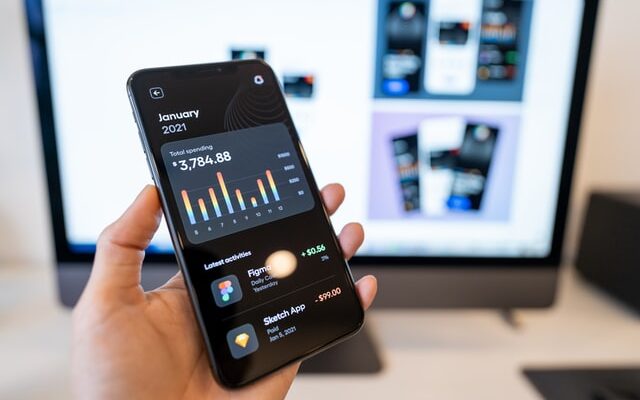
To build a personal data wallet for maximum revenue, start by consolidating the data you legally control, organize it into useful categories, secure it with strong encryption and authentication, establish granular consent controls, and connect only to reputable services that provide legitimate value in exchange for permissioned access.
The objective should not be to indiscriminately sell your identity, location history, medical records or financial information.
Instead, think of a personal data wallet as a secure digital vault that lets you decide what information can be accessed, by whom, for what purpose and for how long.
A strong personal data wallet could potentially create value through:
- Paid research participation.
- Consumer-insight programs.
- Permission-based personalization.
- Loyalty and rewards programs.
- Data-driven financial tools.
- Credential verification.
- AI-powered personal services.
- Consent-based data licensing where lawful.
- Market-research panels.
- Reduced costs through personalized offers.
The opportunity is significant because personal information already has commercial value. The difference is that data brokers and platforms frequently capture that value rather than the individual generating the information.
The U.S. Federal Trade Commission explains:
“Companies known as data brokers collect information about us and sell or share it with others.”
The FTC says such information can originate from public records, social-media profiles and other data brokers.
A personal data wallet attempts to reverse that relationship by giving individuals greater control.
What Is a Personal Data Wallet?
A personal data wallet is a secure digital environment for storing, managing and selectively sharing information associated with an individual.
Think of it as a combination of:
Digital wallet + encrypted vault + identity manager + consent dashboard.
Depending on its design, it might contain:
- Identity credentials
- Education records
- Employment history
- Purchase history
- Product preferences
- Loyalty information
- Financial records
- Fitness information
- Professional credentials
- Website preferences
- Travel history
- Subscriptions
- Digital receipts
The important principle isn’t simply storage.
It is control.
You should be able to determine which service receives which information rather than handing every company unrestricted access to your entire digital profile.
Why Personal Data Wallets Matter
We generate enormous quantities of information simply by participating in modern life. Browsing websites, shopping, travelling, streaming entertainment, using mobile applications and making digital payments can all produce data.
The World Bank’s Global Findex 2025 illustrates the scale of digital participation. Its latest dataset is based on nationally representative surveys of approximately 148,000 adults across 141 economies and includes almost 300 indicators covering financial services, mobile-phone ownership, internet use and digital safety.
Digital identity infrastructure is also expanding, although access remains uneven.
The World Bank estimates that approximately:
800 million people still lack official identification, while at least 2.8 billion people lack access to government-recognized digital identity capable of supporting secure online transactions.
That helps explain why identity and personal-data infrastructure could become increasingly important.
Step 1: Decide What Your Data Wallet Is For
Don’t begin by collecting every possible piece of information.
Begin with a purpose.
Ask:
What economic or practical value should this wallet create?
Possible goals include:
| Goal | Useful Data |
|---|---|
| Market research | Demographics, preferences, purchasing patterns |
| Personalized shopping | Sizes, brands, purchase preferences |
| Financial services | Verified financial information |
| Employment | Qualifications, work history, credentials |
| Travel | Preferences, loyalty memberships |
| Research participation | Consented demographic/behavioral information |
| Identity verification | Verified credentials |
| AI personalization | Preferences and selected personal context |
Purpose limitation matters because unnecessary data increases security risk.
A wallet built for shopping recommendations probably doesn’t need your complete medical history.
Collect what creates value—not everything that exists.
Step 2: Gather the Data You Already Control
Your information is probably scattered across dozens of services.
Create an inventory.
Look at:
- Email accounts
- Social-media services
- Ecommerce platforms
- Banks and payment services
- Streaming platforms
- Cloud storage
- Fitness applications
- Loyalty programs
- Educational services
- Professional networks
Depending on your jurisdiction and the particular service, you may have rights to obtain copies of certain information.
The European Union’s GDPR provides a particularly important example.
The European Commission explains that individuals covered by the relevant right can receive personal data they provided to an organization in a “structured machine-readable format” and have it transmitted to another organization where technically feasible.
The EU Digital Markets Act goes further for designated gatekeepers by requiring mechanisms for portability of certain user-provided or generated data, including continuous and real-time access in relevant circumstances.
Your exact rights depend on where you live and which organizations process your information.
Step 3: Organize Data Into Separate Vaults
Don’t create one giant folder called “My Data.”
Separate information according to sensitivity and purpose.
For example:
Tier 1: Public
- Public professional biography
- Public portfolio
- Published work
Tier 2: Preference Data
- Favorite brands
- Shopping interests
- Entertainment preferences
Tier 3: Transactional Data
- Purchase records
- Subscriptions
- Receipts
Tier 4: Confidential Data
- Financial information
- Identity credentials
- Employment documents
Tier 5: Highly Sensitive Data
Depending on applicable law, this could include information such as health, precise location, biometrics or other specially protected categories.
The more sensitive the information, the stronger your protections and the more conservative your sharing policy should become.
Step 4: Choose Secure Wallet Infrastructure
One interesting technical approach is Solid, a decentralized-data initiative associated with World Wide Web inventor Sir Tim Berners-Lee.
Solid uses personal online data stores known as Pods.
The Solid Project explains:
“Your data remains yours even when you change providers or try new services, applications or AI agents.”
Applications can request access to information stored in the Pod, while the user controls permissions. Solid uses open, interoperable standards designed to prevent information from being permanently locked inside individual applications. Solid Pods can be obtained from hosted providers or self-hosted.
Read Also: How Small Businesses Can Monetize Customer Data Legally
Other architectures are possible.
Whatever system you select, prioritize:
- Encryption at rest.
- Encryption in transit.
- Multi-factor authentication.
- Fine-grained permissions.
- Access logs.
- Data backups.
- Account-recovery mechanisms.
- Data export.
- Permission revocation.
- Open/interoperable formats where practical.
Security should come before monetization.
Step 5: Build a Consent Dashboard
This may be the most important component.
Instead of:
“Company X can access my data.”
Permissions should ideally specify:
Who?
Company X.
What?
Purchase categories from the previous six months.
Why?
Consumer research.
For how long?
30 days.
Can they redistribute it?
No.
Can access be revoked?
Yes.
This turns vague consent into a manageable transaction.
A useful dashboard might show:
| Permission | Status |
|---|---|
| Company requesting access | Verified |
| Data requested | Clearly listed |
| Purpose | Research |
| Duration | 30 days |
| Compensation | $10 |
| Resale allowed | No |
| AI training allowed | No |
| Withdrawal available | Yes |
The user should understand the transaction before approving it.
Step 6: Identify Safe Ways to Generate Revenue
Here is where the concept becomes commercially interesting.
Instead of thinking:
“Who will buy all my personal data?”
ask:
“Who will compensate me for a specific, permissioned use?”
Potential models include:
1. Market Research
Research organizations could compensate users for participating in studies using selected information.
2. Consumer Panels
Users could provide purchasing preferences and feedback in exchange for rewards.
3. Personalized Offers
Consumers could voluntarily share selected preferences with companies in return for discounts or better offers.
4. Research Data
Appropriately consented and legally compliant information could support legitimate academic or commercial research.
5. Credential Verification
A wallet could allow individuals to prove qualifications without repeatedly distributing full documents.
6. AI Personalization
Instead of an AI company permanently absorbing your personal information into its own silo, a personal-data architecture could potentially allow an AI service to access selected information under user-controlled permissions.
Solid explicitly describes this concept, saying users can decide which AI systems access their information and for what purposes.
Step 7: Never Monetize Data Blindly
This point is critical. Not all data should be treated as a commodity. The FTC’s enforcement actions demonstrate why.
In 2024, the FTC finalized an order prohibiting data broker X-Mode and its successor Outlogic from selling or sharing sensitive location data after alleging that precise information could be used to track visits to places including medical and reproductive-health clinics and places of worship.
Another FTC action targeted Mobilewalla over allegations involving the collection and sale of sensitive location information.
These cases demonstrate that personal-data monetization has serious privacy, safety and regulatory implications.
Never casually trade information revealing:
- Precise home location
- Passwords
- Authentication credentials
- Children’s information
- Government identification numbers
- Banking credentials
- Highly sensitive health information
- Other information whose disclosure could expose you to fraud, discrimination or physical danger
Potential compensation is meaningless if the transaction exposes you to identity theft or permanent privacy loss.
Step 8: Calculate the Real Value of Each Transaction
Maximum revenue doesn’t mean accepting every offer. Create a minimum data-value threshold.
Consider:
Revenue received ÷ sensitivity + duration + downstream-use risk
You don’t need a literal mathematical formula, but the principle matters.
For example:
Offer A
$1 for permanent access to detailed location history.
Reject.
Offer B
$10 for an anonymous 15-minute consumer-preference study. Potentially reasonable after verifying the organization and terms.
Offer C
$50 for unrestricted resale of identity, financial and behavioral information. The compensation may look attractive, but the downstream risk could be enormous.
Price is not the same thing as value.
Step 9: Track Who Has Your Data
A good personal data wallet should maintain an access ledger.
Record:
- Organization
- Information shared
- Date
- Purpose
- Compensation
- Permission duration
- Expiration
- Revocation status
This creates something most consumers currently lack:
a map of their personal-data economy.
You can see exactly where your information has gone.
Step 10: Build Multiple Revenue Streams
A mature data wallet shouldn’t depend on selling datasets. Its economic value can come from multiple directions.
| Revenue/Value Model | Potential |
|---|---|
| Paid surveys | Low–moderate |
| Research participation | Moderate |
| Consumer panels | Moderate |
| Loyalty rewards | Low–moderate |
| Personalized offers | Indirect savings |
| Credential verification | Service value |
| AI personalization | Emerging |
| Permissioned data licensing | Emerging/highly regulated |
| Subscription savings | Indirect |
| Business/research partnerships | Potentially higher |
The most promising long-term model may not involve literally selling personal data. It may involve charging for permissioned access, verification, participation and personalization.
Why This Could Become a Bigger Opportunity
Personal information currently sits inside countless corporate databases. A personal-data-wallet model changes the architecture:
Traditional model:
Person → Platform → Platform controls data → Third parties gain access
Personal wallet model:
Person → Personal vault → User grants specific access → Permission expires/revokes
Sir Tim Berners-Lee describes the philosophy behind Solid this way:
“Solid returns the web to its roots by giving everyone direct control over their own data.”
The concept could become particularly important as AI systems demand increasingly large amounts of personalized context.
Final Words
The best strategy for building a personal data wallet for maximum revenue isn’t collecting everything about yourself and selling it to the highest bidder.
That model creates enormous privacy and security risks.
Instead:
- Collect only useful information.
- Store it securely.
- Separate information according to sensitivity.
- Use strong encryption and authentication.
- Create granular permissions.
- Verify every organization requesting access.
- Prefer temporary access over permanent transfer.
- Keep highly sensitive information out of commercial transactions.
- Track every permission you grant.
- Monetize participation and controlled access—not your entire identity.
The World Bank estimates that 2.8 billion people still lack access to government-recognized digital identity for secure online transactions, demonstrating both how far digital identity infrastructure has progressed and how much remains to be built.
Once an unrestricted copy of sensitive information has been sold and distributed, control can be extremely difficult to recover.
But when companies must request narrowly defined permission to access valuable information, the individual has considerably greater bargaining power.
The future opportunity may therefore be less about “selling your data” and more about becoming the gatekeeper to your digital identity.
That is where a well-designed personal data wallet could create both financial value and something even more important:
control.
FAQ
Can I make money from my personal data?
Potentially, but opportunities vary greatly and there is no guaranteed income. Legitimate models can include research studies, consumer panels, rewards programs and consent-based data services.
Avoid schemes promising effortless income merely for surrendering unrestricted access to sensitive information.
What is a personal data wallet?
It is a secure system that allows an individual to store, organize and control access to personal information. More advanced systems can provide granular permissions, access logs and interoperable data sharing.
Is selling personal data legal?
The answer depends on what information is involved, where you live, who receives it and how it is processed. Privacy regimes such as the GDPR impose extensive obligations and rights, while other jurisdictions have their own laws.
Always check applicable privacy and tax requirements before commercializing personal information.
Can companies already make money from my information?
Yes. The FTC explains that data brokers collect personal information and sell or share it with others.
What is the safest way to monetize data?
Generally, prefer narrowly defined, consent-based transactions where you understand the recipient, purpose, duration and compensation. Avoid permanent transfers of raw sensitive information.
Source: linkedin.com










Comments