
 By
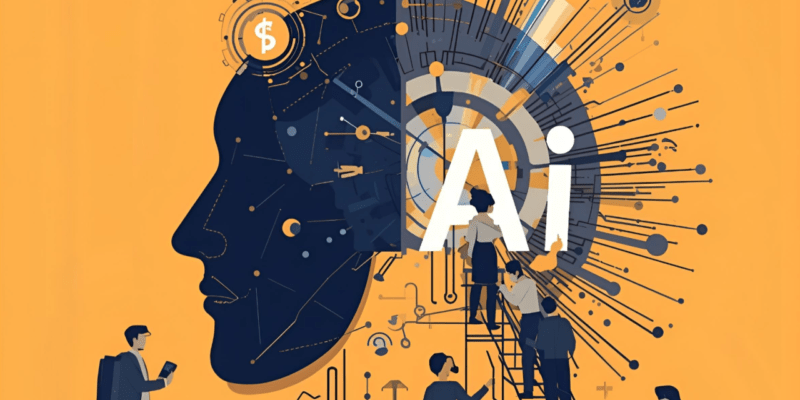
Artificial intelligence has rapidly evolved from a specialized technology into one of the most significant investment themes in the global economy. Companies are investing billions of dollars in AI models, data centers, semiconductors, cloud platforms, and software in an effort to capture the economic value created by increasingly capable AI systems.
For investors, however, the AI opportunity can be difficult to evaluate. The market contains everything from semiconductor manufacturers and data-center operators to utilities, cloud providers, software companies, and businesses using AI to transform their existing operations.
One way to make sense of this complex ecosystem is to focus on three foundational requirements: compute, power, and data.
These are the three pillars that support modern AI.
Compute provides the processing capacity required to train and run AI models. Power supplies the enormous amount of electricity required by AI data centers and computing infrastructure. Data provides the information that models learn from, retrieve, analyze, and transform into useful outputs.
Together, these three resources form an important framework for understanding AI investing.
Investors who understand how compute, power, and data interact can better evaluate where capital is flowing, which businesses may benefit from AI infrastructure spending, and where potential bottlenecks could emerge.
What Are the Three Pillars of AI Investing?
The three pillars of AI investing are:
- Compute: The chips, servers, data centers, networking equipment, and computing infrastructure required to process AI workloads.
- Power: The electricity generation, transmission, distribution, cooling, and energy infrastructure required to operate AI computing facilities.
- Data: The datasets, databases, information systems, and proprietary information required to train, fine-tune, retrieve, and operate AI models.
These pillars are closely connected.
More capable AI models require more compute. More compute requires more electricity. More capable AI systems also depend on increasingly valuable and well-organized data.
This creates a chain reaction throughout the AI economy.
Pillar One: Compute
Compute is arguably the most visible part of the AI investment story.
Modern AI systems require enormous amounts of processing power. Training and running large neural networks involves performing vast numbers of mathematical operations, often across thousands of specialized processors.
That demand has created an investment ecosystem spanning semiconductors, servers, data centers, networking, cloud computing, and AI infrastructure software.
- AI Chips
At the center of the compute ecosystem are processors designed to accelerate AI workloads. Graphics processing units, or GPUs, have become particularly important because their architecture is well suited to the parallel calculations involved in machine learning.
But GPUs are not the only technology involved. The broader AI semiconductor ecosystem includes CPUs, AI accelerators, memory technologies, networking chips, and specialized processors designed for particular workloads.
For investors, this means the AI chip opportunity extends beyond a single category of semiconductor.
- High-Bandwidth Memory
Memory is another critical component of AI computing.
AI models need to move enormous amounts of information between processors and memory. As models become larger and more sophisticated, memory capacity and bandwidth can become significant performance constraints.
High-bandwidth memory, or HBM, has therefore become an increasingly important component of high-performance AI systems.
This illustrates an important investing principle: AI infrastructure demand can spread across an entire supply chain.
A surge in demand for AI accelerators can create secondary demand for memory, advanced packaging, networking equipment, servers, and data-center infrastructure.
- Networking
AI computing also depends on high-speed networking. Large AI systems frequently distribute workloads across many processors. Those processors need to communicate quickly with one another.
If networking becomes a bottleneck, expensive computing resources may not be fully utilized. As AI clusters become larger, demand for high-performance networking technologies can increase alongside demand for compute.
For investors, this means AI infrastructure is not simply a story about processors.
It is a story about the entire computing system.
- Data Centers
AI chips need somewhere to operate. That makes data centers another important part of the compute pillar.
AI-focused data centers can require specialized power systems, advanced cooling, high-density server configurations, and extensive networking infrastructure.
Traditional data-center capacity may not always be optimized for the power density and cooling requirements associated with modern AI accelerators.
Consequently, the growth of AI is creating demand for new data-center capacity and upgrades to existing facilities.
- Cloud Computing
Cloud providers have become major participants in AI infrastructure. Instead of building their own data centers and purchasing large amounts of specialized hardware, many organizations access AI computing resources through cloud platforms.
This can allow businesses to experiment with AI without making massive upfront infrastructure investments.
For investors, cloud companies represent another way to gain exposure to the compute pillar. However, cloud providers must also spend heavily on chips, data centers, networking, and electricity to support growing AI demand.
- Why Compute Matters to AI Investors
The investment case for compute is based on a relatively simple relationship: More AI workloads generally require more computing resources. But investors should not assume that increasing AI adoption automatically means every compute-related company will benefit equally.
Important considerations include pricing, competition, capital expenditure, supply constraints, utilization rates, technological shifts, and customer concentration.
The AI compute market can also change rapidly as companies develop more efficient models and inference techniques. A model that requires significantly less compute can reduce the amount of infrastructure required for a given task.
Therefore, investors should examine both AI demand and improvements in computational efficiency.
Pillar Two: Power
If compute is the engine of AI, electricity is the fuel. This is why power is becoming one of the most important and sometimes overlooked areas of AI investing.
AI data centers can consume substantial amounts of electricity, particularly when they contain large clusters of high-performance accelerators.
As AI adoption grows, the question is increasingly shifting from:
“Where can we get more computing capacity?”
to:
“Where can we get enough power to operate it?”
- Why AI Is Increasing Electricity Demand
AI accelerators consume significant amounts of energy while performing intensive workloads. Training a large model can require sustained computational activity over extended periods. Inference also consumes energy every time a model responds to a request.
As AI becomes embedded into search, productivity software, customer service, coding, recommendation systems, scientific research, and autonomous systems, inference demand can grow substantially.
The result is a new source of electricity demand layered on top of existing data-center growth.
- The Data Center Power Constraint
A data center can have enough physical space and computing hardware but still be unable to expand if it lacks sufficient electrical capacity. This makes access to power an increasingly important factor in determining where AI infrastructure can be built.
For investors, this creates opportunities and risks across the electricity value chain.
Potential beneficiaries can include companies involved in:
- Electricity generation
- Transmission infrastructure
- Distribution networks
- Grid equipment
- Data-center power systems
- Backup power
- Energy storage
- Cooling infrastructure
- Renewable energy
Utilities and AI Investment
Utilities may benefit from rising electricity demand associated with data centers, although the investment thesis varies considerably by geography and regulatory environment.
A utility operating in an area experiencing rapid data-center construction could see stronger demand growth. However, investors must also consider the cost and timing of building new generation and transmission capacity.
Power infrastructure cannot always be expanded as quickly as demand for computing capacity. This creates a potential bottleneck.
- Nuclear, Renewables, and Natural Gas
AI’s electricity requirements are also influencing discussions about the future energy mix.
Different data-center operators may seek different combinations of power sources based on cost, reliability, availability, emissions targets, and regulatory requirements.
Read Also: Beyond the Hype: What Actually Counts as AI Infrastructure
Nuclear power can provide consistent electricity with low operational carbon emissions, while renewable energy can provide large amounts of low-carbon generation but may require additional storage or grid infrastructure to address intermittency.
Natural gas can provide dispatchable generation and may be used to support rapidly growing electricity demand.
For investors, the important point is not that one energy source will necessarily dominate.
The broader opportunity may lie in the infrastructure required to provide reliable, affordable, scalable electricity.
- Cooling Is Part of the Power Equation
Electricity is not only needed to run processors. It is also required to manage the heat they produce.
Traditional air cooling can become less practical as computing density rises. Advanced cooling technologies, including liquid cooling, are increasingly relevant to high-density AI data centers. This creates another layer of infrastructure demand.
An investor analyzing AI power requirements should therefore think beyond electricity generation.
Power distribution, cooling systems, transformers, backup systems, and energy management can all become important components of the AI infrastructure ecosystem.
Pillar Three: Data
Compute and power provide the physical foundation of AI, but data provides much of the information that AI systems learn from and use. Data is therefore the third major pillar.
AI models can process enormous amounts of information, but their usefulness depends heavily on the quality, relevance, availability, and governance of the data involved.
- Why Data Matters
Machine learning models identify patterns from data.
For generative AI systems, data can influence the breadth and quality of knowledge represented by a model. For enterprise AI applications, proprietary company data can allow models to provide answers or predictions that generic systems cannot easily reproduce.
This creates an important distinction between general-purpose data and proprietary data.
- Proprietary Data
A company with unique, high-quality datasets may possess a valuable competitive advantage.
Examples can include:
- Customer behavior data
- Financial records
- Industrial information
- Scientific datasets
- Healthcare information
- Geospatial data
- Supply-chain data
- Proprietary documents
- Historical transaction data
The value does not come merely from possessing large quantities of information. The data must also be legally usable, sufficiently accurate, appropriately structured, and relevant to the AI application.
- Data Quality Over Data Quantity
One of the most important lessons for AI investors is that more data does not automatically mean better AI. Poor-quality data can introduce errors, bias, duplication, and noise.
Organizations increasingly need systems that clean, organize, label, govern, and retrieve data efficiently. That creates opportunities in data infrastructure.
Databases, data warehouses, data lakes, vector databases, data-management platforms, and governance tools can all become important parts of the AI ecosystem.
- The Rise of Retrieval-Augmented AI
One important development in enterprise AI is the use of external data to supplement a model’s built-in knowledge. Retrieval-augmented generation, or RAG, allows AI systems to retrieve relevant information from external sources before generating an answer.
This can enable organizations to connect AI models to proprietary documents, databases, knowledge bases, and internal information. The investment implication is significant.
AI value may increasingly depend not only on the underlying model but also on the infrastructure that connects models to useful proprietary information.
- Data Governance and Security
As data becomes more important to AI, protecting it becomes increasingly important as well.
Companies need to know:
- What data they possess
- Where it is stored
- Who can access it
- Whether it can legally be used for AI
- How sensitive information is protected
- How data quality is maintained
This makes data governance part of the AI investment landscape. Businesses that can turn fragmented information into secure, high-quality, AI-ready datasets may have an advantage over organizations that possess large amounts of inaccessible or poorly managed data.
How Compute, Power, and Data Work Together
The three pillars should not be viewed independently. They form a connected system.
Consider an organization developing a sophisticated AI model.
First, it needs data to train or support the model.
Then it needs compute to process that data and develop the model.
That compute requires power.
Once the model is deployed, it needs more compute and power every time users interact with it.
The cycle therefore looks like:
Data → Compute → Power → AI Output → More Data and Usage
This relationship creates opportunities across multiple industries.
A company may benefit by providing chips, another by operating data centers, another by supplying electricity, and another by owning valuable proprietary datasets.
AI Investing: Looking Beyond the Obvious Winners
The most obvious AI investment opportunities often attract the greatest attention. But infrastructure investing requires looking deeper into the supply chain.
For example, demand for AI accelerators can create demand for:
- Advanced semiconductor manufacturing
- Semiconductor equipment
- High-bandwidth memory
- Advanced packaging
- Networking
- Data-center construction
- Cooling systems
- Power equipment
- Electricity generation
- Data-management technologies
This is sometimes called the picks-and-shovels approach to AI investing.
Instead of trying to identify which AI application will become the dominant consumer product, investors can look for businesses providing the essential resources required across many AI applications.
The Risks of AI Infrastructure Investing
The AI infrastructure opportunity is substantial, but it is not without risk.
High capital requirements
AI infrastructure can require enormous upfront investments. Data centers, semiconductor manufacturing facilities, power plants, transmission networks, and specialized hardware can cost billions of dollars.
Rapid technological change
AI hardware and software are evolving quickly. A technology that is highly competitive today may face new competition as architectures change.
Demand uncertainty
AI investment has grown rapidly, but future demand is not guaranteed to increase indefinitely at the same pace. Companies can overbuild infrastructure if expectations become disconnected from actual usage.
Energy constraints
Power availability can limit data-center expansion. In some locations, obtaining new electrical capacity may take years.
Regulatory risk
AI, energy, data privacy, and infrastructure development are all subject to evolving regulation.
Changes in environmental rules, data policies, energy markets, or AI regulation can affect investment outcomes.
Final Words
FAQ
What are the three pillars of AI investing?
The three pillars of AI investing are compute, power, and data. Compute includes AI chips, GPUs, servers, networking, cloud infrastructure, and data centers. Power covers the electricity generation, transmission, cooling, and energy systems required to operate AI infrastructure. Data includes datasets, proprietary information, databases, and data-management systems that support AI development and applications.
Why is compute important for AI investing?
Compute is essential because AI models require significant processing power for training, fine-tuning, and inference. This creates demand for GPUs, AI accelerators, high-bandwidth memory, networking equipment, data centers, and cloud computing services. Companies supplying these technologies can benefit from continued investment in AI infrastructure, although investors should also consider competition, valuation, technological changes, and demand.
Why is power becoming an important AI investment theme?
AI data centers can consume substantial amounts of electricity, making reliable and affordable power increasingly important as AI adoption expands. This can create opportunities across electricity generation, utilities, transmission, grid equipment, energy storage, backup power, and data-center cooling. Power availability can also become a constraint on where new AI data centers can be built.
Why does data matter to AI investors?
Data is a fundamental resource for developing and operating AI systems. High-quality proprietary data can help companies build differentiated AI products, while data infrastructure enables organizations to store, process, govern, and retrieve information efficiently. As AI adoption expands, businesses involved in databases, data management, data governance, and proprietary datasets may benefit from growing demand for AI-ready information.
Source: linkedin.com








Comments