
 By

Create an entity optimization plan by defining key brand concepts, mapping topical relationships, and establishing authority with structured data and consistent, high-quality content. Focus on clearly describing entities within content (using H2s/H3s), demonstrating relationships through internal linking, and confirming the entity with external, authoritative sources.
Key Components of an Entity Optimization Strategy:
- Identify and Define Entities: Determine the specific, noun-based concepts your brand wants to be associated with. Use tools like Google’s Knowledge Graph to verify how search engines understand these terms.
- Create a Topical Map: Build a visual map or structure of your website’s main topics and subtopics to show relationships.
- Implement Structured Data (Schema): Use
sameAsschema to link to external authoritative sources (like Wikipedia) to clarify entity identity. - Develop Content Strategy: Create content that defines entities within the first 40-60 words of a section to aid AI comprehension. Use related entities naturally rather than keyword stuffing.
- Build Authority and Trust: Use a “hub-and-spoke” model where your website (the hub) links to authoritative external sources (the spokes) to confirm information.
- Monitor and Update: Regularly check search results to ensure your content is still aligned with how Google defines the entities.
Relevant, topical content, discovery based on customer intent is still the biggest challenge we face as search marketers.
Content relevancy, in my mind, means the content is personalized, must tell a story, should be scannable, readable, provides images, and the layout can be consumed on any device.
Here are five outcomes we aim to accomplish with content:
- Discovery: Ensure content is discoverable and available across various customer touchpoints.
- Relevancy: Ensure content meets all the searchers’ needs and contains all topics and sub-topics that a searcher cares about, is easy to read and understand and tells a story.
- Measurability: Content aligned with overall SEO strategy and is scalable and measurable.
- Experience: Content delivers a great user experience and is scannable.
- Engagement: Helps drives engagement and guides the visitors to the desired goals – sign-ups, purchases, form fills, calls, etc.
The most common struggle we all face is determining what type of content to create or add.
Aligning Strategies With Search Engines
Search engines are evolving and content marketing strategies need to align across all verticals from popularity and quality to the intent behind the query and the overall page experience.
Search engine priorities, results, algorithms and needs have evolved over time.

As users search on screenless devices and spoken queries increase, search engines use artificial intelligence and machine learning to try and replicate how humans think, act and react. Search engines must decode a sentence (or paragraph) long query and serve results that best match it. This is where entities come in.
Entities are things search engines can understand without any ambiguity independent of language. Even when a website has a wealth of content, search engines need to understand the context behind it, identify the entities within the content, draw connections between them and map them to the query of the searcher.
Deploying schemas and marking up the entities within your content gives search engines the context and helps them understand your content better. Content, where entities are not marked with schemas, tends to underperform.
Similarly, deploying schemas on content that does not contain all the relevant entities or does not provide all the information will also not have maximum impact.
Entity optimization uses advanced nested schemas deployed on content that meets the searchers’ needs and contains all the relevant topics and entities.
Read Also: Entity Optimization vs. SEO: What’s the Difference?
Let’s use a live project as an example and show what we accomplished for one of our clients.
8 Steps to Developing an Entity-first Strategy
We deployed the eight steps given below as an entity-first-strategy for one of our client in the health care vertical to help them get the best topical coverage and visibility. We started by identifying the most relevant schema in their industry followed by determining the gaps within their content for both schema and entities.
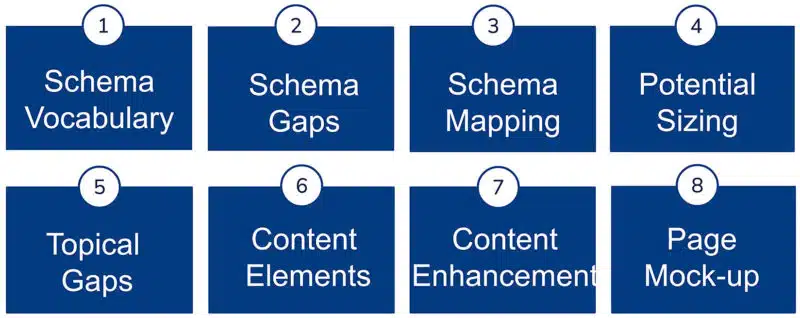
1. Identified schema vocabulary
We created a list of all applicable schemas in the healthcare industry.
2. Determined the schema gaps
We identified the schema gaps by comparing the current site content against the applicable schemas.
3. Mapping schema
Once we identified the schema gaps, we identified the most relevant pages to deploy the unused schemas.
4. Market opportunity and potential sizing
We used in-depth keyword research and analysis of current content performance. Map content based on informational, navigational and transactional content.
It is critical to see how your current branded and non-branded content is performing and what your focus should be based on business goals.
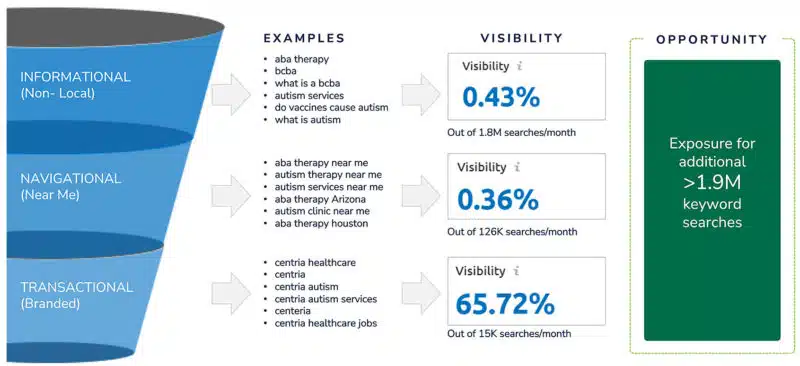
We identified the pages that could see the most impact and potential from topic, entity, and schema optimization.
5. Map topic gaps
Once we identified the best potential pages, we cross-referenced the gaps in the content by analyzing the topics and entities covered by other ranking websites.
6. Identify Content Opportunities
We enhanced the page architecture by adding relevant content elements, such as images, headings and lists.
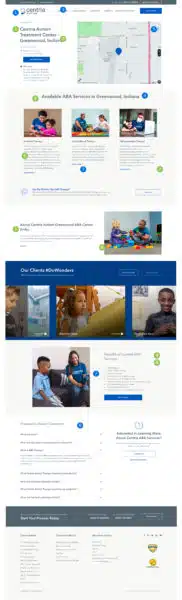
Topic/entity gaps covered:
- care plan
- Treatment
- Treatment center
- ABA services
- Behavior technician
- Autism spectrum disorder
- BCBA
- ABA therapist
- ABA services
Schema gaps covered:
- Medical organization
- SiteNavigationElement
- Medical clinic
- availableService
- hasmap
- FAQ
- ItemList
7. Content enhancement
Optimized the content by incorporating missing topics and entities
8. Create better than the best website page
We then created the perfect in-depth page, rich with relevant topics the target audience is searching for.
Measuring Entity Strategy Impact
When we measured the impact of adding entities and schema into our strategy for this healthcare company, we saw a 66% lift in visibility and inclusions in rich results.
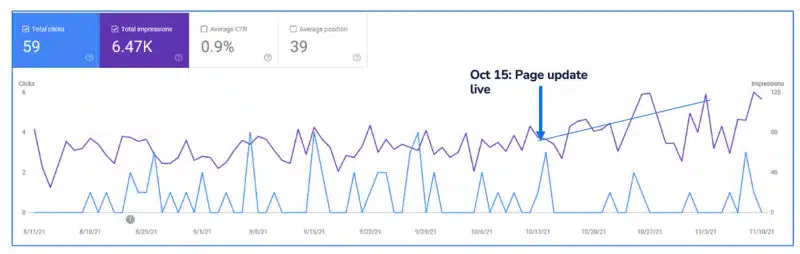
While the above image is just one example of the impact entities and schema can have, you can see below how many different industries benefit by deploying schema and entity coverage.

Lastly
Creating content is more than writing. It is robust when you add in all the elements from design, development, topical entity coverage and schema. All these elements need to align to give optimum results.
Keeping organization in mind, cluster pages of relevant content and connect them through pillar pages, ensuring to take advantage of the interlinking opportunities.
Treat each page as the main category page with several relevant pages linked. Adding interlinking helps in discovery and relevancy.
Once you have an entity-first strategy for content, you need to think about how to scale the process of:
- Understanding the entity.
- Tagging schema.
- Pruning broken links or errors as they come.
- Continuing to add more meaningful content.




Comments