
 By

By establishing strong emotional bonds with consumers, setting the brand apart in a competitive market, and fostering enduring loyalty and trust, storytelling propels the growth of fashion brands. A strong brand narrative conveys your values, mission, and distinctive identity, connecting with your target audience and motivating them to support and advocate for your brand.
Storytelling has become a crucial strategy for organizations looking to establish a deeper connection with their audience in the always changing field of fashion marketing. Brands may create storylines that engage with consumers through storytelling, which goes beyond just showcasing clothing and encourages brand loyalty. In order to help marketers create captivating narratives for features that captivate their audience and propel commercial success, this essay explores the importance of storytelling in fashion marketing.
What is Brand Storytelling?
Brand storytelling is a marketing tactic that uses narratives to help brands engage with their target audience. The purpose of the story is to evoke strong feelings in the audience and assist them in aligning your brand with their own personal beliefs.
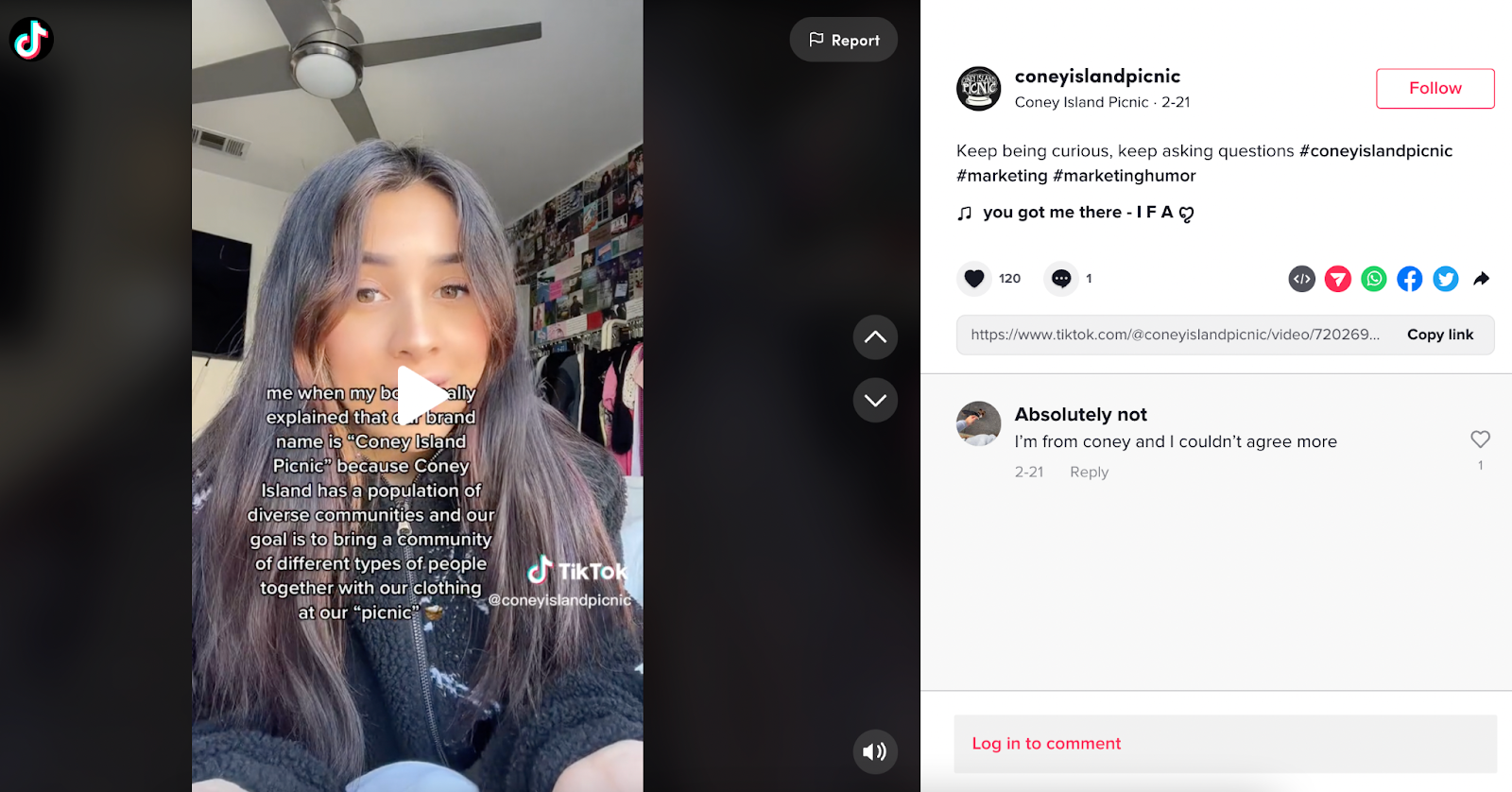
According to Adair Findley, creative director of Coney Island Picnic, “brand storytelling is the key to marketing in the fashion industry.” “You should consider how your brand is seen by customers. What message does your apparel, website, social media accounts, and even packaging convey to them? What sort of reputation do you have, and does it apply to your whole brand?
Fashion ecommerce is a crowded industry that was valued at $871.2 billion in 2022. Combine that with a surge in dropshipping and the rise of companies like Shein offering good quality clothes at low prices, and it’s harder than ever for fashion brands to stand out.
Social networking is almost a given for everybody with an internet connection. Fashion brands and social consumers can interact through storytelling, which helps close that gap. Stories are up to 22 times more likely to be recalled than facts, according to research, which helps your fashion brand stick in the minds of your target market.
When consumers have a great social media experience with a brand, they are 78% more likely to purchase from them, 77% more likely to pick them over a rival, and 72% more likely to spend more money.
The Power of Storytelling
Emotional Connection
Storytelling has the remarkable ability to evoke emotions and create a deep sense of connection. By crafting narratives that tap into universal human experiences, fashion brands can elicit emotions such as joy, excitement, or nostalgia. These emotional connections can foster brand loyalty and encourage customers to become advocates for the brand.
Creating Brand Identity
Storytelling enables fashion brands to shape and communicate their brand identity effectively. Through stories, brands can convey their values, vision, and mission, helping consumers understand the essence of the brand beyond the products. This authenticity and transparency build trust with the audience and establish a strong brand identity.
Building a Fashion Narrative
Fashion marketing is not just about selling clothes; it’s about creating a narrative that engages the audience. Storytelling allows fashion brands to present their collections in a compelling way, weaving together elements such as inspiration, craftsmanship, and cultural references. By taking customers on a journey, brands can enhance their overall brand experience.
Connecting with the Target Audience
Effective storytelling helps fashion brands connect with their target audience on a personal level. By understanding their customers’ aspirations, desires, and values, brands can create narratives that resonate with them. This connection goes beyond product features and creates an emotional bond, making customers feel understood and valued.
Showcasing the Brand’s Values
Storytelling provides a platform for fashion brands to showcase their values and engage in meaningful conversations. Brands that take a stand on social and environmental issues can use storytelling to communicate their commitment and inspire their audience. By aligning with their customers’ values, brands can foster loyalty and attract like-minded individuals.
Although brand storytelling is a long-term strategy, it is worthwhile. Below are the top three benefits of storytelling for fashion labels:
- Creates brand advocates. We all want to belong and be a part of something bigger than ourselves. Involving customers in your narrative and journey inspires brand favorability. It makes them want to be associated with your brand and may even influence them to become an extension of it as an advocate.
- Strengthens marketing campaigns. Gen Z now uses social media to research brands more often than they use search engines. The problem:Customers know when they’re being sold to. And they’re increasingly skeptical of brand advertising. But when they hear how great you are from one of their friends, a favorite influencer, or even a celebrity they love and trust, they’re more open to receiving your brand messages. After all, buying is an emotional decision. What we buy says something about who we are as individuals.
- Defeats ever-increasing advertising costs. Meta’s cost per thousand increased by $14 in the third quarter of 2022, up 3% year-over-year. And TikTok’s paid ads are up 27% year-on-year. . With a focus on instinctively shareable storytelling (especially when partnering with influencers), organic content can overtake the constant demand for paid ads.
How to Grow Your Fashion Business With Storytelling
Begin with your audience
Prior to creating a fashion brand narrative, you must determine your target demographic and the distribution channel. Who are they? What are their greatest desires and anxieties? And above all, why should they be interested in you?
Speak with current clients to learn about their problems and the reasons for their purchases. Qualitative focus groups or quantitative customer surveys can be used for this. You may also learn what your customers want, think, and feel about your business from online reviews.
Tell your origin story
How did you create your fashion line? Entrepreneurs frequently launch companies in response to personal needs or after identifying a market niche. Build your narrative around this origin story.
“You should write down and actively consider your brand’s story before engaging in any promotional activities,” advises Adair.
Consider the distinctive features of your company, such as your design ethos, your use of eco-friendly materials, or your dedication to moral production—whatever sets you apart. Your brand narrative should convey your identity and values, and in the fashion industry, this needs to be clearly defined before venturing into the advertising sector.
Be consistent
Gaining a customer’s commitment to your brand is like falling in love. Weeks, months, or even years may pass before they make a purchase from you. They might come across your website by accident, or through a Google search, blog, Instagram post, YouTube video, or online advertisement. Or perhaps they viewed a heartwarming video review or read a favorable brand story.
Storytelling that works is consistent. Customers won’t know who you are or what you stand for if they receive confusing messaging from one platform to another. For this reason, 84% of companies believe that a connected multichannel brand experience will be more crucial to e-commerce in the future than it has ever been.
The long-term objective of storytelling, according to Beautiful Sparks founder Effie Asafu-Adjaye, is to increase brand equity. For brands, the impact of telling the same story over time is what makes a difference.
Make sure your multichannel marketing strategy is well-defined so that the narrative is consistent across the customer journey at all touchpoints. Connect all correspondence, from emails about abandoned carts to TikTok videos, to the same brand story.
Read Also: Fashion Trends vs Timeless Styles: What’s Best for Your Business?
Once you decide you want to sell natively on the most well-known marketplaces and social media platforms of today, there shouldn’t be any technological obstacles. You can concentrate on expanding that channel rather than the programming effort that supports it thanks to Shopify’s one-click channel integration.
Corroborate storytelling with influencers
Influencer endorsements help fashion firms build their brand narrative. Compared to branded material, this kind of content is more reliable. Additionally, 18.6% of customers claim to follow social media influencers in order to witness narratives.
For instance, the goal of the sneaker company HOKA is to make their clothing affordable for all. HOKA’s “people commitment” explains why it makes donations to nonprofits that support racial and social justice.
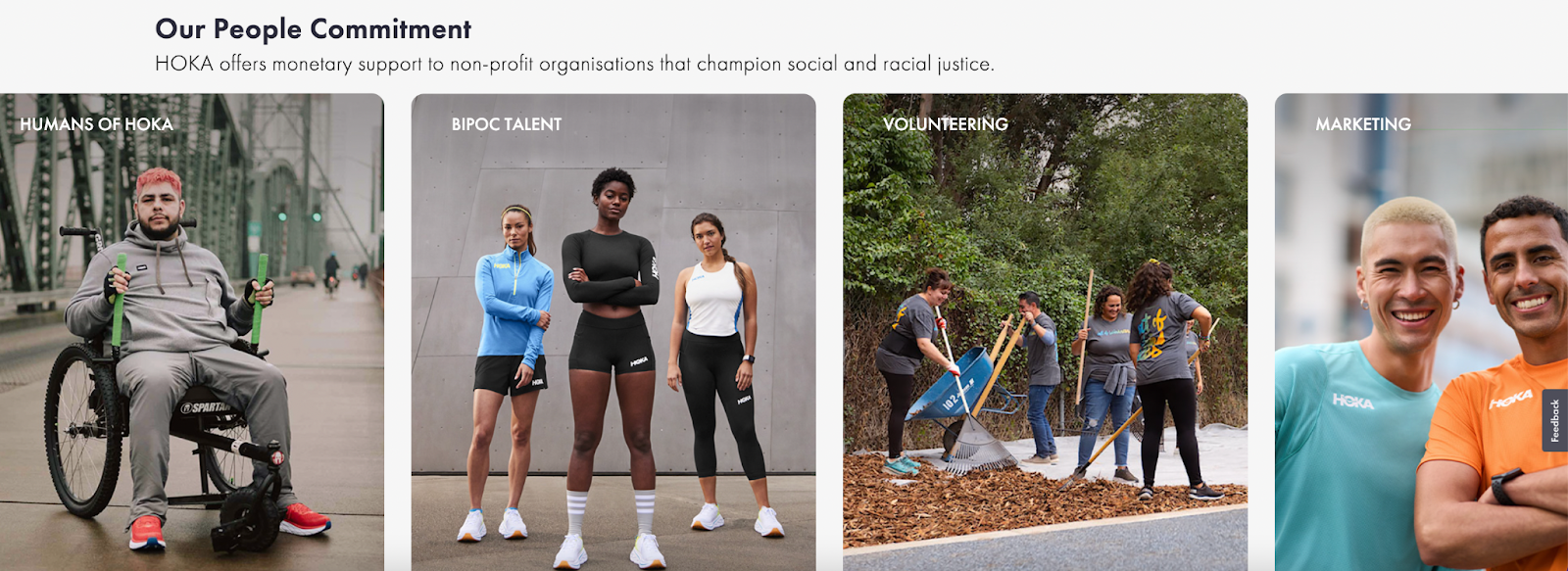
Its A Walk in the Life YouTube series also invites social media influencers to document their daily routine—of course, while wearing their HOKA sneakers.
“The brand is the brand, and we’re very careful to be very consistent with how Hoka shows up, regardless of where it shows up,” says Wendy Yang, HOKA’s brand representative (via Modern Retail).
Use Shopify Collabs to screen, hire, and oversee creators. It facilitates fashion retailers’ growth by providing a unified dashboard for managing influencer marketing partnerships.
Use visual storytelling
Humans process visuals faster than they do text. Neuroscientists found the brain can identify visual themes of information in 30 milliseconds, hence why brand storytelling videos are the most popular video formats for marketers.
“The fashion industry is one of the most highly visual industries in the world, so for our team, it’s important to use visuals to communicate our brand story,” says Adair.
Visual storytelling elements to use when promoting your fashion brand include:
- Short-form videos, such as TikTok videos, YouTube Shorts, or Instagram Reels
- Long-form videos on platforms like YouTube
- Data visualization formats, like infographics or charts
- Augmented reality technology, such as Snapchat filters
Adair adds that for Coney Island Picnic, “this includes product images, behind-the-scenes photos of the design process, or even just lifestyle images that evoke the emotions and values of the brand. We want to continue to position ourselves as a premium streetwear brand, so we use imagery and written content to help us achieve that.”
Fashion Brand Storytelling Examples
From discovery to purchase, a customer’s experience with your fashion brand is a never-ending cycle of several stories. Let’s examine how some of the top fashion e-commerce companies use narrative to draw in, convert, and retain customers.
1. Chanel
One of the main advantages that luxury fashion firms usually have over other clothing companies is their lengthy history. Chanel is no exception. Chanel, the world’s second most recognizable luxury brand, has a rich history spanning over a century, from which it draws tales to bolster its reputation and brand equity.
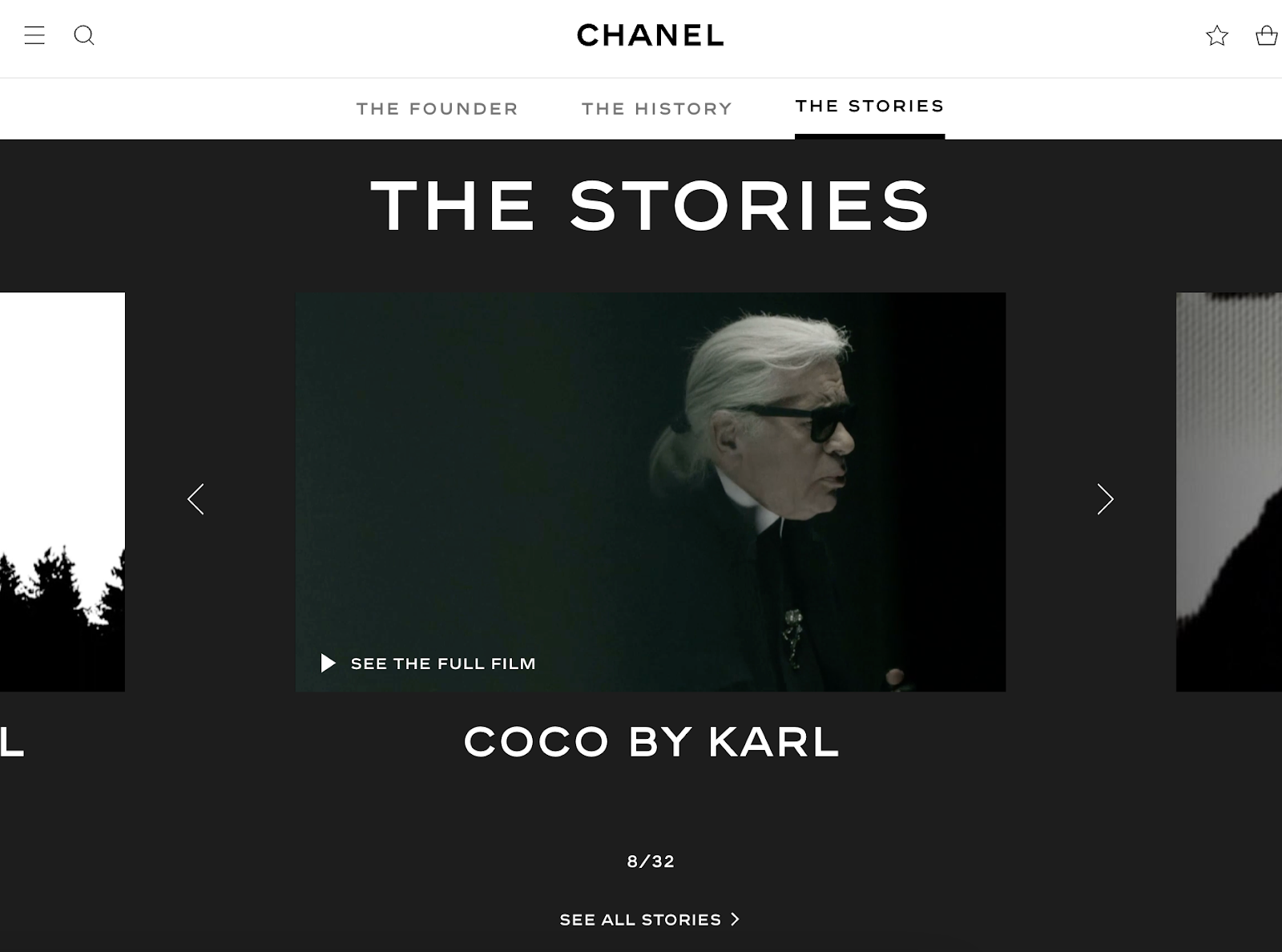
Chanel uses its Inside Chanel series to tell stories to its affluent clientele. Chanel shares tales of the most notorious periods in its history with a series of 32 short films that are available on its direct-to-consumer website, including:
- How its No. 5, Mademoiselle, and Coco perfumes came to life
- The design process of its jacket
- Karl Lagerfeld’s involvement in the brand
Try this:
- Identify key milestones in your luxury fashion brand’s history.
- Find your bestselling product and detail the manufacturing process behind it.
- Try to incorporate celebrities or influencers in your stories, such as Karl Lagerfeld in Chanel, for extra leverage when promoting brand stories across social media.
2. Burberry
One of the biggest high-end fashion labels to emerge from the UK is Burberry. The fashion firm was founded by Thomas Burberry in 1856, thus it is another high-end business with a long history that its brand storytelling campaigns can draw from.
However, Burberry employs a novel strategy with its Burberry Acoustic campaign rather than depending on its past. It invites live performances by British musicians and advertises them on its website and social media accounts.
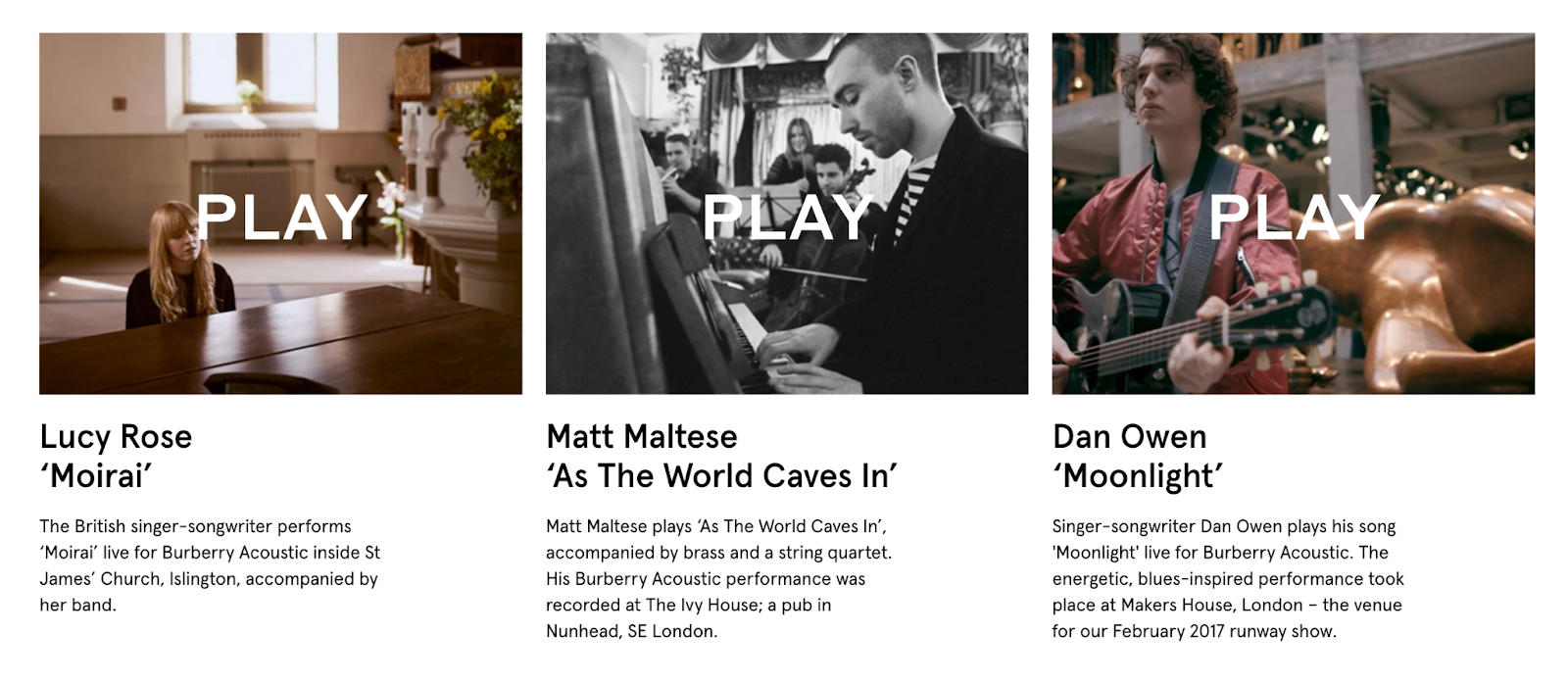
To celebrate the campaign’s 170-year anniversary, Burberry released a soundtrack featuring songs from artists who performed at Burberry events, played a Burberry Acoustic session, or recorded interviews with the brand.
It’s a large-scale storytelling campaign that’s a win-win for everyone involved: British artists build good relationships with the brand since it helps them increase their own audiences, and Burberry benefits from interviewing these artists and telling their stories with the Burberry name attached.
Try this:
- Invite influencers to record live exclusive content with you, such as Q&A sessions or styling tutorials.
- Make these videos shoppable with Shopify apps like Reactive.
- As part of your contract, make it mandatory for influencers to share the story videos with their own audiences.
3. Good American
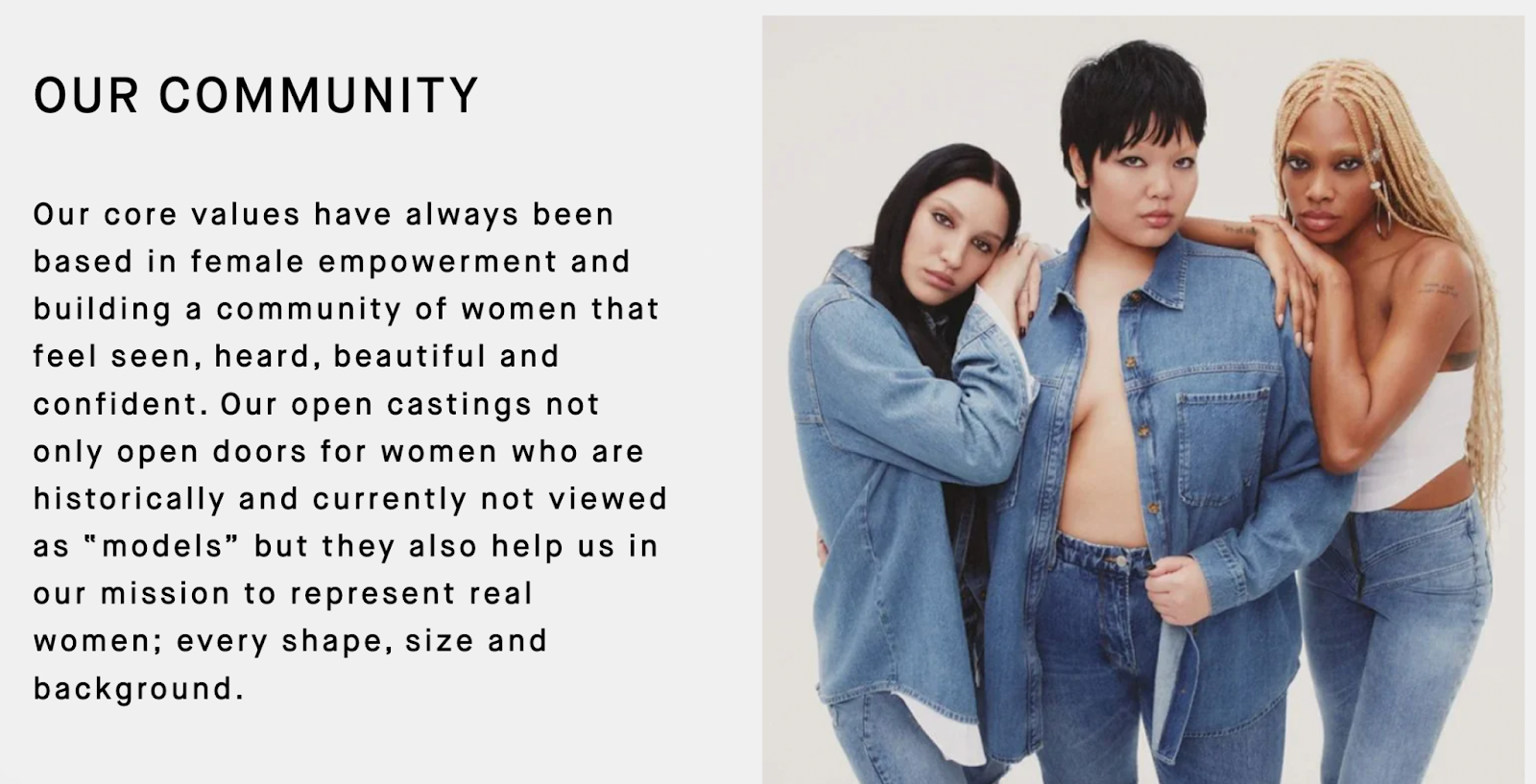
Mega-influencer Khloé Kardashian co-founded the denim company Good American. However, Good American debuted with a compelling brand story and made $1 million on its first day of business, rather than slathering the household name onto its denim products and hoping they would sell.
Khloé talked about how difficult it is for her to shop in typical stores with her smaller sisters. Khloé stated: “With Good American, you have to carry the full size range [00-24] and you can’t separate them” during an interview part on her show Keeping Up with the Kardashians. There is only one section and neither a plus-size nor petite segment. People cannot represent the brand if they disagree with that.
Good American reinforces its brand narrative with annual casting events—an opportunity to recruit a diverse selection of models. It also invites people “who are historically and currently not viewed as models” to “represent real women.”
Try this:
- Distribute your brand story across all sales and marketing channels.
- Invite people to collaborate with your fashion brand—such as modeling, influencing, or product collaborations—who share the same vision as your brand.
- Go behind the scenes of monumental campaigns to maximize their mileage post-event.
Conclusion
Your fashion brand story must prioritize your clients, regardless of how long your company has been in operation—five or fifty years. If their viewpoints shift, your story must adapt as well.
Tell your story with the help of your audience, other brands, and influencers. They can accomplish this through word-of-mouth, reviews, and even content creation to promote you and sway other buyers.
Make the most of your fashion brand’s storytelling content in whatever way you can to increase sales and consumer interest in your products. It should simultaneously empower, inspire, and amuse your audience. Try out new technologies and platforms to engage clients in your brand narratives and give them new ways to interact with your fashion business.






Comments