
 By
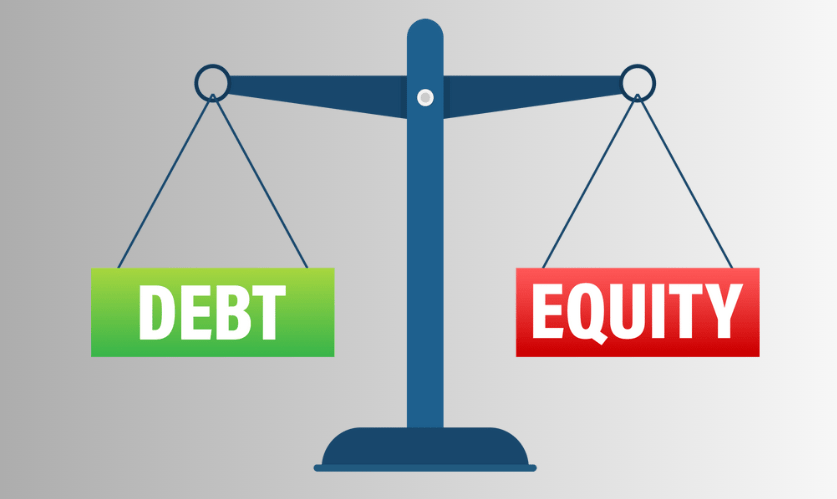
In project finance, debt and equity play critical roles in supplying the capital required to bring a project to fruition. Understanding how debt and equity function and interact is critical for guaranteeing a successful financing structure, whether in infrastructure development, renewable energy projects, or real estate. Below, we will look at the responsibilities of debt and equity, their distinctions, and how they affect the financial structure of a domestic enterprise.
Debt financing is borrowing money from external lenders, such as banks, financial institutions, or bond markets, with the promise to repay it over time, usually with interest. It is usually arranged with a set repayment plan and terms.
Equity financing is the process of obtaining funds by selling ownership stakes in a project to investors and stakeholders. Equity investors bear more risk than debt holders but are entitled to a portion of the project’s revenues and capital appreciation. Project sponsors and external investors can both contribute equity.
Companies can raise funds for business requirements through two types of financing: equity financing and debt financing.
Most organizations employ a combination of debt and equity financing, although both have significant advantages. The primary benefit is that equity financing has no repayment requirement and provides additional working capital that can be used to build a business. Debt financing, on the other hand, does not necessitate handing up a percentage of ownership.
Companies normally have the option of seeking debt or equity financing. The decision is frequently based on which source of finance is most readily available to the company, its cash flow, and how vital preserving control of the company is to its key owners. The debt-to-equity (D/E) ratio indicates how much of a company’s financing is provided by debt vs equity.
Debt in Project Financing
Debt financing entails borrowing money and repaying it with interest. The most frequent type of debt financing is a loan. Debt finance may impose limits on the company’s actions, preventing it from pursuing opportunities outside of its primary business. Creditors prefer a low debt-to-equity (D/E) ratio, which favors the company if it requires further debt funding in the future.
The benefits of debt financing are manifold. First, the lender has no say over your business. Once you repay the debt, your relationship with the financier ends. Next, the interest you pay is tax-deductible. Finally, loan payments do not change, making it simple to predict spending.
What if your firm struggles or the economy collapses again? What if your firm does not expand as quickly or as successfully as you anticipated? Debt is an expense, and you must pay them on a regular basis. This could limit your company’s potential to grow.
Finally, even if you are a limited liability company (LLC) or another business organization that separates the firm and personal finances, the lender may want you to guarantee the loan with your family’s financial assets. If you think debt financing is right for you, the U.S. Small Business Administration (SBA) works with select banks to offer a guaranteed loan program that makes it easier for small businesses to secure funding.
Equity in Project Financing
Equity finance is selling a piece of a company’s equity in exchange for capital. For example, the owner of Company ABC may need to raise funds to fund business growth. The owner decides to sell a 10% stake in the company to an investor in exchange for capital. That investor now owns 10% of the company and may influence all future business choices.
Read Also: Project Finance in Renewable Energy: Trends and Challenges
The primary benefit of equity financing is that there is no responsibility to repay the funds obtained through it. Of course, a company’s owners want it to succeed and offer equity investors with a fair return on investment, but without the need for payments or interest charges, as is the situation with debt financing.
Equity financing adds no additional financial burden to the organization. Because equity financing requires no monthly payments, the company has more capital to invest in business growth.
However, this does not negate the risks associated with equity financing. In fact, the disadvantage is pretty significant. To raise funds, you must give the investor a percentage of your company. You will have to share your profits and consult with your new partners whenever you make choices that affect the company. The only way to get rid of investors is to buy them out, which will almost certainly cost more than the money they gave you in the first place.
Key Differences Between Debt and Equity
- Risk: Debt holders have a relatively lower risk because they are paid before equity investors in case of liquidation or project failure. However, they also face the risk of non-repayment if the project doesn’t generate sufficient cash flow. Equity holders, on the other hand, face higher risk since they are the last in line to be paid if a project fails. However, they stand to benefit the most if the project is profitable.
- Return: Debt financing typically offers a fixed return (interest payments), which is predetermined and does not vary based on the project’s performance. Equity financing offers returns that are tied to the project’s performance, including profits or capital gains. If the project performs well, equity investors benefit through dividends and appreciation in the value of their shares.
- Control: Debt holders generally do not have a say in the project’s day-to-day operations unless specific conditions are breached. In contrast, equity holders (especially major investors) can have voting rights and can influence decisions regarding the project’s management and direction.
- Repayment: Debt must be repaid according to a pre-established schedule, regardless of the project’s success. Failure to meet debt obligations can lead to default. Equity, however, is not repaid unless the project is sold or profits are distributed. Equity investors usually expect their return in the form of dividends or capital appreciation.
Example
Company ABC intends to expand its operations by constructing additional plants and purchasing new equipment. It determines that it must raise $50 million in financing to fund its expansion.
To get this capital, Company ABC plans to use a combination of equity and debt financing. For the equity financing component, it sells a 15% interest in the company to a private investor in exchange for $20 million in funding. For the debt finance component, it secures a $30 million company loan from a bank at a 3% interest rate. The loan must be repaid in three years.
With the above example, there could be a variety of combinations that produce different results. For example, if Company ABC decides to seek capital solely through equity financing, the owners will have to give up greater ownership, lowering their share of future profits and decision-making authority. In contrast, if Company ABC elected to employ just debt financing, its monthly expenses would be higher, leaving less cash available for other uses, as well as a heavier debt burden that it would have to repay with interest.
Businesses must decide which choice or combination works best for them.
Conclusion
In project finance, both debt and equity are essential strategies for providing the funds required to complete projects. While debt provides leverage and lowers the cost of capital, it also increases the risk of financial trouble if the project fails to meet expectations. On the other hand, equity absorbs project risk and has the potential for better returns, but at the expense of increased shareholder dilution and financial exposure. A well-structured debt-equity mix guarantees that the project is appropriately funded, risks are correctly managed, and the interests of both lenders and investors are protected.


Comments