
 By
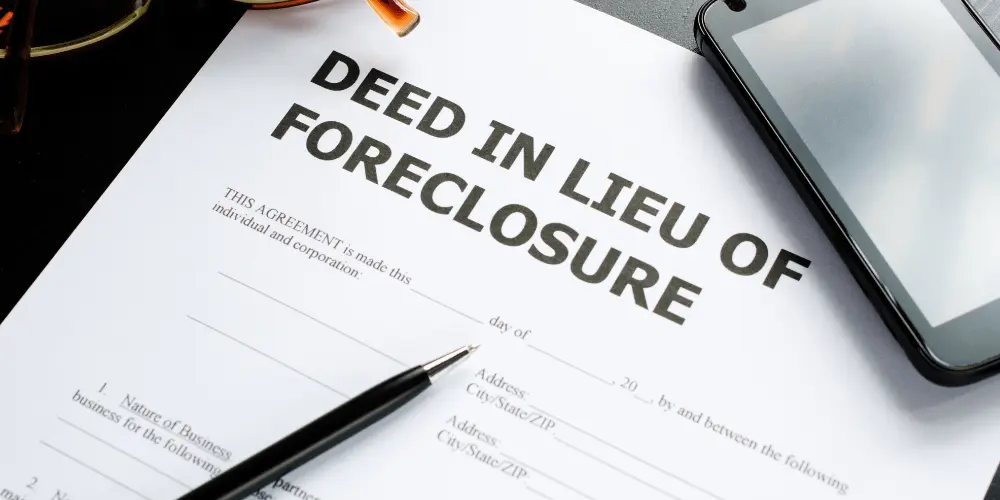
A deed in lieu of foreclosure is an agreement where you voluntarily transfer your property title to the lender to satisfy a defaulted mortgage and avoid the lengthy foreclosure process. It is typically treated as a last resort when other financial hardship options have been exhausted.
Navigating this process smoothly requires careful planning. Keep these essential tips in mind:
1. Get Deficiency Waivers in Writing
If your home sells for less than your outstanding mortgage, the remaining amount is called a “deficiency”. Make sure your lender explicitly agrees in writing to waive their right to a deficiency judgment, so you are not held legally responsible for the remaining balance.
2. Prepare for a Credit Impact
While a deed in lieu is generally less damaging to your credit report than a formal foreclosure, it will still result in a significant drop (often dropping by 100 to 150 points). Always ask the lender how the situation will be reported to major credit bureaus before you sign.
3. Clear Existing Liens
Lenders will only accept a deed in lieu if your property title is “clean”. A title search is usually required; if you have secondary mortgages, tax liens, or contractor debts attached to the property, the lender will likely reject the deed in lieu. You may need to clear these additional debts first.
4. Negotiate Relocation Assistance
Many lenders will offer “cash for keys” or a transition period so you aren’t forced out immediately. Negotiate your move-out timeline and potential relocation funds before you finalize the deed transfer.
5. Be Aware of Tax Implications
The IRS generally considers forgiven debt (the difference between your mortgage balance and the home’s fair market value) to be taxable income. However, you may qualify for the insolvency exemption. Consult a tax professional regarding your unique tax situation before proceeding.
How a Deed in Lieu of Foreclosure Works
A deed in lieu of foreclosure is a potential option taken by a borrower or homeowner to avoid foreclosure.
In this process, the mortgagor deeds the collateral property, which is typically the home, back to the mortgage lender serving as the mortgagee in exchange for releasing all obligations under the mortgage. Both sides must enter into the agreement voluntarily and in good faith. The document is signed by the homeowner, notarized by a notary public, and recorded in public records.
This is a drastic step, usually taken only as a last resort when the property owner has exhausted all other options (such as a loan modification or a short sale) and has accepted the fact that they will lose their home.
Although the homeowner will have to relinquish their property and relocate, they will be relieved of the burden of the loan. This process is usually done with less public visibility than a foreclosure, so it may allow the property owner to minimize their embarrassment and keep their situation more private.
Comparing Deed in Lieu of Foreclosure and Foreclosure
Deed in lieu and foreclosure sound similar but are not identical. In a foreclosure, the lender takes back the property after the homeowner fails to make payments. Foreclosure laws can vary from state to state, and there are two ways foreclosure can take place:
- Judicial foreclosure, in which the lender files a lawsuit to reclaim the property
- Nonjudicial foreclosure, in which the lender can foreclose without going through the court system
The biggest differences between a deed in lieu and a foreclosure involve credit score impacts and your financial responsibility after the lender has reclaimed the property. In terms of credit reporting and credit scores, having a foreclosure on your credit history can be more damaging than a deed in lieu of foreclosure. Foreclosures and other negative information can stay on your credit reports for up to seven years.
Read Also: Few Tips On Refinancing Home Mortgages
When you release the deed on a home back to the lender through a deed in lieu, the lender generally releases you from all further financial obligations. That means you don’t have to make any more mortgage payments or pay off the remaining loan balance. With a foreclosure, the lender could take additional steps to recover money that you still owe toward the home or legal fees.
Deed in lieu of foreclosure has its positive as well as its negative sides. This is an option that you may consider if you are no longer able to meet the monthly mortgage payments on your home. The following are the benefits and disadvantages that you should consider before you make up your mind.
Benefits
One of the benefits of a deed in lieu of foreclosure is that it provides you a way of protecting your credit record. Your credit record will suffer if it has a record of a foreclosure. This might make it impossible for you to be able to purchase another home for up to 10 years. This option makes it possible for you to avoid having a foreclosure on your credit history.
Another advantage of the deed in lieu is that it can be done very quickly. If you are released quickly from the mortgage payments that you have to make every month, the money that you will owe will be less and you will have less penalty fees to pay. You will owe less money if the title to the home is signed over as quickly as possible.
Disadvantages
Some people may not be comfortable with the speed at which the process is executed. When the title has been signed over in a deed in lieu of foreclosure, you will have very little time to move out of the house. Some people would rather stay in the house until they are forcefully evicted by the sheriff’s office. The moment you discover that you cannot sell your house, a deed in lieu has to be done quickly.
Some people may also not be comfortable with the bank requirement that they have to attempt to sell their home first. This means that the home has to be registered with a real estate agent and you have to pay the attendant costs such as an appraisal and the agent’s fees. This may not go down well with individuals who do not have any money.
You should know that a deed in lieu of foreclosure is not possible if there are existing liens on the property. It is almost impossible to avoid a foreclosure if there are liens on your home. The only way to avoid a foreclosure in this instance is to pay the missed back payments. This may not be an option for you since you do not have any money. A legal battle may ensue if there are liens on the property.
There are a lot of benefits as well as disadvantages of a deed in lieu of foreclosure. If you are no longer able to make the monthly mortgage payments on your home, you should carefully consider these pros and cons. A deed in lieu can help you to avoid having a record of a foreclosure on your credit. This will also make it possible to become debt-free at a faster rate. You should also know that you will have to find alternative accommodation when you choose a deed in lieu of foreclosure.
5 Things You Should Know about Deed in Lieu of Foreclosure
Before you pursue it, you should know these five important facts.
1. A Deed In Lieu Of Foreclosure Is a Legal Document
This legal document transfers the title (and ownership) of the home to the bank or other lender that holds the mortgage. The name “deed in lieu of foreclosure” means that you will give the lender the deed to your home if they agree to drop the foreclosure proceedings.
2. Choosing A Deed In Lieu Of Foreclosure Can Be Less Damaging Financially
Foreclosures can have devastating consequences that can negatively affect your financial future for years. For example, your foreclosure can reduce your FICO score by 100 points or more, according to Experian. Moreover, a foreclosure remains on your credit score and hurts your credit for as long as 7 years. Many lenders will refuse to work with you as long as the foreclosure remains on your credit score.
While this option does affect your credit score, it can be less damaging to your credit profile than a foreclosure judgment.
3. It Is A Last Resort
While a deed in lieu of foreclosure is better than a full-blown foreclosure sale in Ohio, it still a drastic step that you should consider only after you have exhausted all other options. Your foreclosure defense lawyer can help you explore other options, such as a short sale or a loan modification.
4. It Is More Private Than a Foreclosure
Foreclosures can be financially devastating, and they can also be embarrassing – foreclosures come with a public notice taped to your front door. A deed in lieu of foreclosure is more private and is therefore a better choice for those who have a visible presence in their community or who simply wish to keep their financial struggles private.
5. It can often eliminate a deficiency
Many lenders who accept a deed in lieu will waive a deficiency. A deficiency arises when you sell a property for less than what is owed. Normally, you would be responsible for paying that difference even if you lose the home. As an incentive, the lender will often agree to waive that.
Finally
A deed in lieu of foreclosure could be a suitable remedy if you’re struggling to make mortgage payments. Before committing to a deed in lieu of foreclosure, it’s important to understand how it may impact your credit and your ability to buy another home down the line. Considering other options, including loan modifications, short sales, or even mortgage refinancing, can help you choose the best way to proceed.











Comments