
 By
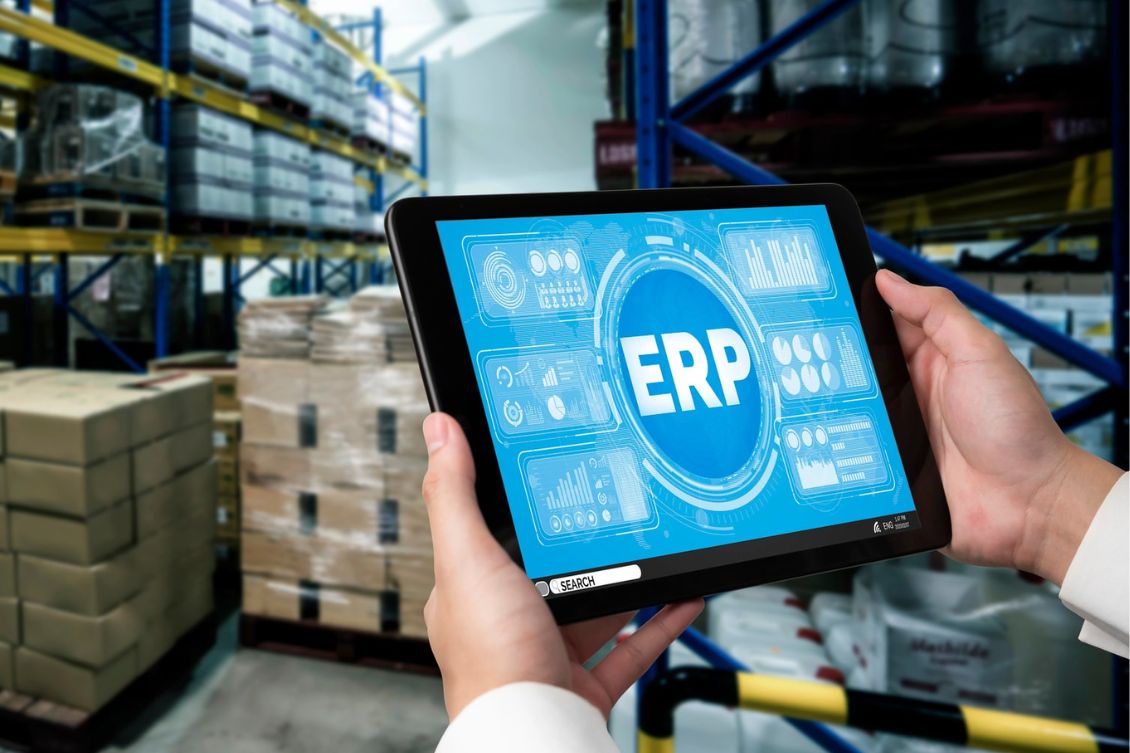
ERP software promotes business transformation by increasing efficiency through automation and process streamlining, enabling better decision-making with real-time data and analytics, fostering scalability to support growth, improving the customer experience through integrated operations, and driving innovation by integrating systems and supporting new technologies. These five factors provide a solid, cohesive foundation for organizations to achieve operational excellence and sustain a competitive advantage in the market.
Enterprise Resource Planning (ERP) is a collection of connected tools that help firms manage and automate their business activities across multiple departments. Rather than juggling many tools for each function, ERP integrates data and activities into a single platform.
ERP systems typically contain the following modules:
- Accounting and Finance
- Inventory and Supply Chain Management
- Sales and Customer Relationship Management (CRM)
- Human Resources (HR)
- Project Management
- Manufacturing
With the right ERP system in place, businesses can achieve real-time visibility, streamlined operations, and data-driven insights that enhance efficiency and profitability.
1. Consolidating Independent Systems
Ask the average IT manager how many systems they manage, and you might (or might not) be shocked. It is fairly uncommon to have as many as 30 separate systems. How are those systems controlled, and how integrated are they anticipated to be? ERP can combine many of these diverse systems into a single source, or a system in which everything is connected via integration. Multiple distinct systems can cause a wide range of issues.
ERP may eliminate many duplicate systems, saving your team from having to set up users in several locations, reducing consolidation errors, and allowing you to see horizontally and vertically across the enterprise from a single source. Consolidating independent systems improves operational efficiency, increases agility and reduces the possibility of failed integrations.
2. Business Process Improvement
During ERP implementation projects, it is industry best practice for your partner to collaborate with you to reevaluate business processes to ensure that they perform effectively with the new software system. This can be a highly beneficial practice because it helps you identify which procedures are impeding efficiency and preventing improvement. Organizations frequently stick to their methods and accomplish things the same way. It becomes easier to identify flaws in procedures during the early stages of ERP installation.
We advise organizations not to “pave the cow paths,” which involves simply transferring old operations to the new system. Anyone embarking on an ERP deployment project is encouraged to reevaluate current business processes in light of the new system and identify what works best.
During this review step, you will gain a new perspective, identify potential risks, and discover that some processes are not current industry best practices. Many times, you may not even realize a process is faulty until it is studied in further detail.
3. Real-time Information
With rapid access to vital company data, team members may be more imaginative and modify the way they serve customers. When you have real-time sales data, you can respond faster to sales patterns and ensure that the relevant products are in stock. This real-time information benefits the leadership, filters down to the purchasing staff, and influences everyone in between.
4. Collaboration
Managers and departments can collaborate more effectively to improve operational harmony thanks to ERP’s integration and real-time data. Role-based dashboards enable individuals throughout the organization to instantly access information and relevant data in order to perform their duties efficiently and effectively. Projects and processes are easier to track when everything is linked. ERP cooperation opportunities give you with access to information that is very relevant to your needs.
Read Also: 5 Clear Signs Your Business Needs an ERP Upgrade Now
Collaboration, for example, is extended both internally and with customers and vendors using built-in solutions such as Skype for Business within Microsoft Dynamics ERP software. In this scenario, if you are examining a vendor invoice and have a query, you may immediately chat with them to receive a response.
5. Efficiency
ERP implementations greatly improve overall process efficiencies and innovation. When done correctly, ERP may lower operating expenses and enhance business operations. An integrated ERP system provides more accurate information, reduces risk in operational processes, and improves forecasts.
An ERP solution increases efficiency by reducing human work, providing easy access to key information, and reducing system changeover time. The ERP project’s additional features encourage innovation in how your staff can better fulfill the demands of their customers. The entire project enables your organization to improve its processes and achieve more with the same or less work.
To really tap into these benefits, it’s essential to select an ERP solution that fits your business size, goals, and industry.
Here are some key factors to consider:
- Cloud vs On-premise
- Customization options
- User-friendliness
- Vendor support and training
- Compatibility with existing tools
Implementing an ERP system is more than just modernizing your software; it is about altering your entire business for better, faster, and more lucrative growth.
ERP systems enable you to scale efficiently and stay ahead of the competition by streamlining processes and improving data-driven choices, as well as increasing customer satisfaction and lowering overhead expenses.
Maximize your data
Data is the lifeblood of your company, and ERP serves as a centralized information platform and a single point of truth. However, the insights you gain will only be as valuable as the underlying data.
To optimize the utility of your data, you’ll need a thorough data-governance program and strategy for cleansing, managing, storing, and archiving various sorts of information. To gain accurate insights into your company’s performance, data must be interoperable across all relevant sources.
It is also critical that data is accurate, especially when using data-driven technologies such as predictive analytics. When centralized on an ERP platform, this data becomes a single source of truth for analytics across the enterprise. It must be clean and consistent in order to flow effortlessly from the ERP to the ecosystem.
Finally
If your organization already has a powerful, well-integrated ERP system, you may be able to build on that foundation and maximize your ERP investment by incorporating emerging technologies such as AI, RPA, and advanced analytics. This has the potential to open up a whole new universe of opportunities.
Consider how organizations are beginning to implement AI-powered technologies that automate activities such as accounts payable. When AI technologies are linked with ERP, they may programmatically gather, process, and pay bills while also extracting business-critical information that can be processed to better understand performance and profit.









Comments