
 By
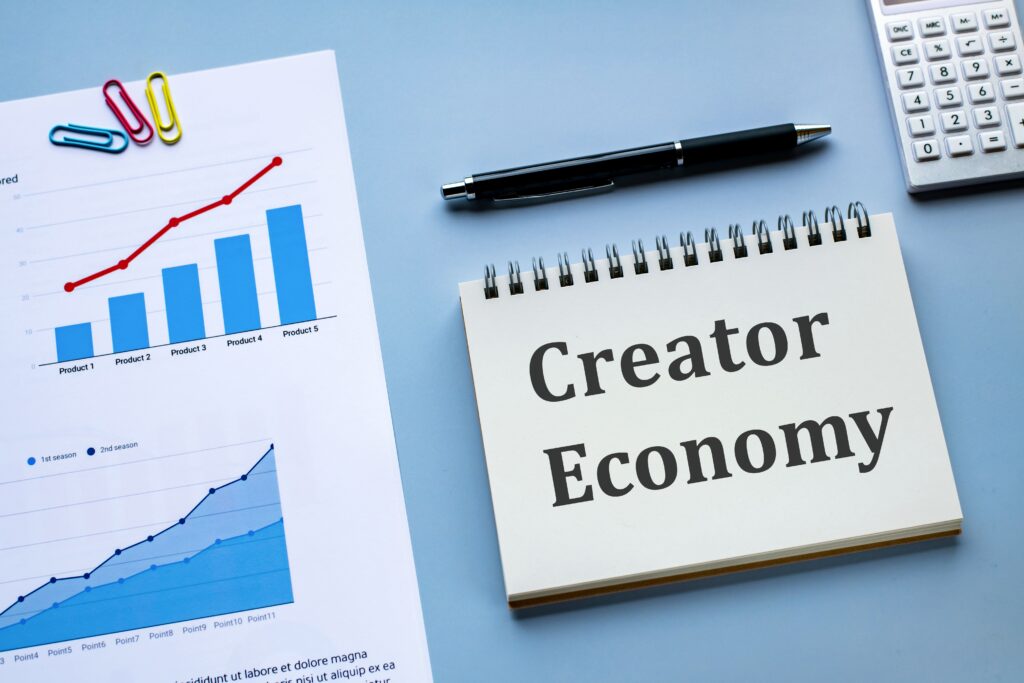
The Creator Economy is a digital ecosystem in which independent content creators, such as YouTubers, bloggers, artists, and social media personalities, use online platforms and technologies to monetise their skills, abilities, and content directly with their target audience. It enables individuals to create personal brands and businesses based on their passions, moving away from traditional work arrangements.
Key Components
The creator economy functions through the interaction of several key components:
- Creators: The individuals who produce original content, which can be videos, articles, music, artwork, or online courses.
- Platforms: Digital platforms (e.g., YouTube, Instagram, TikTok, Patreon, Substack) provide the infrastructure for content creation, distribution, and audience engagement.
- Audience/Community: Engaged followers who consume content, interact with the creator, and often provide financial support.
- Brands & Advertisers: Businesses that partner with creators (influencer marketing) to promote products or services to the creator’s audience, leveraging the creator’s credibility.
- Support Services: A vast array of tools and companies offering services like content editing, financial management, legal help, and merchandise fulfillment to assist creators in running their businesses.
How Aspiring Digital Entrepreneurs Can Get Started
For aspiring entrepreneurs, the creator economy offers a viable path to building a business. Here is a beginner’s guide to navigating this space:
- Define Your Niche and Value: Identify a topic or skill you are passionate about and an expert in, and determine what unique value you can offer to an audience.
- Build a Content Strategy: Focus on creating high-quality, consistent content that resonates with your target audience. Short-form video (TikTok, Instagram Reels, YouTube Shorts) is currently a popular format for discovery, while long-form content (podcasts, blogs, in-depth videos) helps build deeper engagement.
- Choose Your Platforms: Start by establishing a presence on social media platforms where your potential audience spends time. Diversifying your presence across multiple channels (e.g., YouTube, a personal website, an email newsletter using a service like Substack) can mitigate risks associated with algorithm changes on a single platform.
- Engage with Your Audience: Building a loyal community is crucial. Interact with comments, ask for feedback, and create spaces (like a Discord server or Facebook group) for your fans to connect with you and each other.
- Diversify Monetization Streams: Relying on a single source of income can be unpredictable. Explore multiple revenue streams:
- Platform Ad Revenue: Earn a share of advertising revenue from platforms like YouTube.
- Brand Partnerships/Sponsorships: Collaborate with brands for sponsored content or affiliate marketing, where you earn a commission for sales generated through your unique links or codes.
- Direct Fan Support: Offer paid subscriptions or accept donations through platforms like Patreon for exclusive content or perks.
- Sell Your Own Products: Transition from simply creating content to selling digital products (e-books, online courses, templates) or physical merchandise through e-commerce platforms like Shopify or Etsy.
Success in the creator economy requires treating content creation as a business, balancing creativity with entrepreneurial skills, and continuously adapting to the evolving digital landscape.
Previously, a few huge media firms, music labels, and publishers controlled the creator-to-fan pipeline, determining who and what consumers saw while exerting financial power over creators and their content. However, in the last decade, a new, digitally native playing field has evolved, enabling creators to become their own publishers. Platforms such as Twitch, Patreon, and TikTok democratized distribution, allowing producers to access audiences directly. Monetization technologies quickly emerged, and the audience-first business was established.
Many companies are increasingly tying their brands to owned channels and creating platform-agnostic communities. And as the distinction between the creator economy and entrepreneurship blurs, independent creators are having a moment.
What is the Creator Economy?
The creator economy refers to a business model in which online content creators monetise their audiences through paid partnerships, ad revenue, tipping systems, and product sales. The creator economy consists of an estimated 50 million influencers, artists, curators, and community builders.
Another set of entrepreneurs—the founders constructing the technology that supports this economy—serves as the easel for this canvas. This includes content production apps, ecommerce-enabled social networking networks, and monetization systems such as Patreon. With this technology, creators may develop personal brands, attract viewers, and make money.
The creative economy has been expanding for over a decade, but its origins may be traced back far further. Web 2.0 debuted in the late 1990s, ushering in an era of user-generated content and interactivity, while the emergence of mobile led to always-on internet consumption. Blogging platforms emerged first, transitioning from online diaries to one-person media engines that fed these “extremely online” audiences.
Monetization alternatives such as adverts and brand sponsorships enabled some bloggers to survive solely on blogging, building readership that matched those of big media publications. The Huffington Post and BuzzFeed were among the first to formalize the ethos of the blog as media property. “Real people” began to feature in big advertising campaigns, supplanting traditional celebrity endorsements, and the first hints of modern influencer marketing arose.
Reality television accelerated the tendency, elevating the unknown to celebrity status overnight. And when YouTube went public in 2005, wannabe stars no longer needed production deals to garner viewers. The next decade would see the rise of new social platforms, as well as creator incentives such as YouTube Shorts, which have emerged in recent years. Progress happened gradually, then all at once.
In recent years, the creator economy has attracted a varied range of talent, including influencers, bloggers, social media celebrities, comedians, activists, podcasters, videographers, artists, musicians, and athletes. They range from side hustlers to full-time entrepreneurs, micro-influencers to mega-stars.
However, when we examine the overall ecosystem, the number grows tremendously. “People look at a very successful creator and don’t realize how many team members are behind them,” says creator Samir Chaudry, half of the movie pair Colin and Samir. These behind-the-scenes roles are critical to assisting creators in developing personal brands into mature businesses.
In 2022, creators are raking in earnings directly from platforms, but only a fraction of them actually make a enough to live on these earnings alone. On Spotify, 98.6% of artists make just $36 per quarter, and on Patreon, only 2% of creators earned a monthly minimum wage.
Common Roles Within the Creator Economy
Not every content creator is an influencer, and not all influencers have over 100,000 followers. The creator economy is large and growing. However, there are several common groups into which content providers fall.
Content creators as celebrities
Celebrity endorsement marketing existed long before the rise of influencer marketing. Content creators that acquire 1 million or more engaged followers achieve celebrity status, and as a result, endorsements from these celebrities (though expensive) create a big “splash” within a brand’s target audience.
Read Also: The Rise of Creator Economy: Turning Passion into Profit
Artists who achieve celebrity status outside of social media (professional athletes, movie stars, etc.) often choose to become active on social media to connect with their fans and create more IRL content. These celebrities may promote their favorite brands, accept endorsement deals, or leverage their social media to promote their own entrepreneurial endeavors.
Content creators as content producers
Many content creators simply love perfecting their craft, expressing themselves uniquely through specific styles of content. These content creators may partner with brands to compose versatile product images, videos, blogs, etc. that brands can repurpose in a variety of ways.
That’s why many direct-to-consumer (DTC) brands prefer to outsource their social media post content to these individuals. Content creators as content producers are more affordable and authentic than most media production agencies. This approach also lowers payroll costs for DTC marketing teams.
Content creators as influencers
When a content creator embraces their role as an influencer, audience members pay close attention to that influencer’s opinions and guidance when considering their own needs and aspirations.
Key opinion leaders (KOLs)
A KOL typically holds the necessary credentials to become an expert in their field. Examples of KOLs include professional artists, executives turned business coaches, licensed healthcare professionals, and more.
Brand partnerships with KOLs work best in B2B markets or complex industries (SaaS, nutrition, mental health, etc.).
Brand ambassadors
Some brand-influencer partnerships run so deep that the relationship becomes exclusive. This approach is most common among influencers who are official brand ambassadors.
As an ambassador, that influencer may receive cash payments but nearly always enjoys free products, commissions on sales, and exclusive brand perks.
Affiliates
Affiliate influencer relationships often work just like ambassadorships. Many brands use these terms interchangeably. But these influencers work solely on commissions. That content creator’s online presence offers higher returns for brands because influencers have a stronger connection to their audience than do traditional affiliates.
Customer advocates
Another category of influencers are those influential customers that are avid brand fans. Many brands establish communities of customer advocates who connect with one another around shared interests and brand-sponsored activities.
Customer advocates often have smaller audiences, but those audiences tend to be highly engaged. These influencers can drive sales and intense brand loyalty among their fans and followers.
How Do Creators Make Money?
There are numerous ways for creators to generate money online; however, for the purposes of this essay, we will focus on knowledge creators and how they might make a living. As previously stated, the category of knowledge creators encompasses anyone who has monetized their expertise online by sharing and teaching their talents with others.
There are three basic ways to earn money online for knowledge creators:
1. Selling their knowledge under their own business
This is likely the most lucrative option for a knowledge developer to earn money online. In this scenario, producers will establish their own business by hosting their material on a website or specialized platform, retaining complete ownership of it.
This strategy of monetization involves developing online courses, selling digital items, providing coaching services, and conducting training calls. By selling their work on their own website or using a platform that allows creators to fully own their content, they may maximize earnings while still having the freedom to promote, price, and structure their business as they like.
Heights Platform allows creators to host online courses and membership sites, sell digital products and coaching services, keep full ownership of their work, and design their own business strategy. Heights Platform is easier to use than developing your own website using WordPress, for example, because it is specifically developed for online course makers.
The new Heights AI suite allows creators to produce full online courses, develop high-converting landing pages, and even receive tailored business coaching—all powered by AI. Heights AI serves as a virtual assistant and business mentor, facilitating the journey from idea to launch faster than before.
2. Selling their knowledge through third-party apps
Third-party apps can also help knowledge providers monetize their expertise by reaching a larger audience of potential purchasers.
There are numerous platforms and markets available to creators depending on the type of content they want to sell.
Marketplaces for online courses, such as Udemy or Skillshare, allow producers to submit their work and sell it to an established audience. While this method of selling online may be easier in terms of promotion and getting new clients, producers typically lose a significant amount of their earnings due to marketplace commission/transaction costs, and are limited by the third-party platform’s limitations.
3. Monetizing their content via partnerships and advertising
This method of producing money online is applicable to all creators, not just knowledge creators.
If a creative has a huge audience and a social media following, they can use their online influence to get paid to promote third-party items and services. The larger the audience and the higher the engagement, the more money creators can earn from advertising.
Influencers, more than knowledge creators, rely on sponsored posts or affiliate marketing to generate revenue rather than selling their own products or services, like knowledge entrepreneurs do.
A knowledge developer can use all three earning tactics, including selling courses on their own website, using third-party apps, and sponsored promotion; however, ad money or affiliate commission is sometimes viewed as a “extra” revenue stream, rather than the primary focus for knowledge providers.
Starting a Creator Business
For creators considering entrepreneurship as a path to independence, there are a few best practices to consider.
Build the right tech stack
According to a London Business School study, smaller firms that use low-code technologies like Shopify experience significant growth and returns on investment while requiring less capital initially. “A decade ago, creating an online presence required a significant upfront investment,” says the study’s originator, Dr. Gary Dushnitsky.
As a result, low-code tools have leveled the playing field, allowing a previously underserved minority to profit financially from the creative economy.
“These tools can be stacked and expanded to serve the needs of a focal business,” Gary elaborates. And for many creators, commerce is the best method to turn content into cashflow before they reach a seven-figure follower base. Sonja Detrinidad, TikTok plant parent and creator of Partly Sunny Projects, is one such entrepreneur who has expanded her business in tandem with her fan base.
The creator economy tech stack is constantly expanding with new content creation tools and platforms. While social media apps allow creators to grow their audiences, it is vital to transition those audiences to owned channels where consumers may support creators by purchasing products, online courses, or paid subscriptions.
Develop meaningful partnerships
Creators’ significance should not be underestimated—or devalued. According to one survey, 45% of buyers are willing to buy products advertised on social media by creators, and 73% believe a creator’s in-depth product expertise increases confidence.
A well-placed sponsored social post featuring a relevant creative might push a brand’s goods to out-of-stock. Creators benefit from this relationship by receiving a one-time payment per post, but the value to the brand might last beyond the agreement’s lifespan.
However, if done wisely, Samir believes that brand alliances can give long-term benefit to a creator. “It’s a good relationship when the advertiser becomes a character in your universe,” he jokes.
While many content creators focus on presenting their tales to audiences, Samir recommends making an equal effort to communicate your narrative to the market. “The whole business is storytelling,” he claims. “And what we saw was, when we started telling our story properly, relevant advertisers came to us.”
Prioritize audiences over advertisers
Brand partnerships may always be part of a creator’s monetization strategy, but Colin and Samir have always believed that fans will always pay more than advertising.
Samir notes that when the team created an online course, 800 people paid $100 each to enroll. “In what world are we getting 800 views on a post and getting $80,000 [from advertising] in exchange?”
Learning from engagement and tailoring content to audience preferences is a long-term strategy that does not rely on advertising expenditures.
Make the most of the “attention phase”
Social platforms are and will always be an important element of this ecosystem, even as creators diversify their revenue and viewers. They are first and foremost a platform for budding creators to gain notice and expand their fans. Established creators will always use them as a pipeline to bring new audiences into their owned channels.
Diversification among these non-owned channels is another insurance policy to consider during what Hugo refers to as “the attention phase” of the creator life cycle. Most producers find their rhythm on one platform, whether it’s the format or the audience, but eventually reach a point when expanding into additional channels makes sense. Basically, choose a lane, but don’t remain there.
The same advice applies to monetization. Creators that earn money across multiple revenue streams avoid the pitfalls of volatile platforms and ensure they always have a plan B.
Think like a brand
Successful creators are individuals who have built a dedicated audience around their specific kind of material. These personal brands are vulnerable to the same problems as any other brand if not supported by a plan.
When artists make the decision to develop a brand around their impact, they should tackle it with the same zeal as a product-first brand. When launching a firm, it is vital to understand your target audience, establish a set of values, and create a style guide. This activity will assist creators in developing the appropriate products and paid content for their target market.
The Challenge of Managing a Large Number of Content Creators
Brands that have committed to a sophisticated influencer marketing plan may find it time-consuming, which is why content creator management software may successfully address relationship difficulties.
Content creator discovery
Many of the leading social platforms are applying updates that make it easier to identify high-performing content creators within specific industries. That said, using a content creator-specific platform helps marketers narrow their influencer search based on audience demographics, bio keywords, engagement rate, and more.
Recruiting & onboarding
Negotiations and contracts ensure that brands and content creators are in complete agreement before formalizing new partnerships.
After agreeing to terms, these new content creator partnerships require an initial onboarding process, such as gathering shipping information, product preferences, and campaign guidelines. Many brands utilize various forms of media (intro videos, slide presentations, etc.) to expedite a creator’s familiarity with their new partnership.
Relationship management
Over time, most influencer marketers learn to leverage each content creator team member according to their strengths. Personalizing the brand-content creator relationship means paying close attention to details and maintaining impeccable communication with each content creator partner.
Campaign workflows
Depending on how many different types of partnerships and campaigns a brand chooses to run in a given time period, maintaining a sustainable process can be one of the most difficult parts of an influencer program.
That’s why influencer marketing automation is so important. Campaign workflow tasks are highly repetitive and are more efficient to manage within the right software solution.
Product fulfillment
Managing inventory while overseeing free gifts to content creators often places unique burdens on ecommerce brands that lack a strong product fulfillment process. Among the best solutions to this challenge is seamless ecommerce shop integration within an influencer marketing software platform.
Influencer payments
Whether product seeding, commissions on sales, flat fees, or a combination of all three, high-performing influencer programs must plan their content creator payments carefully. Brands need to disburse payments accurately and in a timely manner in order to maintain strong relationships with their creators.
Conclusion
What does this mean for you, as the creative economy grows at an exponential rate?
If you have a passion, a pastime, or are skilled about a particular area, why not monetize it online?
Knowledge entrepreneurs use online courses, membership communities, digital downloads, coaching programs, newsletters, and podcasts to monetize their material and expertise.
These items and services can be offered through marketplaces, third-party apps, or by the developer directly on their website. The latter is the ideal option for knowledge makers. Here’s why:
Diversifying income streams and securing a platform on which you own both the material and the audience relationship are critical for all types of producers. This enables the direct commercialization of products, services, and content.
Another significant reason why this model benefits artists is that controlling your material means you are not at the mercy of a third-party program, or even the creator economy itself.











Comments