
 By
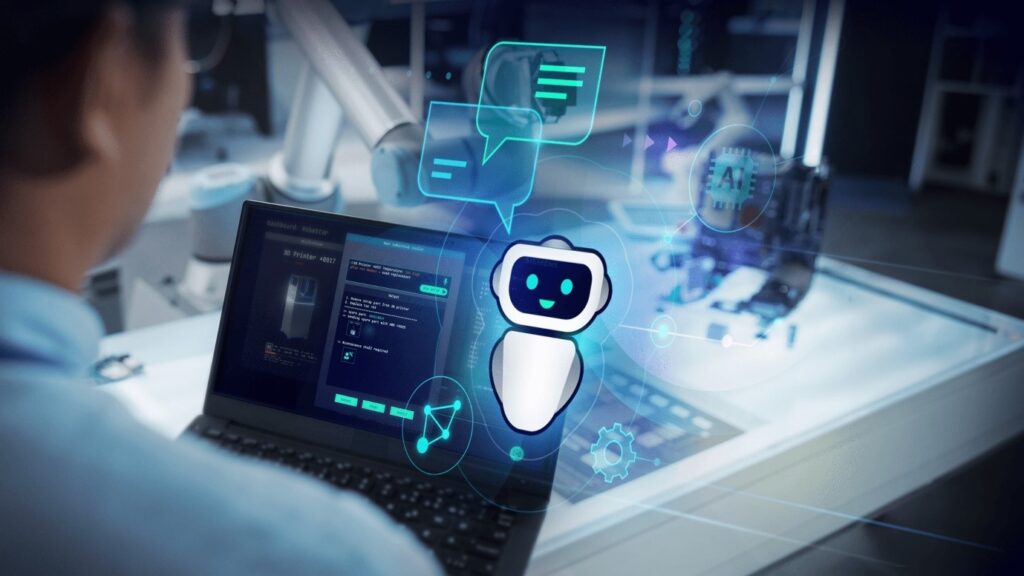
Digital twins are transforming manufacturing by producing virtual counterparts of actual assets, processes, and systems, allowing for real-time monitoring, predictive maintenance, and optimization. This enables manufacturers to improve operational efficiency, cut costs and waste, and improve product quality by making data-driven decisions and simulating various situations before they affect the actual world. The future of manufacturing will witness more integrated and advanced digital twins, including full-factory models, powered by AI to drive sustainability and better operations.
What is a Digital Twin?
A digital twin is a dynamic virtual depiction of an object, system, or process in the physical world. It employs real-time data from sensors, IoT devices, and software analytics to simulate how a real thing behaves and performs. It constantly updates itself depending on new data and evolves alongside the actual object.
Manufacturers can evaluate, monitor, simulate, and optimize processes without disrupting integrated real-time activities, whether they are machines or manufacturing lines. Technosoft creates one-of-a-kind systems that integrate innovative Digital Twin Solutions with the world of physical assets and digital intelligence via organizations.
Consider a future in which you can test and improve your manufacturing processes without touching a tangible product. Welcome to the digital twin era, in which virtual versions of production lines, goods, and even entire supply chains are digitized, transforming how manufacturing teams design, operate, and maintain their operations.
With only 29% of global manufacturing organizations actively using digital twin plans, it’s evident that this technology isn’t just a future concept, but a current source of advantage, or even leverage.
Key Benefits of Digital Twins in Manufacturing
1. Predictive Maintenance to Minimize Downtime
Digital twin implementations yield some of the best and most exciting benefits: predictive maintenance. Most of the traditional maintenance models relied on check-up intervals or reaction models. Digital Twins change all of this by:
- Constantly tracking equipment performance with sensor data.
- Using AI and machine learning algorithms to predict failures before detection.
- Issuing alerts to technicians, enabling proactive maintenance actions.
As a result, unplanned downtimes are minimized, asset lives are extended, and maintenance costs are cut.
2. Better Product Design & Prototyping
Engineers and product designers test and simulate the various conditions in which a product would operate, before developing a prototype physically. This allows them to:
- Verify product design with various stress and environmental conditions.
- Perform analysis for material compatibility and structural integrity.
- Quickly involve customer responses in the design phase.
Fewer physical prototypes and shorter time-to-market lead to better customer satisfaction.
3. Optimized Production Administration
Each phase of a production process can be monitored in real time using digital twins. It can be used by manufacturers to:
- Define bottlenecks and inefficiencies in production lines.
- Simulate alternative workflow areas, resulting in optimized layout and resource allocation.
- Monitor energy consumption for sustainability enhancements.
By simulating changes virtually, an organization has sufficient confidence to implement them because outcomes are known.
4. Real-time Quality Control
Manufacturers can perform continuous quality monitoring with a digital twin:
- Comparing actual production data with previously established quality criteria.
- Automatically flagging discrepancies for timely correction.
- Unifying the compliance across multiple production plants.
The result is consistently good quality products with fewer defects, as well as a strong feeling of trust from customers.
5 Digital Twin Applications
1. Digital Twin Applications in Product Design
Digital twins play an important role in product design, acting as virtual prototypes. Digital twins can test an infinite number of simulations or designs before manufacturers invest in an actual prototype. This approach to product design saves time and essential costs by decreasing the number of physical iterations needed before production.
2. Derisk Automation Investments with Virtual Commissioning
Digital twins can be utilized to offer virtual commissioning, which allows you to test the performance of a new automation system, such as takt time and throughput, in a simulated environment. Virtual commissioning allows for the detection and resolution of any issues before the physical line is installed, lowering the risk of downtime and providing a smoother transition to system installation and ramp-up.
3. Process Optimization with Digital Twin Simulations
Digital twins also improve process optimization. They develop a structural and operational understanding of what will happen if the future state changes. This allows engineers to see how changes affect the system digitally before adopting them in real life.
Read Also: Building a Digital-First Business in 2026-2030
Digital twins in manufacturing can also support live systems. A digital twin can examine key performance indicators at a more granular level by utilizing sensors on a production line. Adjustments can assist teams in discovering new ways to optimize productivity, reduce variations, and perform root-cause analysis.
4. Digital Twins are Enhancing Training
Traditional training approaches struggle to remain relevant in today’s increasingly digital society. Digital twins improve training by enabling virtual reality (VR) training, which transforms how we learn and overcomes the constraints of conventional approaches. Employees may access flexible, immersive, and engaging learning experiences at any time and from any location with virtual training.
5. Remote & Predictive Maintenance with Digital Twin Technology
Digital twins can detect when line components are about to fail, notifying operators or even initiating automatic reorders for spare parts and maintenance procedures. Remote functionality also improves machine uptime. Experts can remotely examine and diagnose faults using machine sensors, then resolve them using remote-controlled software or by coaching an on-site specialist through corrective actions. Remote monitoring can help foresee maintenance requirements or potential fault scenarios, allowing plant managers to order extra parts ahead of time.
Real-World Applications of Digital Twins in Manufacturing
Automotive Industry
Companies like Tesla use digital twins to keep an eye on vehicle performance, track user behavior, and ensure the efficiency of assembly lines. The ability to create simulations that mimic real-world environments on a large scale has led to waste reduction and greater customization.
Aerospace and Defense
In aerospace, the most pertinent application of digital twins would be monitoring jet engines. Among others, Rolls-Royce implements digital twin technology to monitor engine performance, forecast failure of engine components, and proactively schedule maintenance.
Electronics Manufacturing
Digital twins ensure precision and quality control in producing microchips and circuit boards. With so little room for error, manufacturers use those virtual simulations to drill down on potential concerns before they become expensive failures.
Consumer Goods
From packaging innovation to supply chain simulation, digital twins support rapid iteration in consumer goods production. They ensure global consistency and adaptability to multiple markets.
The Future of Digital Twins in Manufacturing
Digital twins have evolved with the times thanks to the simultaneous development of AI, edge computing, and sustainable manufacturing:
1. Integration with Artificial Intelligence and Edge Computing
Digital twins calculate data near the edge (data processing close to the source) so as to reduce latency to ensure fast decision-making. AI plays a role in predictive analytics and offers automated anomaly detection with intelligent recommendations.
2. Sustainable Manufacturing
With ESG up on the priority list, digital twins support manufacturers to consume less energy, reduce material waste, and simulate environmentally-friendly processes for a better planet.
3. Supply Chain Synchronization
Digital twins today are exposed far beyond factory walls. Connected by a larger digital thread, they enhance real-time collaboration of manufacturers with their suppliers and distributors, thus augmenting visibility and responsiveness across the value chain.
4. Advanced Simulation Capabilities
Digital twins of the future will simulate the behavior not just of mechanical systems, but also of interactions of humans with machines, supply chain behavior, and market responses. This will further extend their tentacles into the realm of strategic value.
Final Words
Digital twins are transforming the industrial sector by improving product design, process optimization, quality management, virtual reality training, and predictive maintenance. As more businesses adopt digital twin apps, the benefits become more apparent.
According to a Research and Markets survey, 36% of executives from various industries understand the benefits of digital twin technology, and about half intend to integrate it in their operations by 2028. This rapid acceptance highlights digital twins’ revolutionary potential for driving innovation, efficiency, and sustainability in manufacturing, particularly as enterprises scale up to meet greater demand. The side that improves their digital twin technology will outperform the others.







Comments