
 By

Through an on-demand, cloud-based service model that lowers equipment and staff expenses, Data as a Service (DaaS) offers businesses scalability, financial flexibility, and cost savings. By making data easily accessible, it facilitates quicker insights and more flexible, data-driven decision-making. Additionally, DaaS improves data quality, dismantles data silos for a cohesive company picture, and gives businesses a competitive edge by providing real-time industry data for operations and strategic planning.
Let’s examine a few of the main benefits of using data as a service in your company:
1. Improved decision-making
By combining data from multiple divisions, data integration helps decision-makers see the business as a whole. Organizations may more readily examine patterns and make better decisions when they have a single data source.
For instance, a retail chain combines seasonal trends, inventory levels, and past consumer purchases. Their price and product variety are improved as a result. Managers may make better judgments about stock replenishment and guarantee that popular products are always accessible while reducing excess inventory by using this data-driven strategy.
2. Increased operational efficiency
By dismantling data silos and reducing redundant data entry, data integration helps organizations optimize their operations. Because teams can obtain the information they require instantly, operations become quicker and more effective.
For instance, a logistics business combines information from customer orders, warehouse inventory, and its fleet management system. Real-time cargo tracking is made possible via this connection, which facilitates better collaboration between delivery drivers and warehouse employees, cutting down on delays and raising customer satisfaction.
3. Enhanced data quality
Information sharing between systems is made simple by data integration. Members of your team don’t need to log into separate platforms to access CRM and ERP data. Less mistakes will be made, authorized staff will be able to obtain the information they require faster, and your present systems will be used to their full potential.
Data cleaning and validation from several sources are also included in the discussion of data integration. This increases accuracy and consistency, guaranteeing that the information you depend on is reliable and free of errors. Making educated decisions and preserving the integrity of your company depend on this.
For instance, a medical professional combines patient data from several hospitals and clinics. They guarantee that medical personnel have access to correct and current information and minimize errors in patient records by standardizing and cleansing the data for consistency. As a result, patients receive better care and have more faith in the medical community.
4. Better customer insights
Businesses can obtain a comprehensive understanding of their clientele by integrating data from marketing, sales, and customer support. Businesses can customize their services and communications to match particular demands thanks to this thorough client profile.
Example: To build a comprehensive client profile, a financial services organization combines information from its online banking, transaction systems, and customer care. By analyzing this integrated data, the business is able to provide financial products that are tailored to the requirements and tastes of each individual customer.
5. Cost savings
Businesses save manual procedures and superfluous duties when they connect their data, which results in more cost-effective operations. Businesses can save operating expenses and free up personnel by automating data flows between systems.
Read Also: How Data as a Service Can Transform Your Business
For instance, an e-commerce business combines information from supplier systems, inventory management, and its website. This implies that when stock levels are low, the business can automate the product ordering process. This guarantees that clients have access to the most recent stock information while also lowering excess inventory and storage expenses.
6. Faster reporting and analysis
Businesses can create reports and analyze important indicators more rapidly when they have real-time access to consolidated data thanks to data integration. This enables companies to react to changes in the market and new trends more quickly.
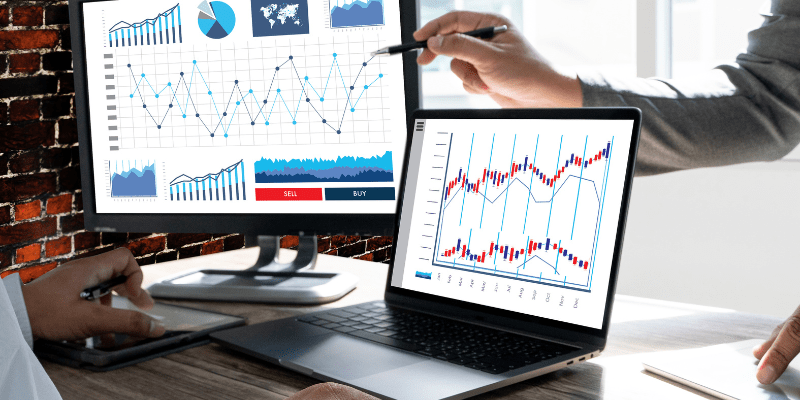
As an illustration, a multinational marketing firm compiles information from client campaigns, internet traffic, and social media analytics into a single dashboard. With the help of this integration, the firm can monitor the effectiveness of marketing campaigns in real time and swiftly modify its approach to enhance campaign performance or take advantage of new trends.
7. Increased Collaboration
Teams from different departments can access a single data set when businesses connect their data. Employees are better able to communicate, coordinate their activities, and cooperate toward shared corporate objectives when all information is readily available.
For instance, a software development company combines information from its sales, product development, and customer service departments. The development and support teams may work together more efficiently and guarantee that customer needs are met in product updates by having a single view of user feedback, issues, and feature requests.
8. Scalability
Data integration guarantees that new data sources can be seamlessly integrated into an organization’s current systems as it grows. This scalability is essential for handling bigger data sets and fostering company expansion without interfering with daily operations.
Example: To link its supply chain, customer support, and sales operations across multiple nations, a multinational corporation employs data integration. The company’s data integration solution makes it easy to integrate local data sources as it enters new markets, which makes it easier to manage operations at scale and guarantee data consistency across regions.
9. Regulatory compliance
By storing, processing, and reporting data in accordance with the necessary standards, data integration assists firms in adhering to rules. Businesses can lower the risk of non-compliance by tracking, auditing, and controlling their data through integration.
For instance, a financial institution combines tools for compliance monitoring, transaction systems, and customer identifying information. This lowers the possibility of regulatory fines and penalties by automatically flagging all client transactions for any fraud or compliance issues and making all data easily accessible for audits.
10. Real-time insights and responsiveness
Organizations may react quickly to opportunities or dangers by using integrated data to track important metrics and events as they occur. Competitive advantage and agility are enhanced by real-time knowledge.
For instance, a cybersecurity company combines threat information feeds, user authentication logs, and real-time network traffic data. This stops possible breaches before they get worse by enabling security experts to identify and neutralize cyberthreats as they appear.







Comments